
Lead with the task the ink must handle
Black ink is not one single choice for every part of a tattoo. A studio usually needs at least a lining option, a solid fill or packing option, and a general stock black that can handle a mix of styles. If you work across flash, script, geometric work or larger shaded pieces, the ink should match the task rather than force one bottle to do everything.
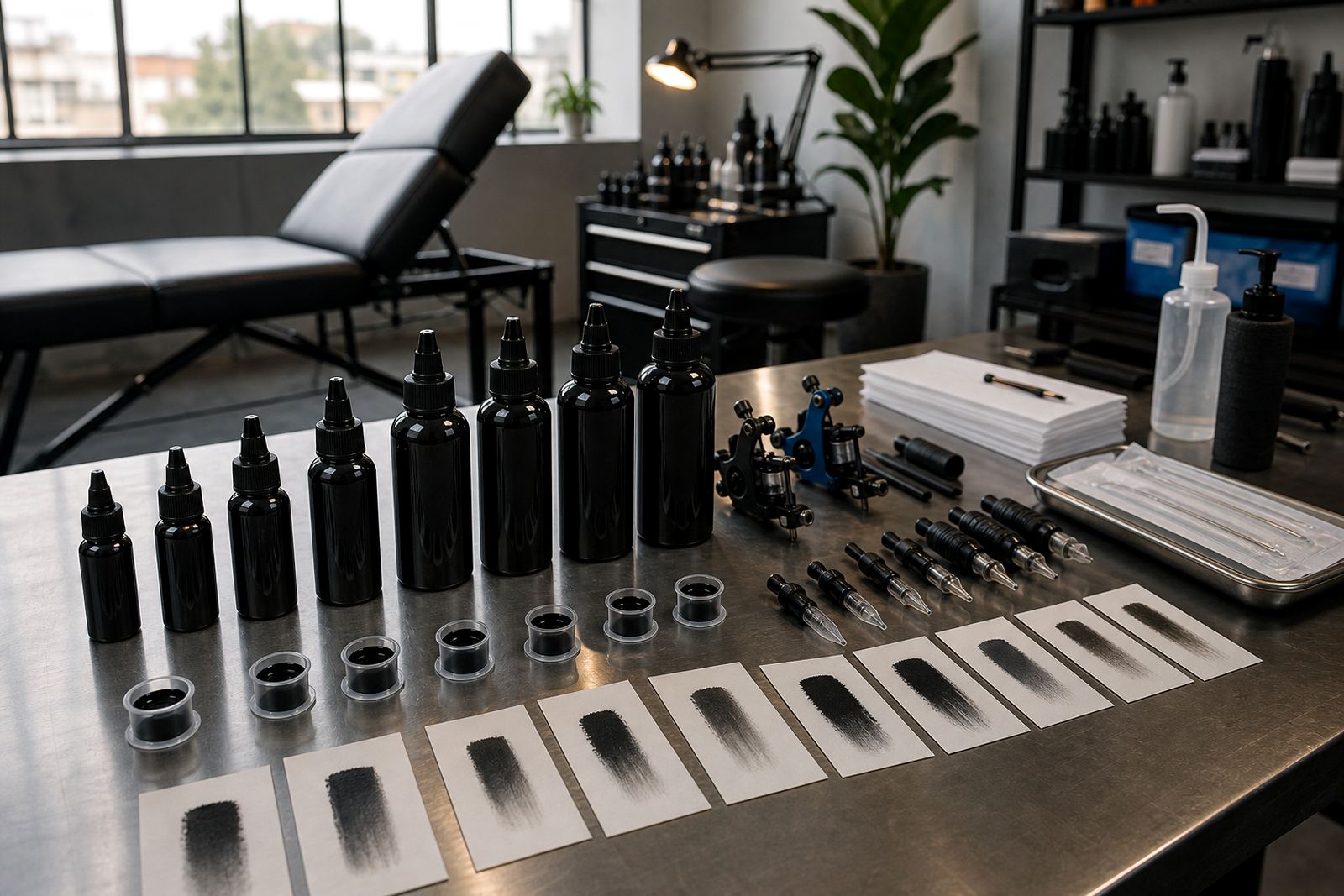
For lining, artists generally want a black that flows cleanly through the needle grouping and holds a crisp mark without feeling watery. For fill and packing, the better choice is a denser black that settles into larger areas without needing repeated passes. For general shelf stock, many studios keep a mid-purpose black that works for everyday work and covers quieter weeks without tying up too much cash in slow stock.
In Cape Town, Johannesburg, Durban, Pretoria and Gqeberha, the same category logic applies, but the stock mix may shift by client demand. A studio doing more script and fine line work may use more lining black, while a shop handling bigger black and grey pieces will move through more fill ink.
Black ink categories that belong on the shelf
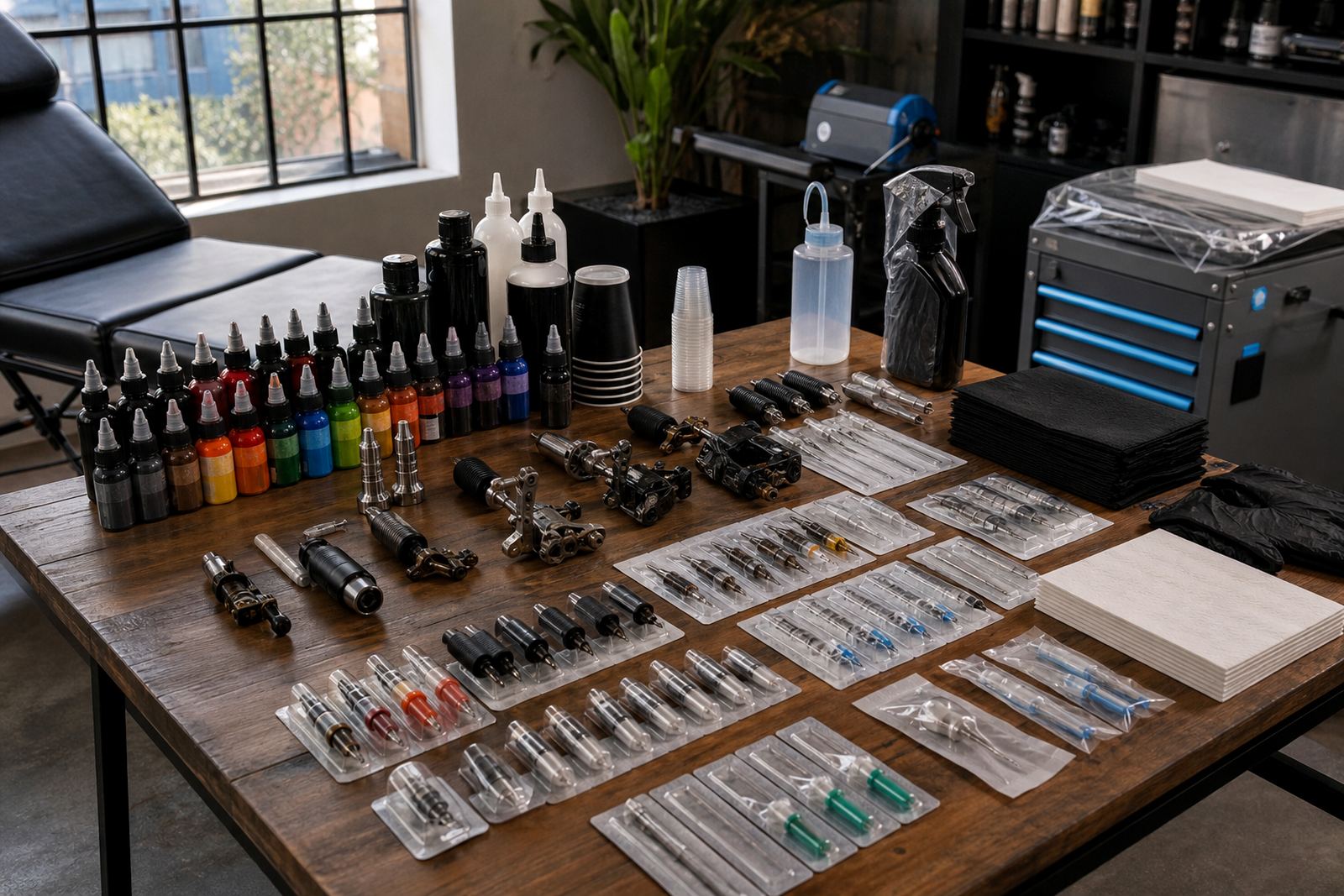
When choosing shelf stock, it helps to group inks by use instead of colour name alone. That makes reordering easier and keeps the station tidy. A practical black range for a South African studio often includes the following:
- Lining black: usually thinner in flow, made for crisp lines and controlled work with smaller needle groupings.
- Dense fill black: used for solid areas, heavier saturation and larger shapes that need consistent coverage.
- General purpose black: a middle option for mixed work, shading edges and everyday sessions.
- Grey wash base or diluted black: useful for softer shading and tonal transitions when a studio mixes its own values.
- Practice and back-up stock: a smaller reserve kept for busy periods, bulk days or supply delays.
Some studios also separate bottles by viscosity, because not every black behaves the same way in the machine. That matters when a team uses different hand styles or needle configurations. If one artist prefers tight lines and another works with broader passes, keeping the categories clear saves time at the station.
Match the ink to the needle and cartridge grouping
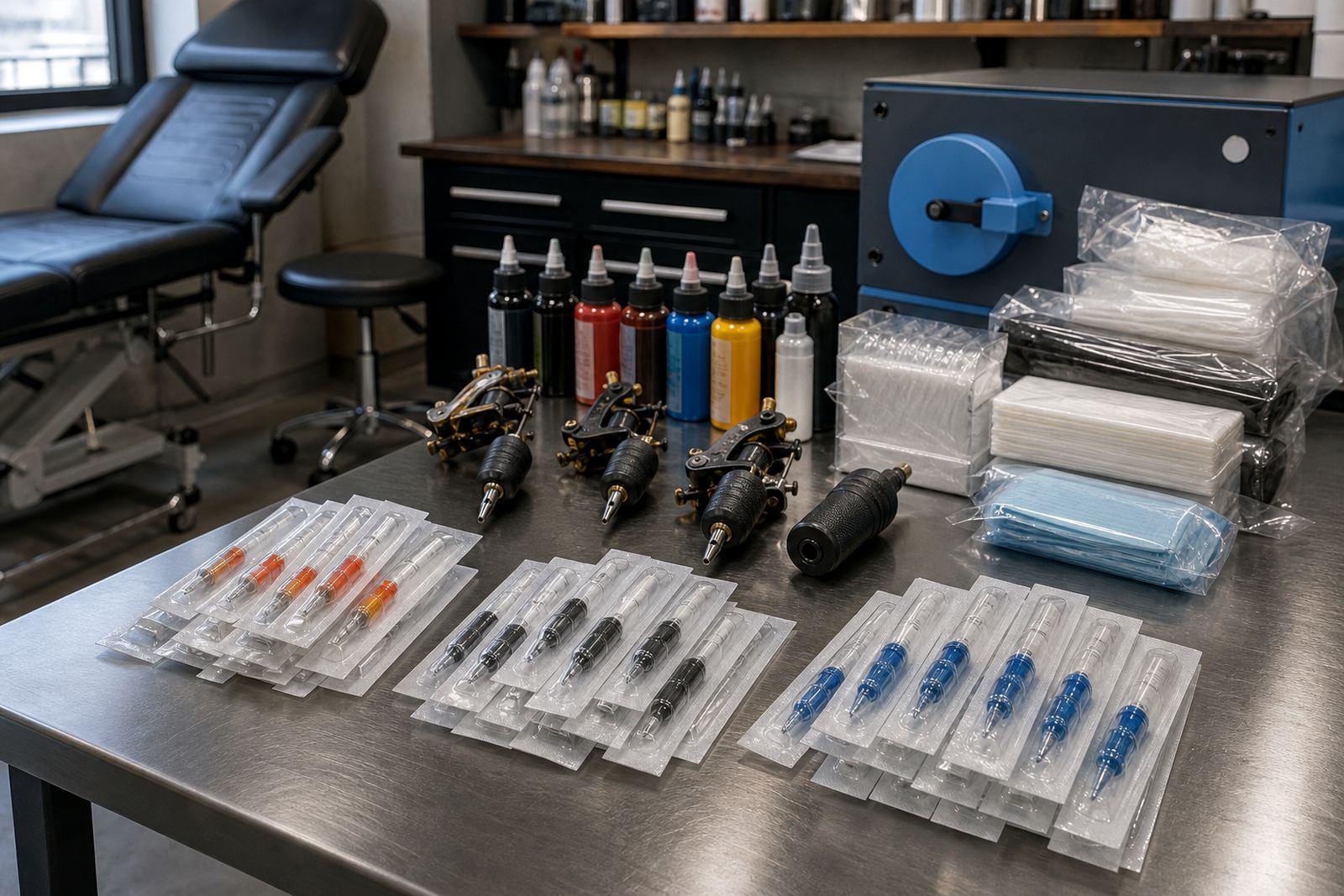
The ink choice should sit comfortably with the needle grouping in use. A fine round liner usually benefits from a black that moves well without flooding the group, while a larger liner or mag setup can handle a denser ink for stronger output. When the grouping and ink are mismatched, the artist ends up fighting the machine rather than working with it.
Cartridge work also changes the feel of the ink at the skin. Some cartridges run cleanly with a thinner lining black, while others pair better with a fuller fill black that keeps the stroke steady. The point is not to chase one perfect bottle, but to keep a small range that fits the main groupings your studio uses most often.
- Fine liners: choose a black with cleaner flow and good control.
- Medium round groupings: keep a balanced black for mixed line and shade work.
- Large liners and mags: stock a denser black for coverage and packing.
- Mixed-station studios: label inks by use so the right bottle reaches the right chair.
That kind of grouping also helps during busy days when artists share stock from one central shelf. A clear system reduces mistakes and makes consumable reorders easier to plan.
What to look for before you place a black ink order
Black ink stock should be chosen with the same care as needles or cartridges. Check the container size, bottle style, storage needs and how quickly that category moves in your studio. If the ink sits on a shelf in Observatory or travels to a partner studio in Durban, the label and closure should make handling easy and clean.
It also helps to think about shelf life in a practical way. Keep unopened stock in a cool, dry place away from direct sun and heat. Coastal humidity in places like Gqeberha and Durban can make orderly storage even more important, especially where bottles are opened and closed often. Once a bottle is in use, keep the station tidy and close caps properly between clients.
- Choose bottle sizes that match your weekly use, not only your best month.
- Keep separate stock for lining, fill and grey work so the shelf stays organised.
- Check that labels remain readable after handling and cleaning.
- Store away from dust, moisture and direct sunlight.
- Follow local health regulations for tattoo studio storage and handling.
How to build a practical shelf stock plan
General shelf stock should cover the most common work first. Start with the black that moves fastest, then add the other categories that your artists use often enough to justify shelf space. A new studio kit might need a tighter range at first, while a busy shop with several artists may need more variety and backup stock.
A useful method is to split stock into three bands: fast moving, steady moving and reserve. Fast moving items are the blacks used every week. Steady moving items are the specialist bottles that still matter for certain jobs. Reserve stock is there for busy periods, stock delays and larger orders. This keeps cash flow clearer and reduces the chance of running short on the exact black a client session needs.
For studios working across multiple towns, storage planning matters too. The Cape Town team may need a different pack pattern from a Johannesburg delivery or a Pretoria restock. If your artists share stock across stations, keep a written list of what is open, what is sealed and what needs replacing soon.
Useful checks for studio hygiene and storage
Black ink stock works best in a clean station with clear handling habits. That does not mean overcomplicating the setup, just keeping bottles, caps, trays and wrapping in order so the artist can move without clutter. Single-use items should stay single-use, and opened bottles should be handled in a way that suits the studio’s daily cleaning routine.
Good storage also protects the rest of the consumables on the shelf. Needles, cartridges and transfer items should be kept separate from bottles and away from anything that may contaminate them. If your studio runs deliveries into Bellville, Somerset West or Stellenbosch, a tidy packing list helps the stock arrive in the same condition it left the warehouse.
- Keep black inks grouped by use and clearly marked on the shelf.
- Separate opened bottles from sealed reserve stock.
- Store sterile single-use supplies in clean, dry containers.
- Keep the work area free of clutter between appointments.
- Follow local health regulations for studio hygiene and waste handling.
A short buying checklist for black ink restocks
Before you place a black ink order, check what the studio actually used during the last few weeks and which category moved fastest. If lining black is going out first, do not overbuy fill stock. If large fill jobs are common, keep that category ahead in the cart. Matching the order to real use keeps the shelf balanced and avoids dead stock.
For teams that place orders for more than one branch area, it helps to group by site and by use. That way a Durban delivery or Gqeberha delivery can be packed with the right black inks, while the main observatory base keeps the core range ready for the next dispatch. A good buying habit is practical, tidy and easy for the whole team to follow.
- Confirm the main use: lining, fill or general stock.
- Check current shelf levels before adding reserve bottles.
- Group by artist need and by branch location.
- Keep storage space in mind for sealed and opened stock.
- Review which black sells fastest before every bulk order.