
Where the counter gets busiest
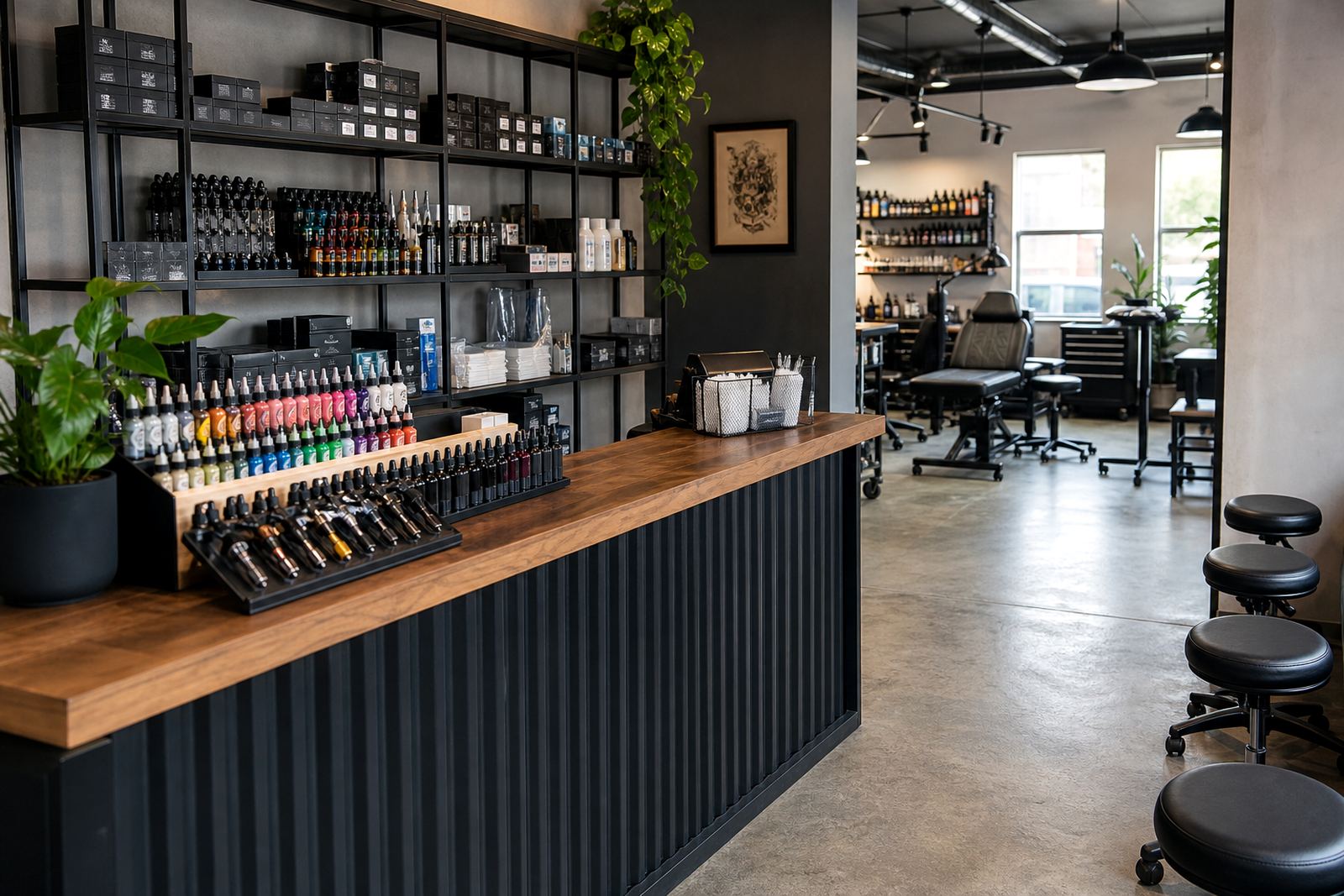
Walk-in counter setups usually carry the pressure of quick questions, small top-up purchases, stencil changes and last minute session checks. In studios from Observatory to Bellville, or in busy inner-city spaces in Johannesburg and Durban, the counter often becomes the handover point between consultation, prep and chair time. The stock you keep there needs to suit fast turnover, not long browsing.
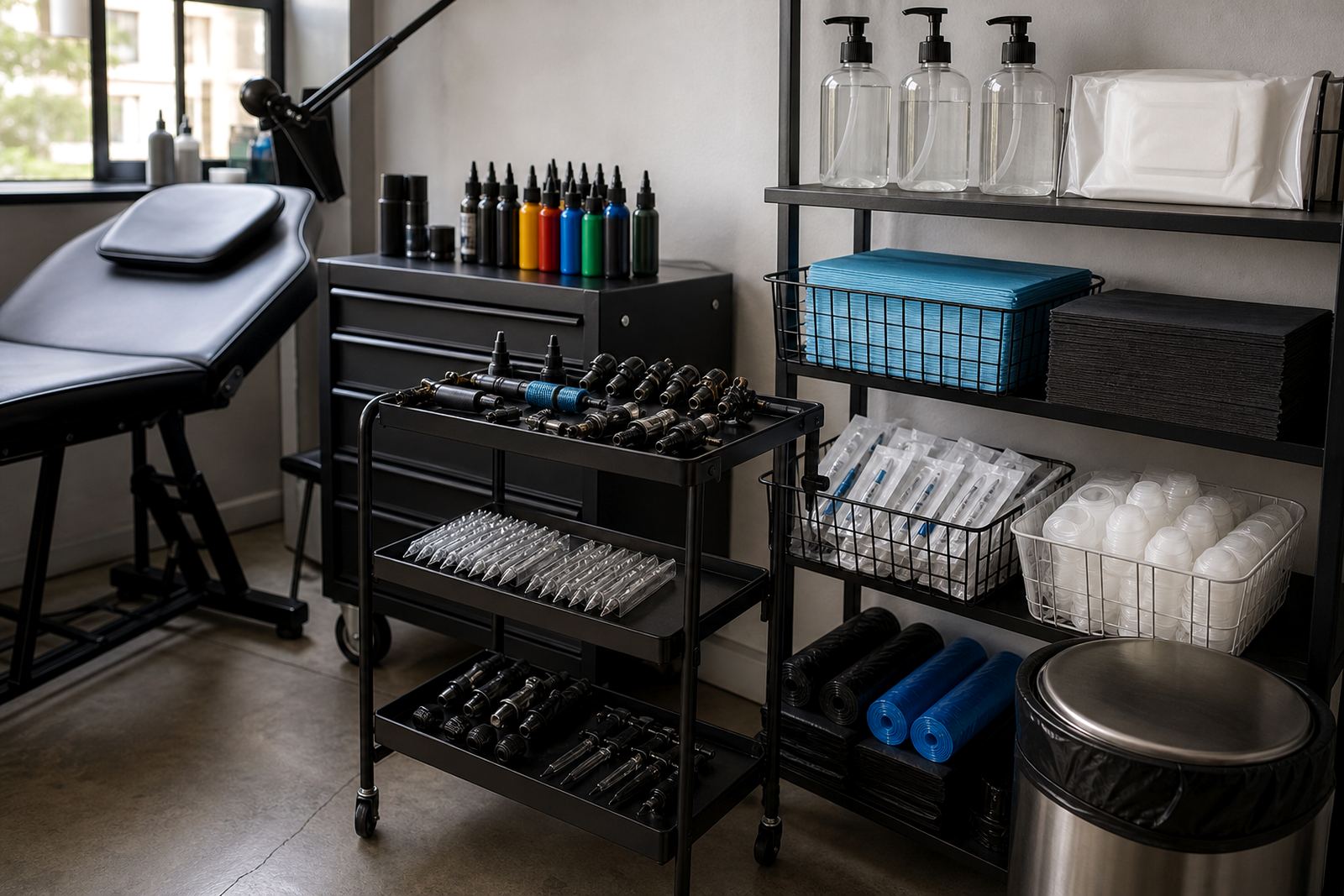
For that reason, most studios separate front-of-counter items from back-of-house stock. The counter can hold the most requested ink bottles, common needle and cartridge groupings, single-use grips, clips, barrier film, rinse cups, ink caps, wrap, and cleaning consumables. Bulk cartons, larger storage tubs and reserve packs sit in the rear store or shelving near the packing area.
A practical counter set for faster sessions
The best counter set is usually compact and repeatable. You want enough range to cover line work, shading and colour packing without crowding the surface. A studio in Pretoria or Gqeberha may keep a slightly different mix depending on walk-in demand, but the same principle applies: the items used most often should be within reach, clearly grouped and easy to count at a glance.
- Ink bottles in the shades used most often, with labels facing forward
- Needle groupings for liners, shaders and mags sorted by configuration
- Cartridge groupings for the same core work patterns
- Single-use barriers, wraps, cups and clip covers
- Disposable gloves, wipes, paper towel rolls and surface covers
- Storage tubs for sealed reserve stock and order packing
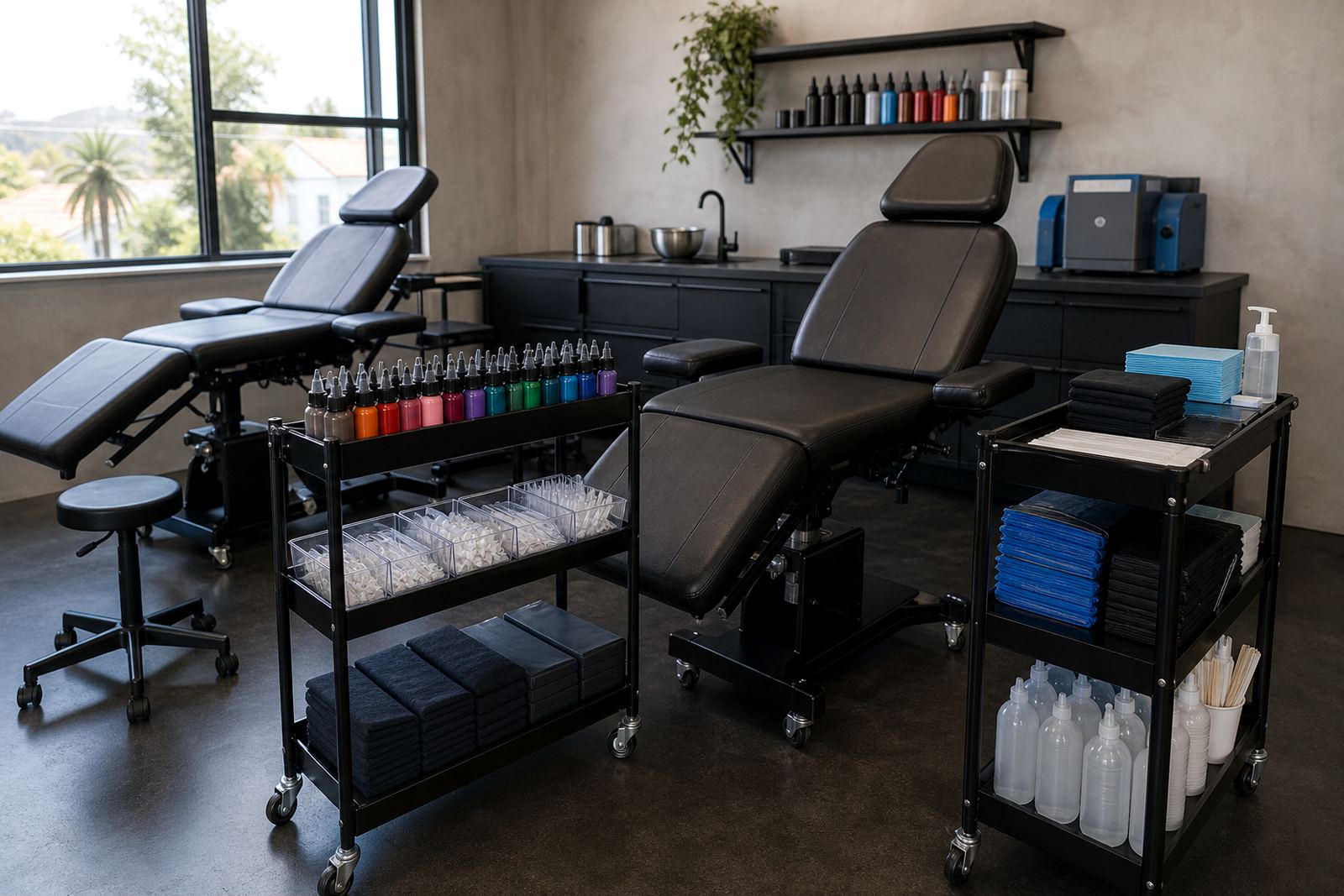
Studios often pair the counter with one machine check area nearby, especially where artists move between walk-ins and booked sessions. That lets the team match the right setup without sending someone across the room for every small part. It keeps the pace steady and reduces mix-ups.
Layout that keeps stock moving without clutter
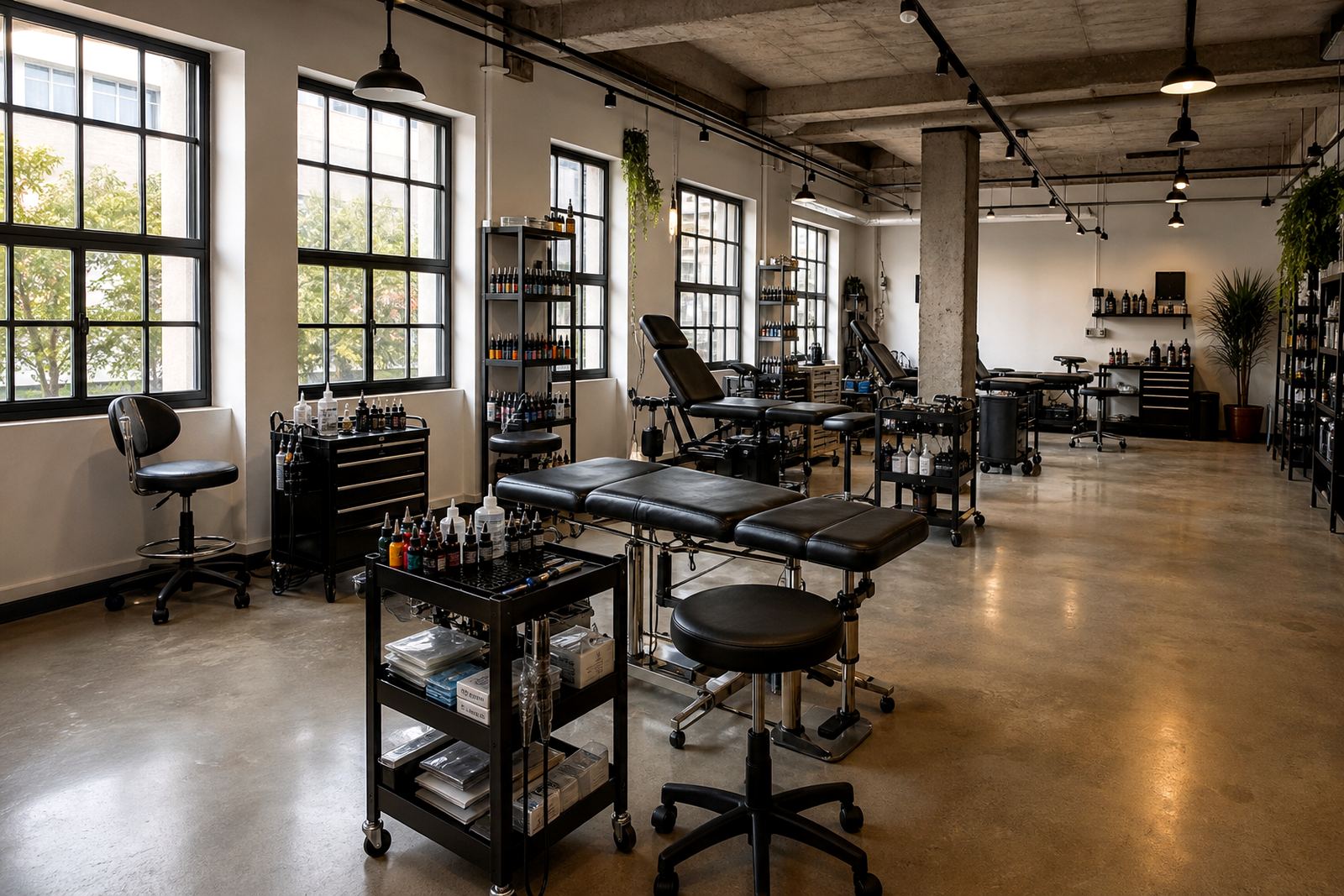
A walk-in counter works best when the layout follows the flow of the day. The front section should hold display stock, intake items and the quick grab consumables. The back section should hold replenishment packs, sealed cartons and items that are used less often. In coastal towns such as Cape Town or Durban, closed storage also helps protect inks and consumables from damp conditions and salty air that can affect packaging left open for too long.
Many studios use a simple shelf plan: top shelves for light stock, middle shelves for the fastest moving items, and lower shelves for heavier cartons and storage tubs. That setup makes it easier to pack a fresh shift and easier to spot shortages before the day runs thin. If the counter is too full, artists end up hunting for small items and the whole space gets slower, not faster.
- Keep the daily count list at the counter or in the packing area
- Separate open stock from sealed reserve stock
- Use labelled trays for needle and cartridge groupings
- Store sterile single-use items where they stay dry and clean
- Leave enough clear counter space for intake, payment and handover
Common mistakes when the day gets busy
One of the most common problems is mixing fast movers with reserve stock. When everything sits in one pile, the counter looks full but the useful items disappear first. Another issue is buying too many mixed packs without a clear plan for session type. A studio may end up with extra stock in uncommon sizes, while the liners and cartridge groupings that are used every day run low.
Another mistake is poor rotation. Inks and consumables should be checked in the order they were received, then used in a steady rotation so the older packs move out first. That matters even more in studios with high foot traffic or humid storage conditions. It also helps to avoid opening too many sterile single-use packs before they are needed. Once opened, they belong in the working area and should be handled according to local health regulations and studio procedures.
Misplaced storage is just as costly. If the counter is expected to do everything, people lose time moving between the front area and the back room. A better approach is to keep the likely session kit together, then keep backup stock close by but off the main surface.
Budget ranges that suit different studio sizes
Walk-in counter budgets vary depending on how many artists work through the space, how often walk-ins are taken, and whether the studio keeps a broad ink range on display. A small studio may only need a lean front stock set with the main consumables and a limited range of needles and cartridges. A larger shop in Cape Town or Johannesburg may need wider coverage, more storage tubs and regular replenishment to keep the counter ready every day.
As a working guide, many studios plan in layers rather than one large spend. A basic counter support order may sit around R2 500 to R6 000, depending on stock mix. A fuller replenishment for an active studio can move into the R8 000 to R18 000 range. Larger multi-artist orders, especially where inks, cartridges and sterile consumables all need topping up, can go higher. The useful part is not just the total, but how the stock is grouped so the money goes into what moves fastest.
When a studio is planning for a busy month, it often helps to split the order into core session stock, reserve stock and display stock. That keeps the counter useful without tying up cash in items that stay on the shelf too long.
How supply support fits the front counter
InkX Tattoo supports studios with stock list help, range grouping advice, station planning, consumable reorders, bulk order support, new studio kits, machine match help, cartridge match help, storage planning, dispatch updates, product substitutions and seasonal restock plans. For a walk-in counter, that support is mostly about making sure the right items sit in the right place, with enough reserve stock behind them to keep the day moving.
Studios in Somerset West, Stellenbosch and Bellville often use a counter plan that is simpler than a full back room plan, while larger city studios tend to build more layered storage. Either way, the same principle applies: keep the working stock close, keep the reserve stock labelled, and keep the intake area clear enough for quick sorting. That makes it easier for the team to handle enquiries, top ups and session prep without crowding the artist area.