
What a busy shared floor usually needs
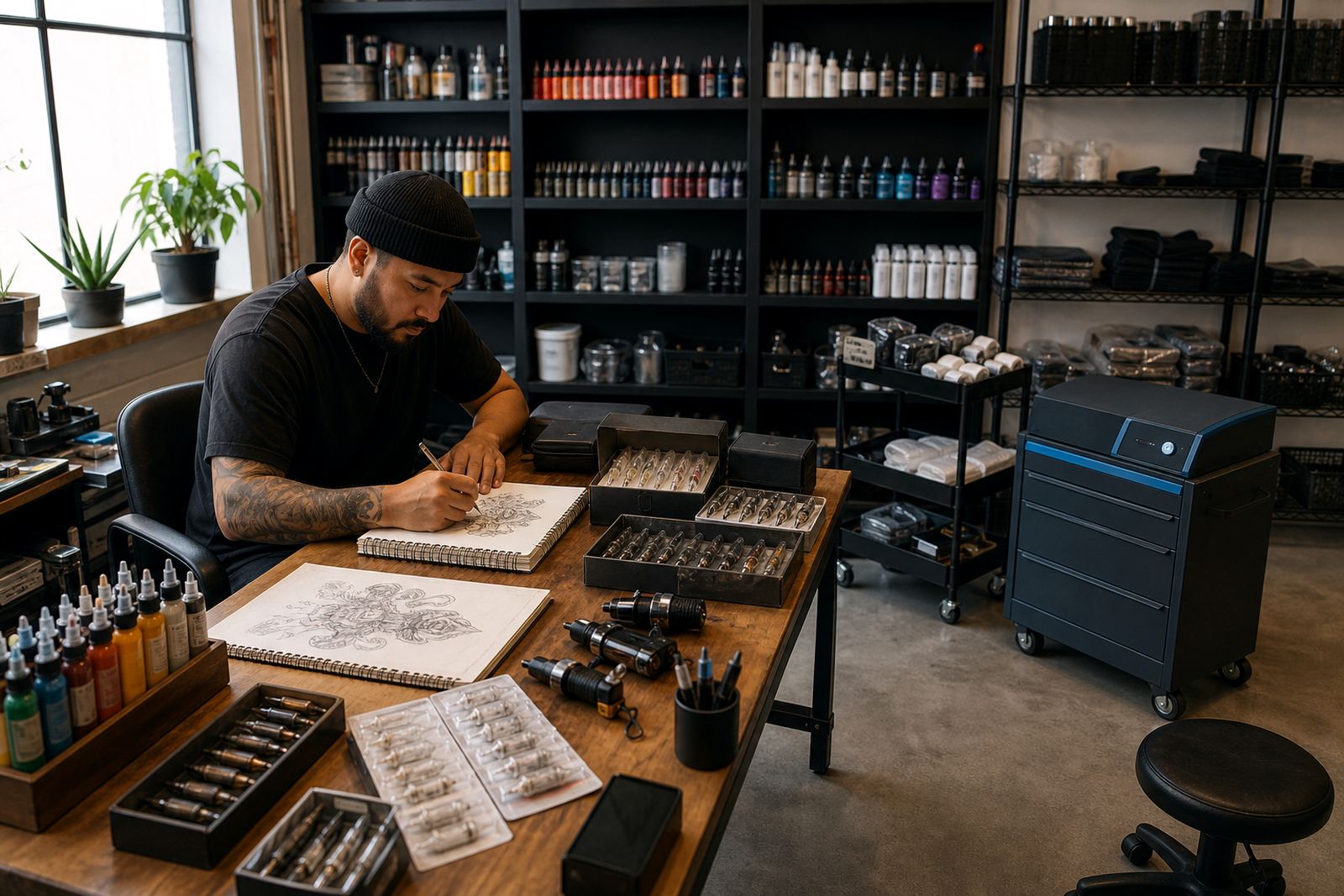
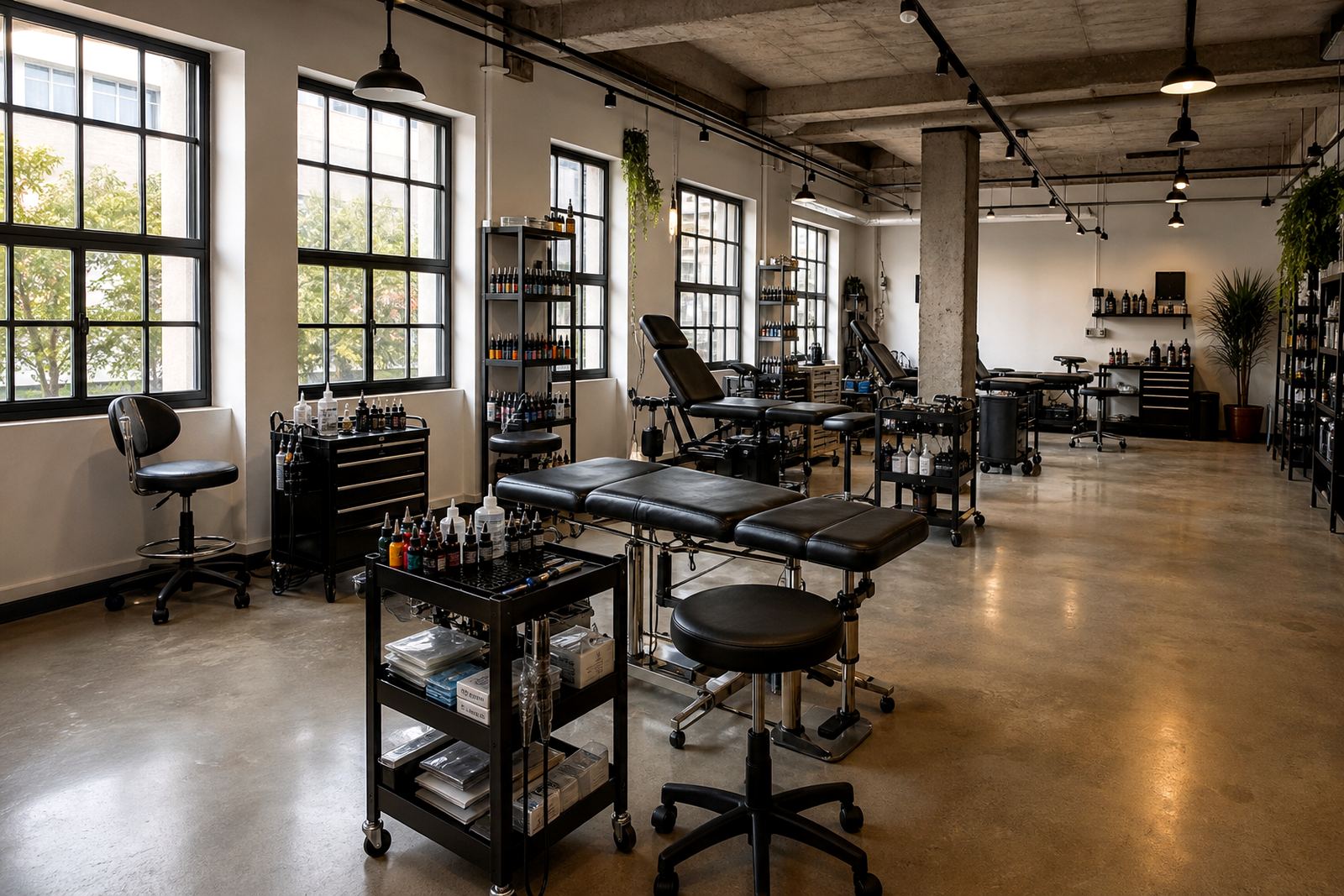
Shared tattoo floors in Cape Town, Johannesburg, Durban, Pretoria and Gqeberha often run several stations at once, with each artist needing a steady flow of inks, cartridge options, needles, clip cord or battery machine support, and sterile single-use supplies. The stock plan has to suit the actual rhythm of the room, not just the shopping list. If one station does portraits, another does fine line work, and a third handles heavier black work, each area will need a different mix of shades, needle groupings and consumables.
A practical floor plan keeps the core items in repeatable sets. That usually means lining up the basics for each station before the day starts, then holding shared back-up stock in a clean store area. In coastal towns, sealed storage matters too because humidity can affect packaging, labels and how tidy a shelf stays through the week.
- Pre-paired ink sets for each station style
- Needle and cartridge groupings matched to common line, shade and colour work
- Single-use barriers, trays, wipes and rinse cups stored in one place
- Dedicated storage for unopened stock and fast-moving reorders
How to group inks for multiple artists
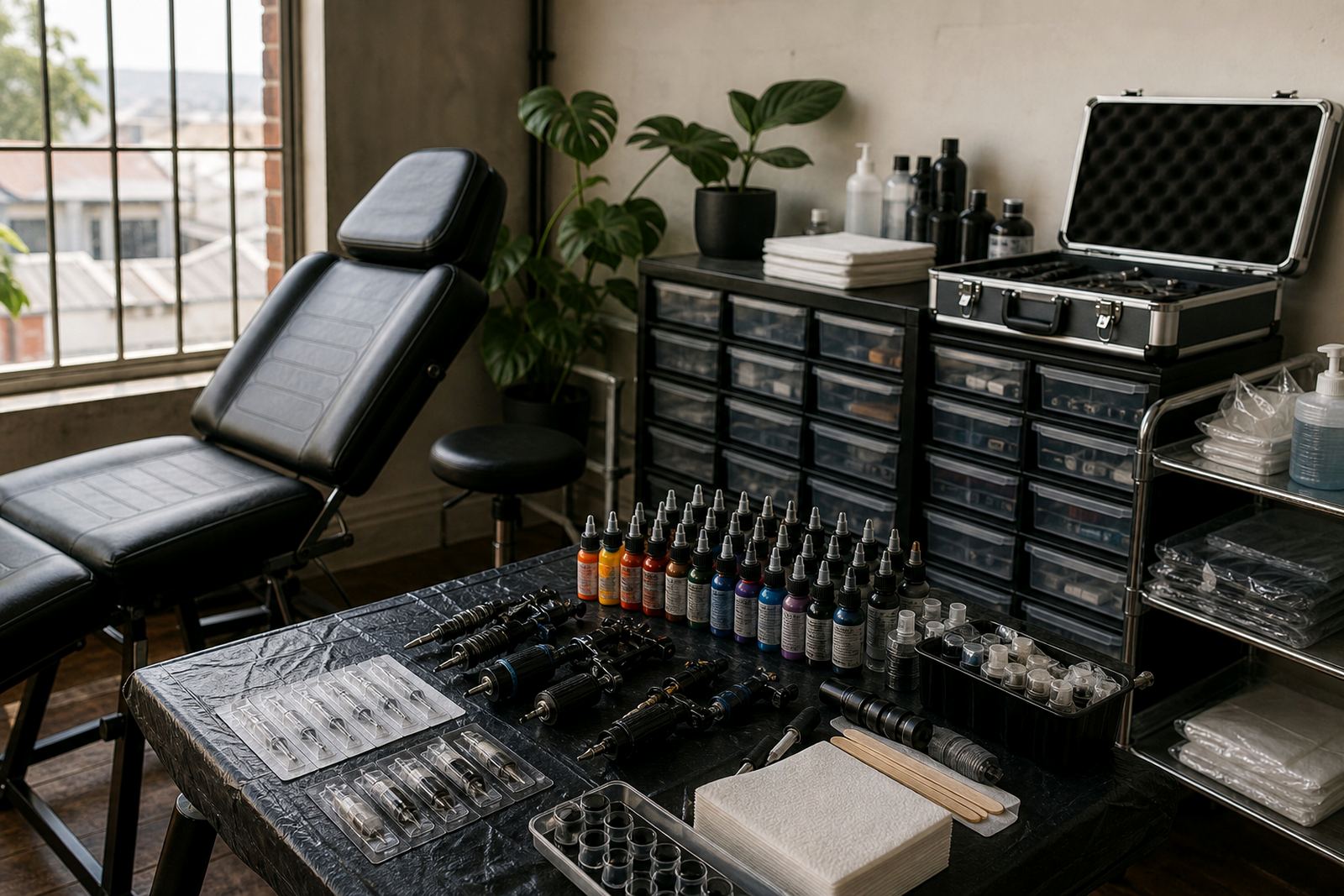
Inks are easiest to manage when they are grouped by use, not just by colour family. A floor with several artists may need separate sets for lining, shading, black and grey, colour packing and touch-up work. That stops people from pulling from the wrong shelf in a rush. Clear internal labels also help when two or three artists are opening bottles and setting out caps at the same time.
For studios with regular walk-ins or booked days, it helps to keep duplicate sets of the colours used most often. That avoids bottlenecks when one station uses more warm tones and another goes heavy on cooler shades. Put the most-used bottles at eye level and keep slower-moving colours in secondary storage. If your room is compact, use shallow shelving and front-facing bins so staff can see what is low before the next stock run.
- Group by station type, not by personal preference only
- Separate high-turn shades from special-use colours
- Keep unopened bottles in a cool, dry store with clear batch rotation
- Use labelled trays for each artist when the floor is fully booked
Needles, cartridges and machine pairings that make sense
Needles and cartridges work best when they are grouped by the kind of line or shading they support, then matched to the machine setup the artist already uses. A shared floor often needs more than one grouping size, because some artists want tight liners while others prefer wider groupings for shading and colour packing. Having the right spread on hand saves time and avoids opening the wrong pack during a busy shift.
Keep common pairings together in the same drawer or tray. That makes it easier for a senior artist, apprentice or floor assistant to grab the correct supply without mixing up line work and shading stock. On larger floors, it also helps to separate disposable grip covers, clip cord covers and other sterile single-use items from the machine storage area so the bench stays uncluttered.
- Fine grouping cartridges for line work and detail passes
- Mid-size groupings for general shading and everyday studio use
- Larger groupings for solid fill and broader colour packing
- One storage point for needles, cartridges and the matching single-use accessories
Layout advice for stations that work under pressure
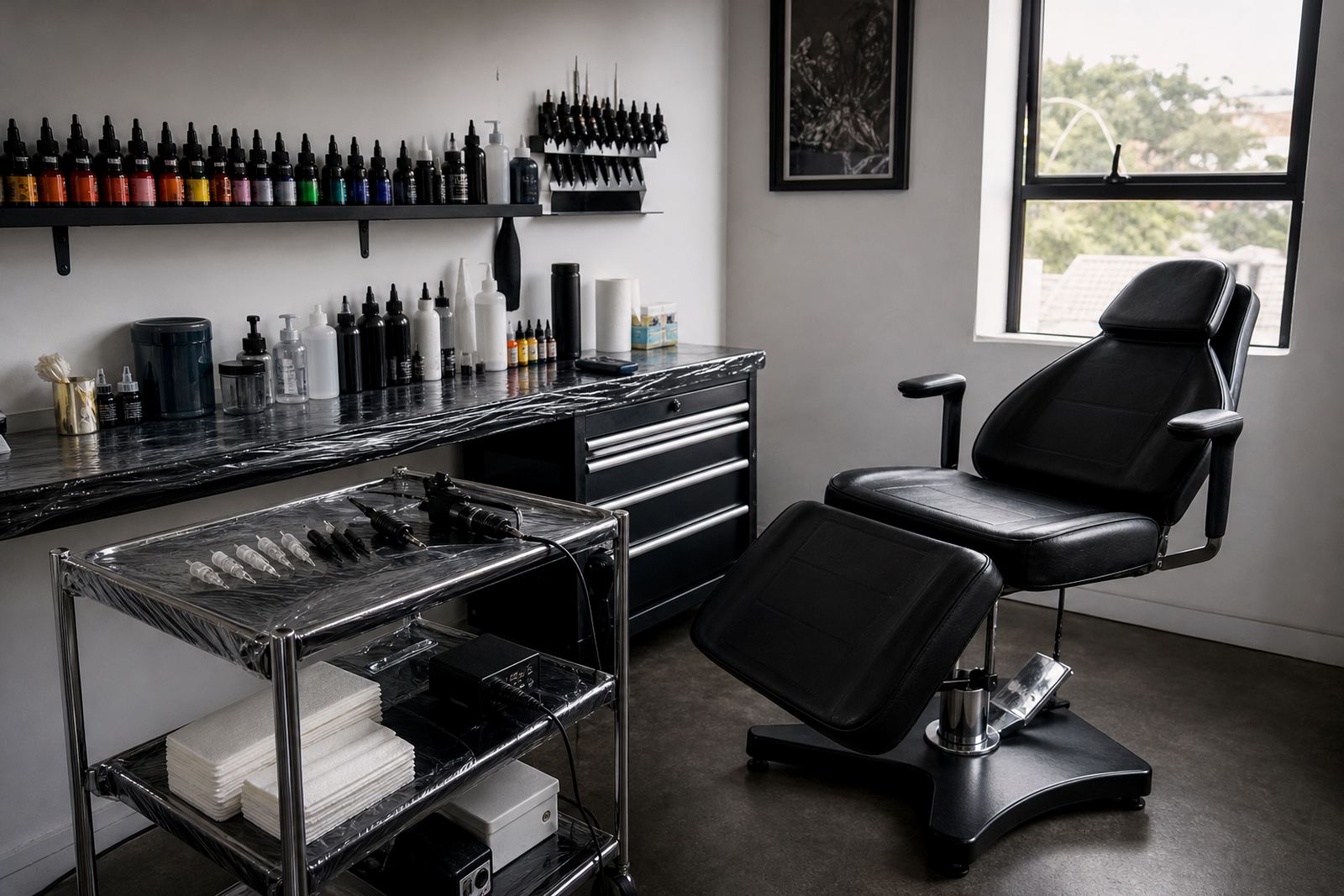
A multi-artist room works better when every station follows the same basic layout. That means the ink set, rinse area, sterile consumables, machine stand and waste point all sit in the same relative position from station to station. When artists move between days or cover for one another, they do not need to relearn the room. It also reduces unnecessary reaching across other stations, which keeps the floor calmer during a full booking list.
Use the main store as the control point and the stations as the working point. That way the daily issue box can be topped up once, then checked off against the booking sheet. In South African studios where power interruptions or generator use are part of the routine, keep charging and battery stock organised too if the machines depend on them. Where the setup is mains-based, the load planning should leave room for safe cable routing and clear surfaces.
Good floor planning usually includes:
- One standard station layout for all active workspaces
- Clear separation between clean stock and used items
- Accessible shelves for fast-moving consumables
- Low, stable storage that will not tip when staff are moving quickly
Common mistakes on a shared tattoo floor
The most common problem is overbuying the wrong mix. A studio might spend too much on one line of cartridges and not enough on the sizes that get used every day. Another issue is loose storage, where inks are kept open on mixed shelves and nobody can tell what needs restocking until the last minute. That creates delays and unnecessary waste.
Another mistake is treating every station the same when the work is not the same. If one artist does a lot of small detail work and another does solid fills, they should not be pulling from the same exact stock pile. It also helps to set one person to oversee order checks, because mixed responsibility often means missing cartons, duplicated orders or stale stock sitting at the back of a shelf.
- Buying by habit instead of actual station use
- Mixing open stock with unopened supply boxes
- Leaving cartridges and needles unlabelled once packs are opened
- Ignoring rotation, especially for slower-moving inks and consumables
Budget bands for floor planning in Rand
Budgeting for a shared floor depends on the number of active stations and how broad the service range is. A smaller studio with two to three stations may start with a tight consumable plan and a limited ink palette, while a busier floor with four or more artists usually needs a wider spread of cartridges, needles and sterile supplies. The aim is to cover the week without tying up too much cash in slow stock.
As a rough working range, a lean starter restock for a small shared floor can sit in the low thousands of Rand, while a fuller multi-station supply plan can move into the mid or upper tens of thousands depending on the stock mix. A proper range grouping exercise helps narrow that down, because the right plan often cuts waste and repeat courier costs. For studios along the coast, sealed storage and replacement stock are worth factoring in from the start, since humidity and busy turnover can make packaging and shelf life management more demanding.
When setting a budget, focus on:
- Fast-moving inks and the sizes used every week
- Needles and cartridges matched to real station demand
- Single-use supplies for each active bay
- Emergency back-up stock for busy booking periods
Stock control that suits a studio team
A shared floor runs best when the stock process is simple enough for the whole team to follow. That means one clear list for inks, one for needles and cartridges, and one for the single-use and hygiene items that are replaced often. When the same person does not handle every order, the list has to be obvious enough for operations, support and floor staff to read at a glance.
Studios in Observatory, Cape Town and across South Africa often work with a mix of new artists and long-term staff, so the system must be easy to hand over. A neat stock setup also makes it easier to plan larger orders for delivery to Cape Town, Johannesburg, Durban, Pretoria, Gqeberha, Stellenbosch, Bellville and Somerset West.
For multi-artist floors, the best stock control is not the biggest one. It is the one that stays organised when the room is full.