
When the booking sheet starts filling fast
Weekend trading in a tattoo studio is rarely gentle. A few extra walk-ins, longer sessions, touch-ups and last minute changes can turn a tidy station into a rushed one if stock is not grouped properly. For studios in Observatory, Cape Town and across busy city centres, the best pre-weekend plan is to sort the order by station use rather than by product type only.
That usually means checking which inks are used most often, how many needle groupings and cartridge types are needed for the booked work, and whether there are enough sterile single-use items to cover the full run. It also helps to keep cleaning and barrier supplies close to the station so an artist does not waste time moving across the room between clients.
- Set aside the inks used most often for line work, shading and colour packing
- Count needle groupings and cartridge sizes against actual bookings, not guesswork
- Keep sterile wraps, wipes, clip cord covers and other single-use items in the same zone
- Make sure storage is neat enough that busy hands can find the right item quickly
Typical set-up for a busy Friday and Saturday
A weekend-ready studio usually works best with a clear split between machine supply, cartridge supply, pigment storage and hygiene stock. Some artists prefer a compact station tray with only the exact items needed for that shift. Others like a wider support table with extra reserves for back-to-back appointments. Both can work well if the layout is consistent.
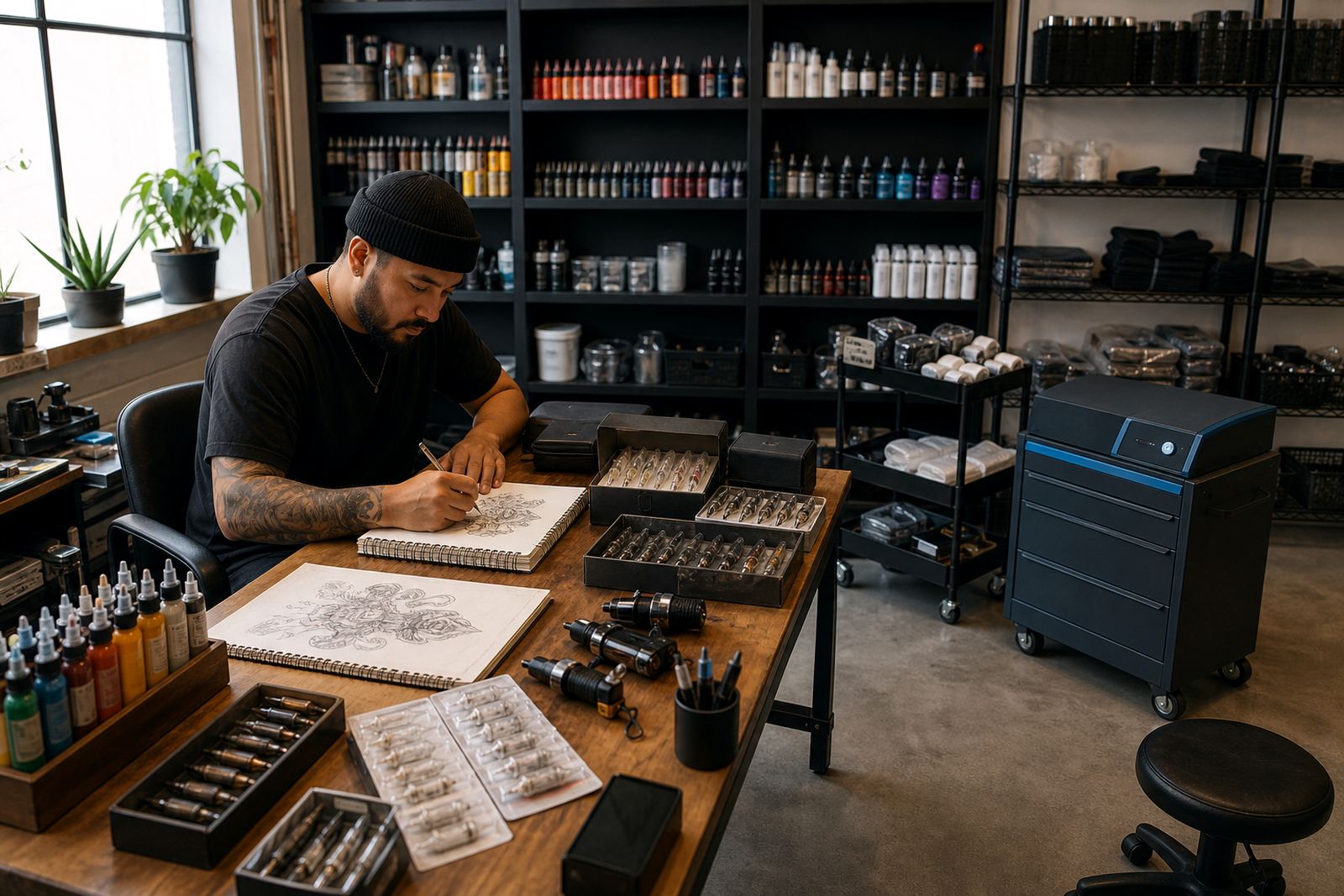
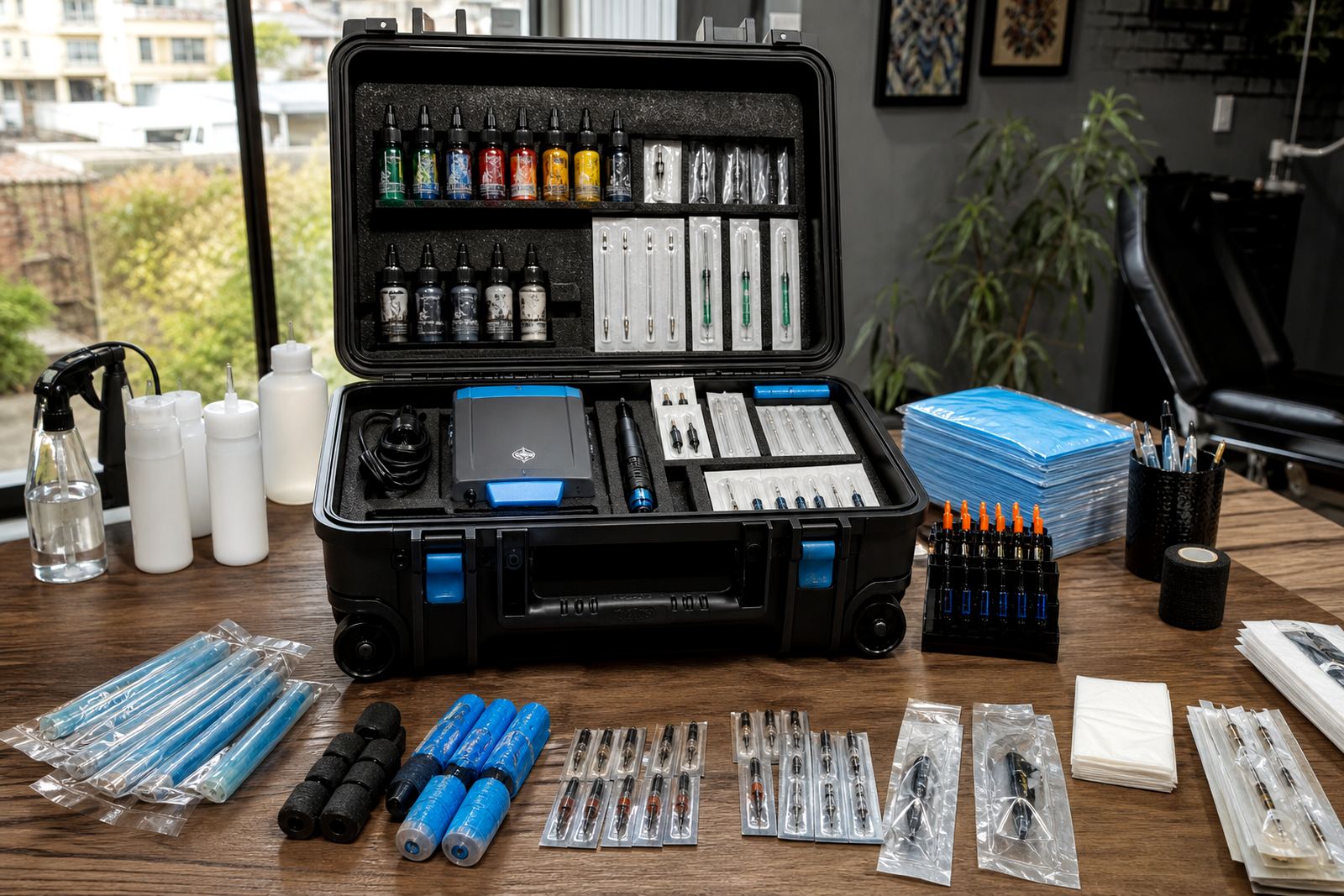
For a busy period, a practical stock mix often includes tattoo inks in the shades used most often, a range of needle groupings for lining and shading, cartridge groupings for different needle counts, disposable ink caps, barrier film, gloves, clip cord sleeves, surface covers, cups, spray bottles and sealed waste bags. Storage boxes should keep bottles upright and protected from heat and accidental knocks, especially in coastal humidity where packaging can take a beating over time.
- Ink bottles grouped by shade family and usage frequency
- Needles and cartridges packed by grouping and count so reordering is easier
- Machines checked with the matching grips, caps and power leads where relevant
- Single-use supplies packed in sealed, easy-access bundles for each station
Layout planning that saves time between clients
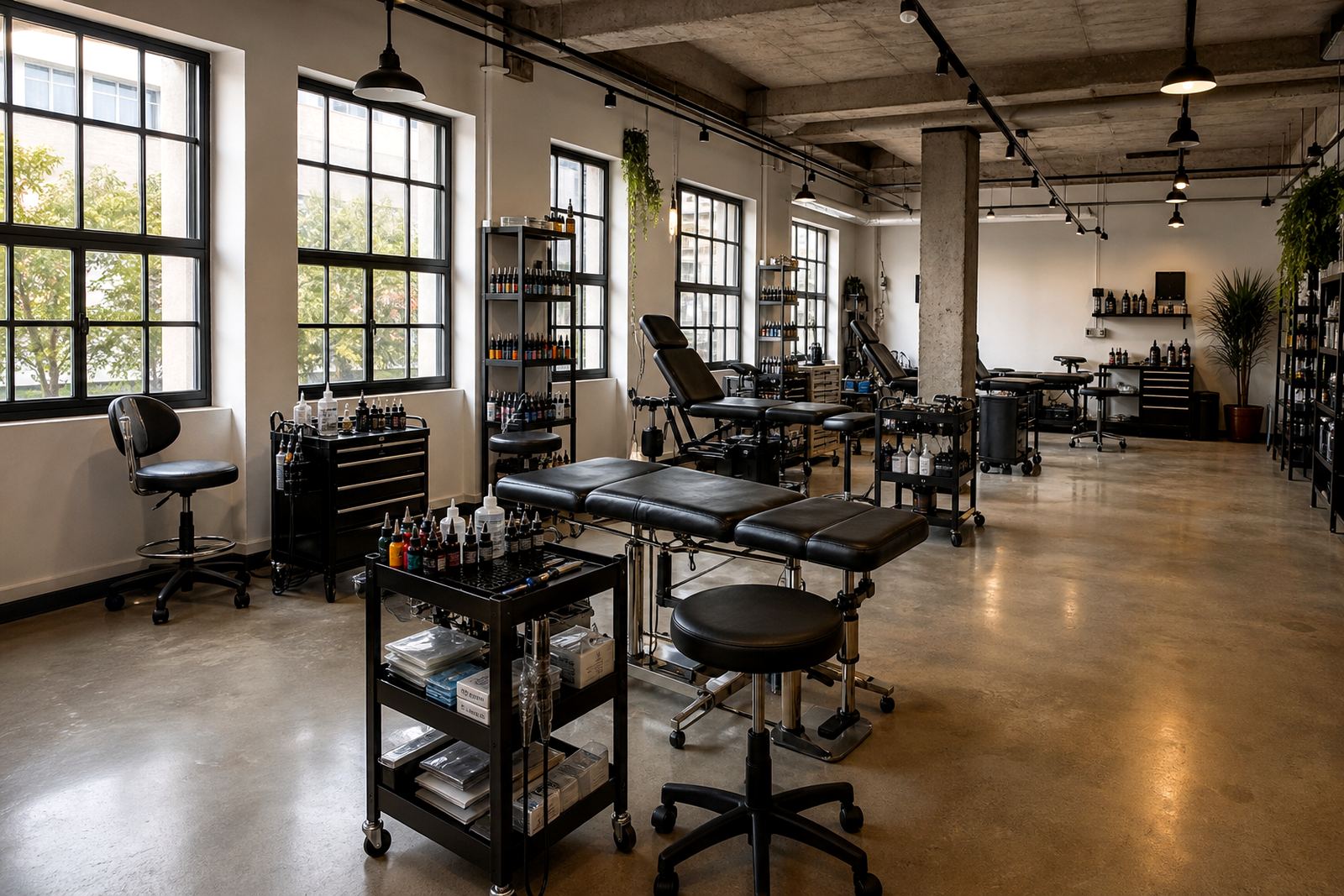
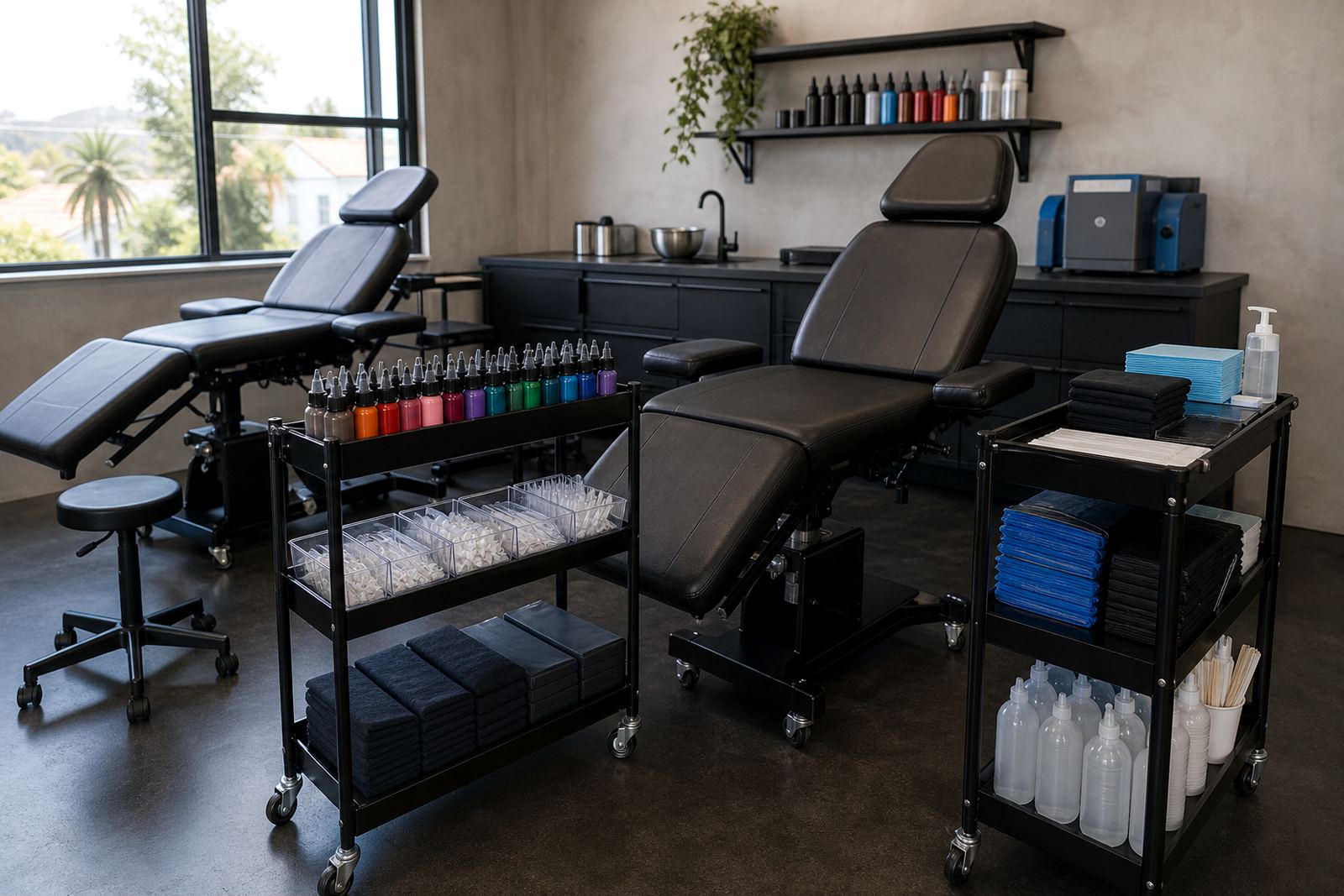
A weekend layout should reduce movement. The more a station is used, the more important it is to keep the sequence steady: setup, tattooing, wipe-down, reset. If needles, cartridges and inks are stored in separate corners of the room, the artist spends too much time crossing back and forth. A tighter station plan keeps the most-used items within reach and leaves the less-used stock in the main storage area.
We often see studios do better when they label drawers or tubs by station use rather than by vague categories. For example, a lining drawer, a shading drawer and a colour drawer makes it easier for a team to work quickly on Saturday when the room is full. Where several artists share stock, a simple stock sheet helps prevent double ordering and keeps the weekend run from eating into the next week's supply.
Local delivery routes matter too. Studios in Cape Town, Stellenbosch, Bellville, Somerset West, Johannesburg, Durban, Pretoria and Gqeberha often need the same core items but in different quantities depending on appointment volume. A good plan allows for the region’s pace, the studio’s size and the number of active stations on shift.
Common mistakes that slow a packed weekend
The biggest problem is usually not the machine or the ink, it is the order in which stock gets managed. Many studios leave replenishment too late and then have to make quick fixes on Thursday evening. That leads to mismatched cartridge counts, missing needles in a needed grouping, or one artist borrowing from another station mid-session. It can also mean overbuying items that already sit untouched in storage.
Another common issue is poor separation of sterile single-use items from reusable equipment. A busy room needs a clear system so the right consumable goes to the right station without confusion. Storage should also stay dry, clean and orderly. Follow local health regulations for studio handling, disposal and cleanliness at all times, and keep your internal process consistent across the team.
- Leaving restock checks until the last minute
- Ordering only by habit instead of checking actual weekend bookings
- Mixing station stock and main storage stock in the same tray
- Keeping too many loose items on open shelves where they can get dusty or damaged
Budget ranges for a weekend-ready stock plan
Weekend prep budgets vary a lot depending on how many stations are active and how much work the studio expects to handle. A small studio covering a light booking list may only need a modest top-up of inks, cartridges, needles and consumables. A busier shop with several artists working full day shifts will need more depth in every category, especially if there are colour-heavy bookings or longer appointments.
As a rough working guide, a lean weekend top-up may sit in the low thousands of Rand, while a broader stock replenishment for multiple stations can move into a larger mid-range budget. If the order includes a wider range of needle groupings, cartridge types, storage gear and hygiene consumables, the total climbs further. The best way to control spend is to match the purchase to real use, not to a general wish list. That keeps cash tied up where it is needed and avoids extra stock sitting idle.
For studios that prefer tighter control, a standing stock list with seasonal restock planning makes weekend ordering easier. It also helps with consumable reorders, bulk order support and substitution decisions when one item needs to be swapped for a suitable alternative.
What a practical weekend order usually includes
A strong weekend order is not only about buying more. It is about choosing the right combination of products so the team can work without interruptions. That means checking which machines are in use, which needle or cartridge groupings match those machines, and which sterile supplies must be opened fresh for the next run of clients. It also helps to include storage materials that keep the back room organised after the rush dies down.
In practice, many studios build their order around a few core buckets and then adjust by booking list. That keeps the counter clear, the station ready and the back stock under control.
- Tattoo inks in the colours and shades booked most often
- Needles and cartridges grouped by use, with enough depth for repeat sessions
- Machine support items where needed, such as grips, barriers and power-related consumables
- Single-use hygiene stock for station reset and clean handling
- Storage tubs, labels and packing supplies for a tidy back room
For studios working through a full weekend roster, the goal is steady flow. Not a crowded shelf, not a scramble on Saturday afternoon, just stock that is ready where it should be.