
What a shared hygiene point handles during a session
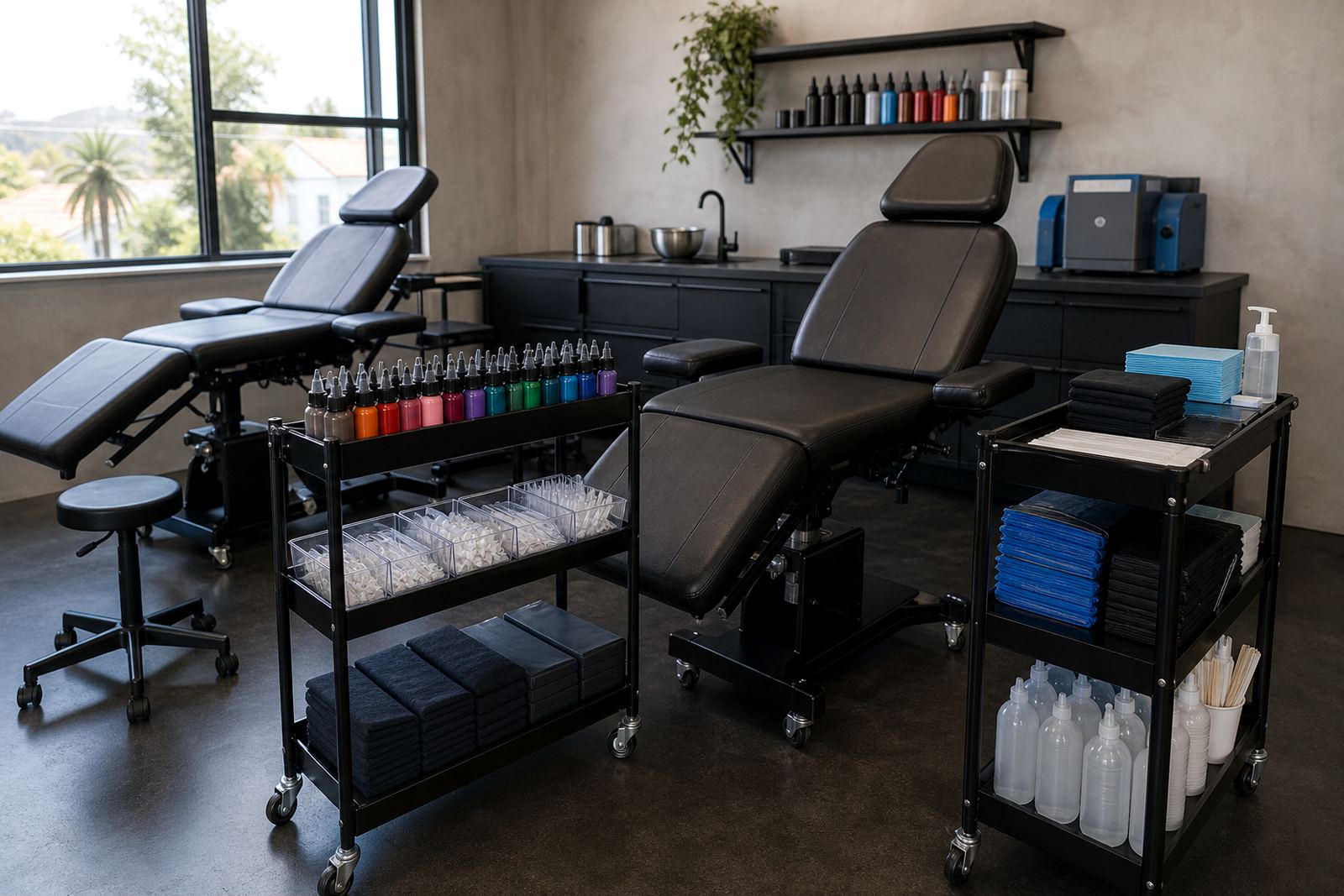
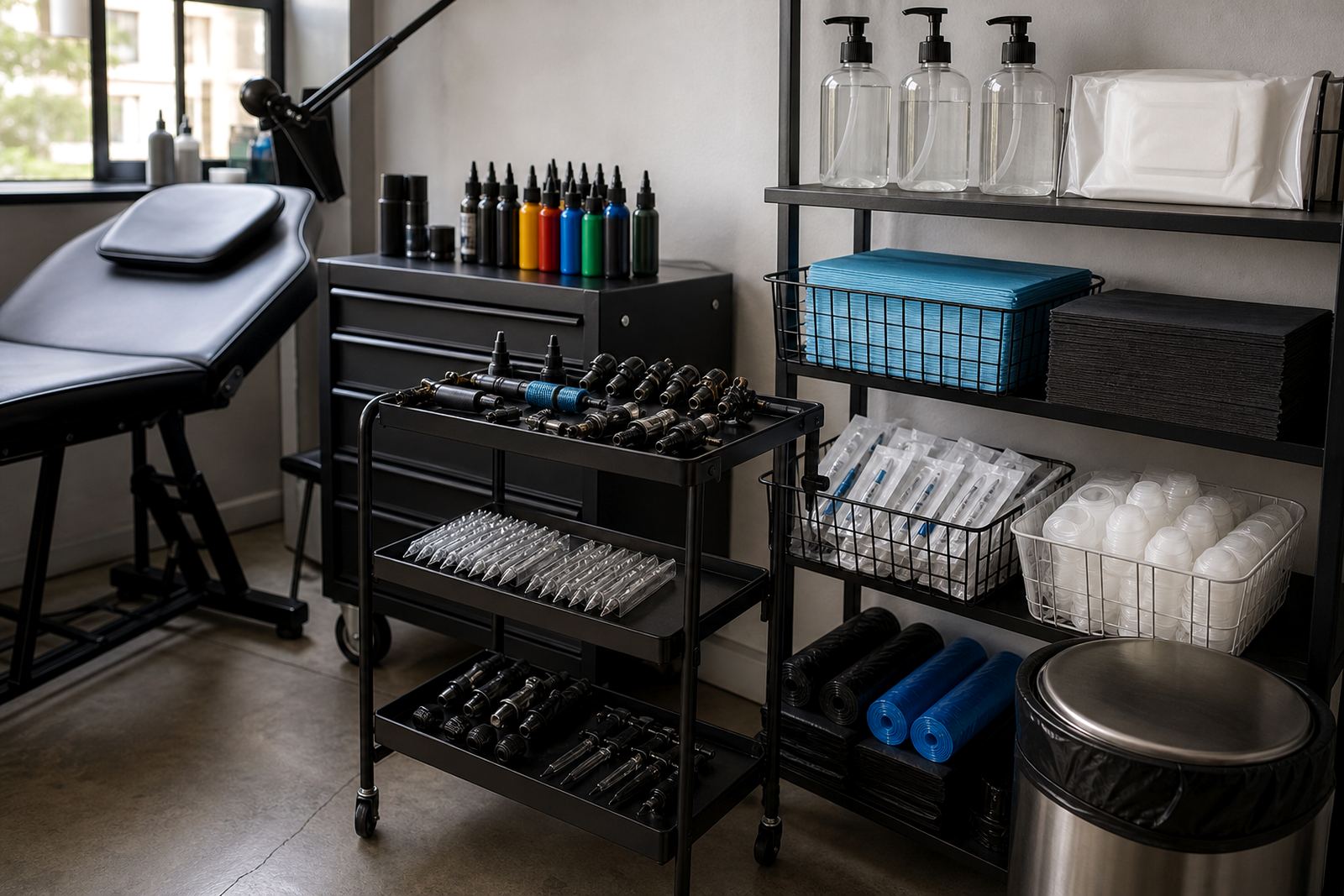
In a working studio, the shared hygiene point is the place where the small but constant items live. That includes barrier film, clip cord covers, machine sleeves, spray bottles, paper towels, surface wipes, disposable cups, wash bottle sets, glove boxes and waste liners. When these items are grouped together, artists spend less time walking back and forth and more time keeping their station steady.
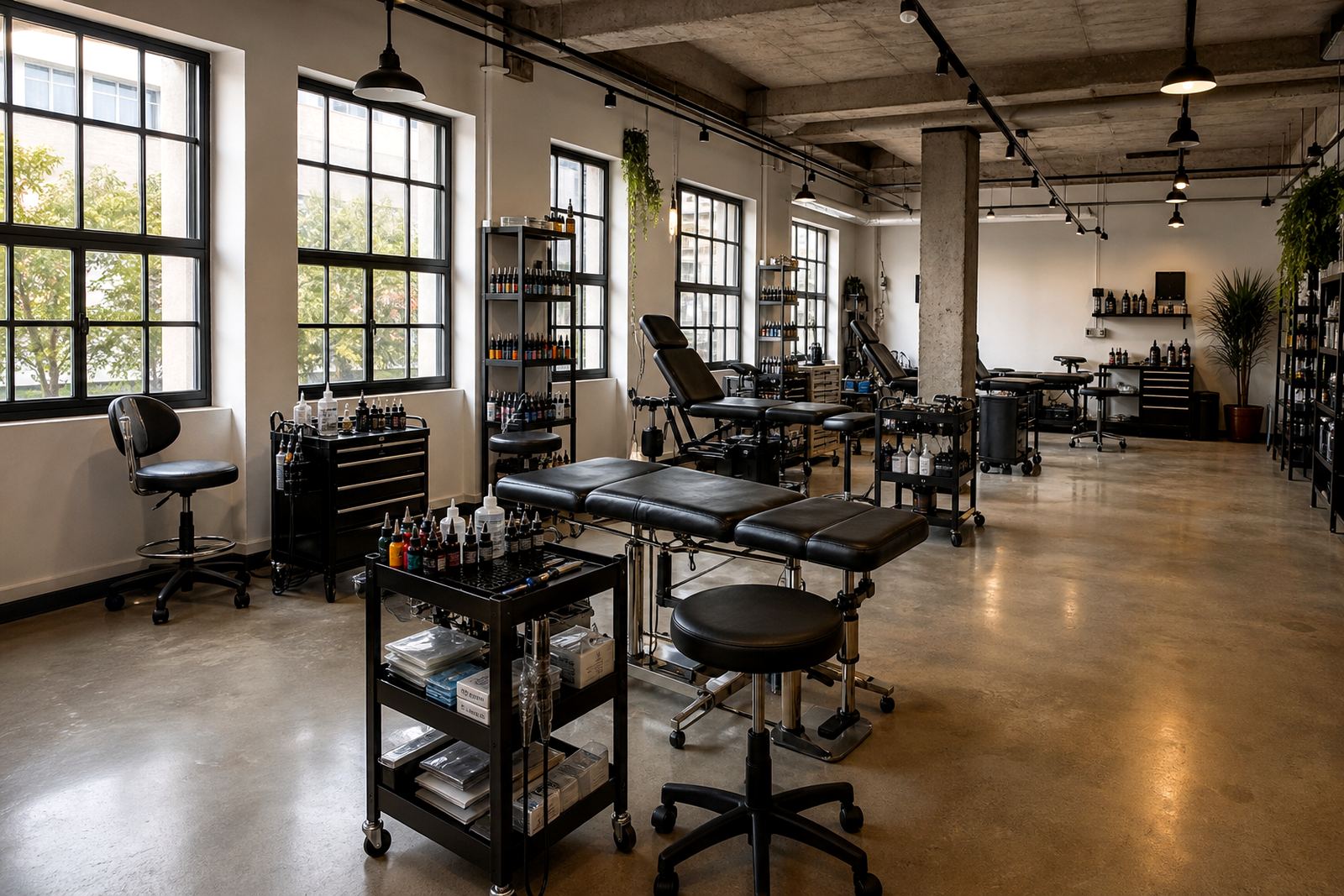
The layout usually suits a central bench or wall-mounted shelf near the prep area. In larger studios, a second point may be set up near the back-of-house stock shelves so the front station stays uncluttered. The aim is not decoration, it is control of movement, stock and cleanliness through the day.
- Barrier items for handles, cords and touch points
- Wipes and cleaning cloths for surface turnover
- Single-use consumables for set-up and pack-down
- Labelled bottles for water, rinse and cleaning use
Typical equipment grouped around the point
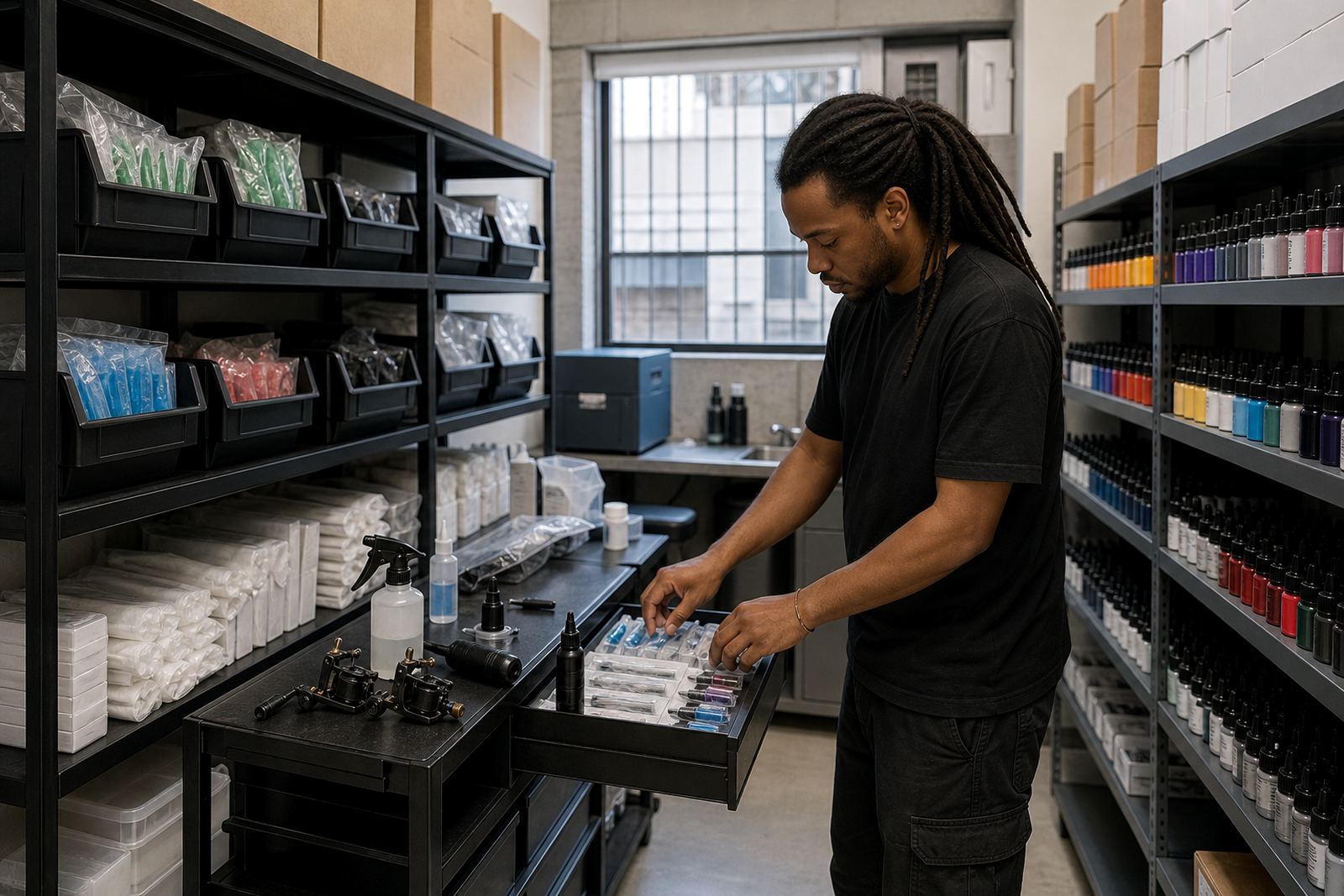
A useful shared point starts with predictable groupings. Tattoo inks can stay in a separate, shaded storage section, while needles and cartridges are kept in sealed boxes arranged by grouping size and needle configuration. Machines may be stored in padded trays or upright holders, with cables, batteries and grips kept nearby if the studio uses them. The supply area should not feel crowded, because cramped storage slows the room and makes restocking messy.
For sterile single-use supplies, sealed packs should be easy to count at a glance. That includes needle cartridges, razors, applicators, rinse cups, gauze, mask packs, aprons and clip cord covers. Many studios also keep a small range of transfer paper, skin markers and stencil wipes in the same place so the full prep flow stays together.
- Ink bottles sorted by colour family and batch rotation
- Needles and cartridges sorted by grouping and taper type
- Machines separated from wet-area consumables
- Disposables packed in labelled containers or drawers
Layout choices that work in Cape Town studios and beyond
Observatory, Woodstock and other high-traffic Cape Town studio areas often work best with compact shared points that stay close to the artist flow. In warmer coastal conditions, sealed storage helps protect paper goods and packaging from humidity. Inland, where dust can be a bigger issue, covered tubs and drawer dividers are useful. The same principle applies whether the studio is in Johannesburg, Pretoria, Durban or Gqeberha: keep the point easy to reach, but not open to every passing hand.
Wall shelving suits smaller rooms with limited counter space, while low trolleys work well when stations need to be reset during the day. If a studio runs multiple artists at once, the best plan is often one shared hygiene point per work zone, plus a central back-up stock area. That keeps the front room neat and avoids pile-ups of wipes, sleeves and empty packaging.
Local health rules and studio requirements should guide how waste is separated, how sealed stock is handled and where cleaning materials are stored. If the room layout is being planned from scratch, the practical test is simple: can an artist reach the essentials without crossing another station or leaving a clean area exposed.