
When the back room is smaller than the stock list
Many studios in Observatory, Cape Town and other city areas work with a narrow storeroom, one spare cupboard or a section of shelving behind the prep area. The trouble usually starts when tattoo inks, needles, cartridges, clip cords, machine parts and sterile single-use supplies all end up on the same shelf. In a small room, that mix leads to double ordering, slow stock counts and boxes getting pushed into corners where they are hard to reach.
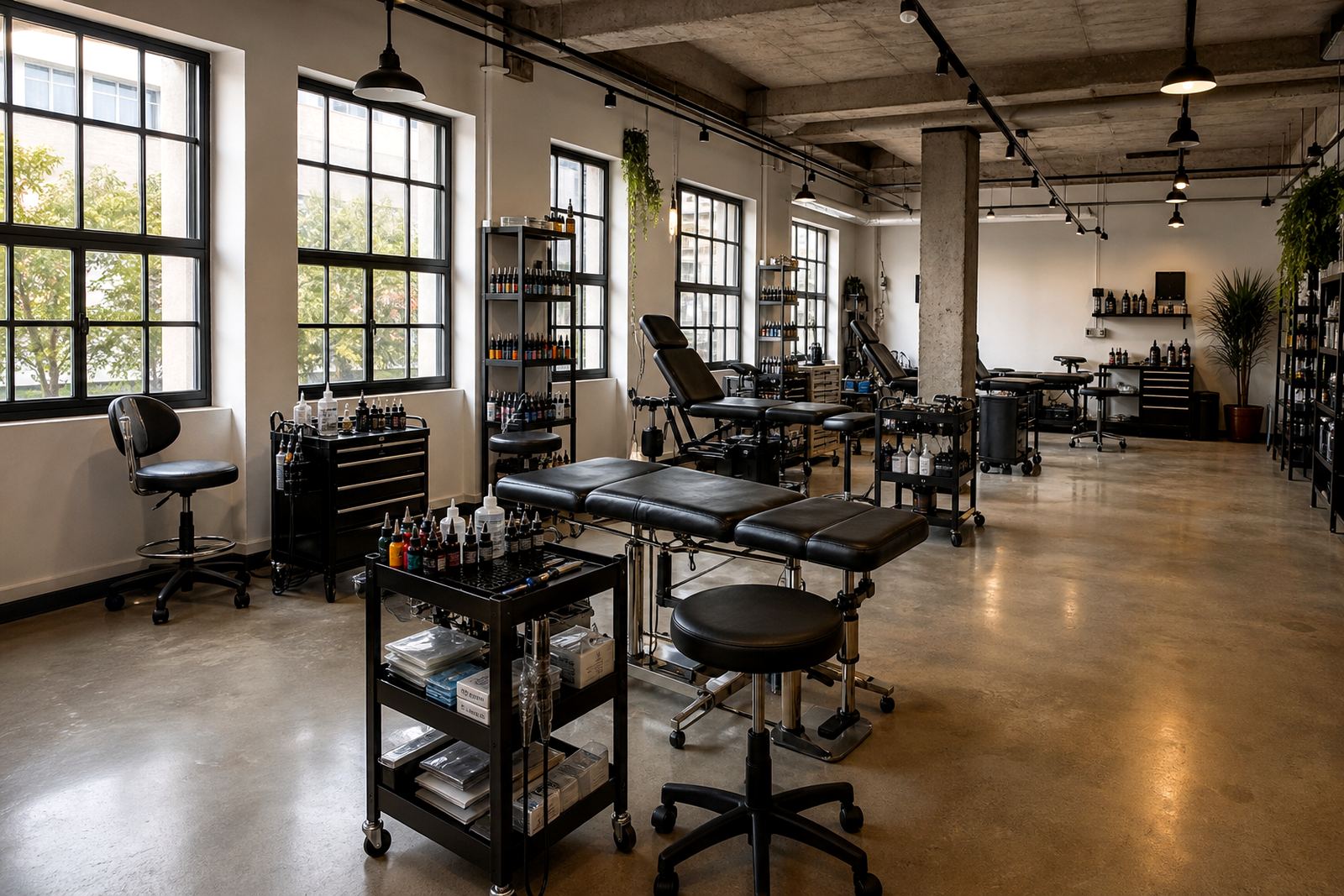
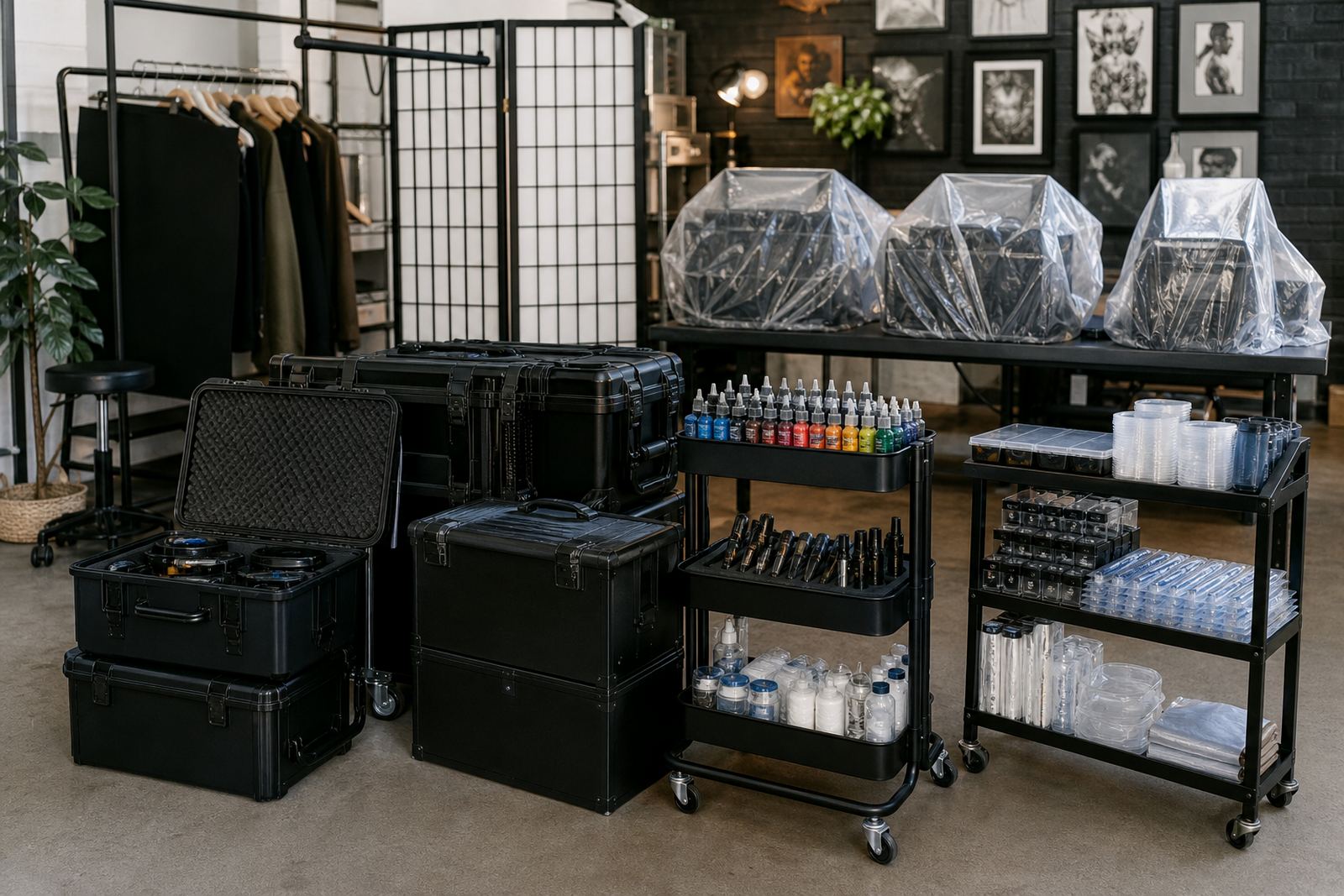
A better plan is to split the room into clear zones for fast-moving consumables, long-life stock, fragile items and bulk back-up packs. That way the front of the shelf carries the items used every day, while the upper or lower sections hold the slower stock. For studios serving walk-ins and booked sessions in Cape Town, Johannesburg, Durban, Pretoria and Gqeberha, this kind of zoning keeps the room workable even when the studio is busy and the floor space is tight.
A practical stock set for a compact studio
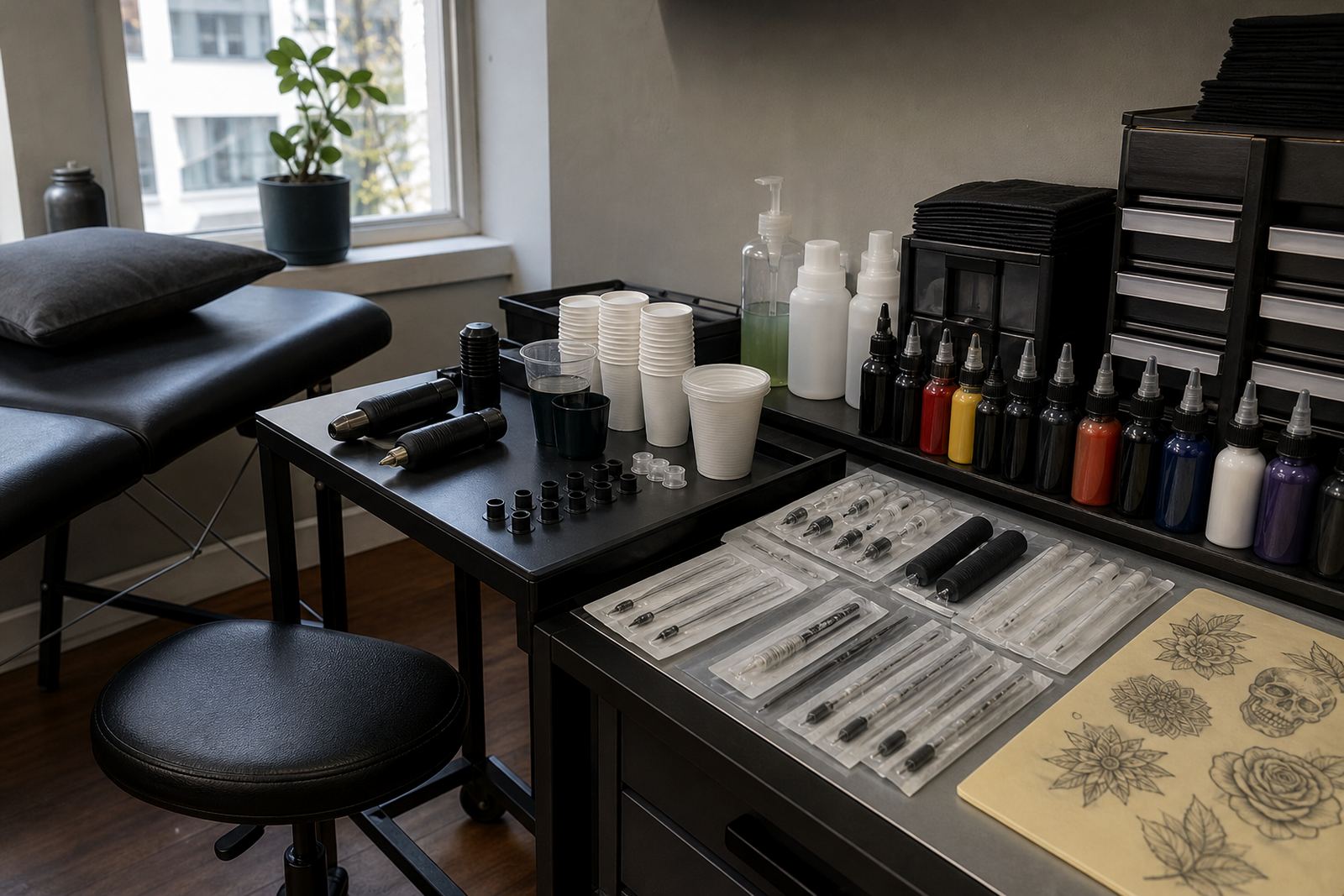
A small storage room does not need a huge range of items, but it does need the right mix in the right pack sizes. Most compact studios keep a steady core of inks, grouped needles and cartridges, grips or machine parts, single-use barriers, trays, caps, clip cord covers, gloves, cleaning wipes, clip cords, power leads, and storage containers for clean packing. Ink bottles and cartridges should be grouped by use rather than left loose by colour or size, because that makes stock taking quicker.
- Daily use items: gloves, caps, wipes, barriers, razors, clip cord covers and apron stock
- Procedure stock: cartridges, grouped needle configurations, machine parts and grip sleeves
- Storage stock: sealed ink bottles, back-up disposables, tray items and shelf containers
- Receiving stock: incoming cartons waiting to be counted, labelled and put away
Some studios also keep a small buffer for seasonal demand, especially before holiday periods when bookings rise and courier volumes can get heavier. A compact room needs that buffer to be recorded, not hidden. If it is not written down, it usually gets opened early and forgotten during the next count.
Shelf layout that saves time in a narrow room
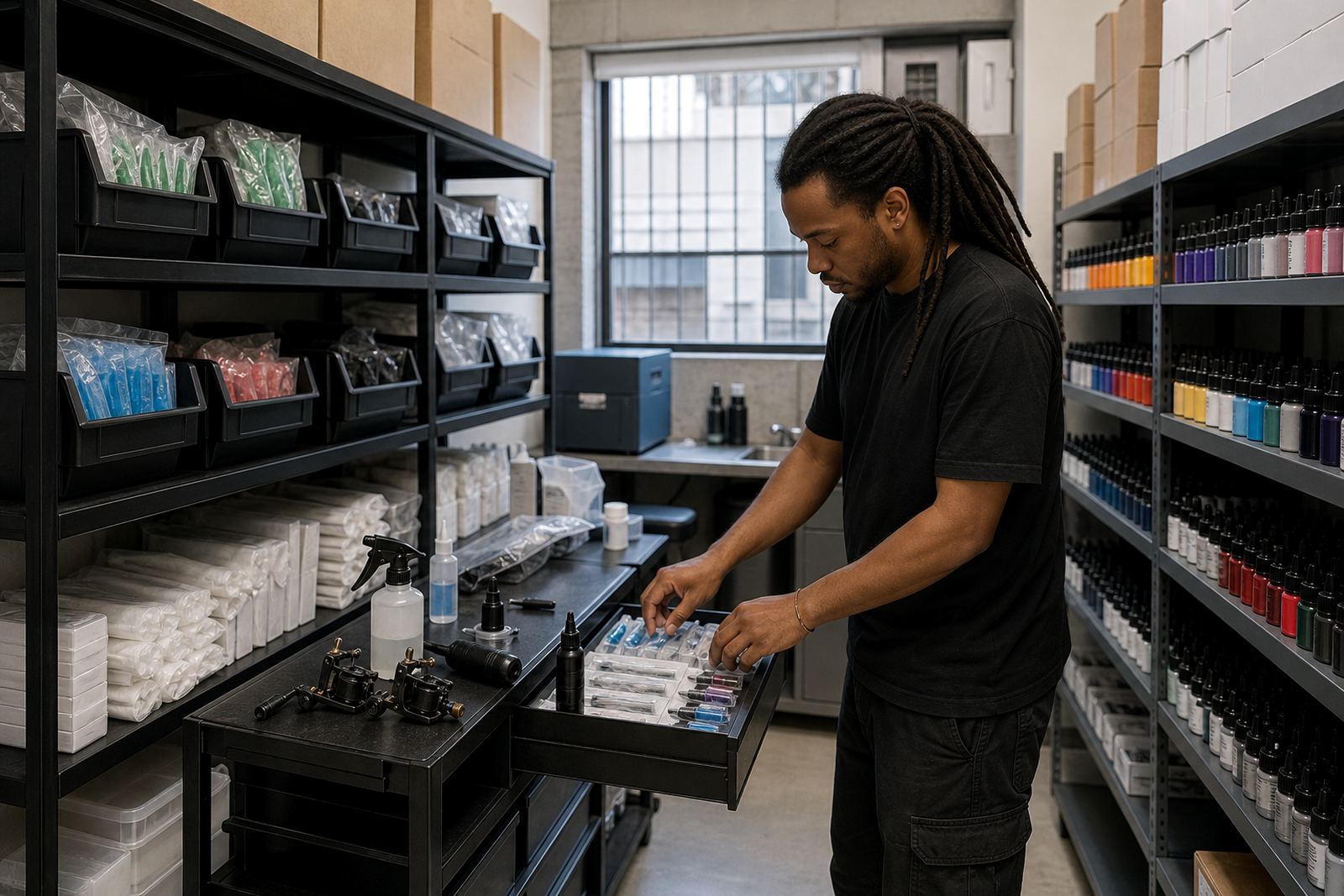
The easiest layout is a straight shelf plan that follows the order of use. The top shelves can hold slow-moving or backup stock. Mid-level shelves should hold the items the team reaches for during the day. Lower shelves work well for heavier cartons, boxed bulk items and labelled tubs. If the room has only one long shelf, split it into lanes with clear labels so each item family has a home.
In a coastal city like Cape Town or Durban, storage also needs to account for humidity and temperature swings. Sealed containers, raised shelving and dry cupboards help protect cartons and outer packaging from damp air. Keep inks upright and grouped by shade family or bottle size, and do not overpack the shelf so labels stay visible. For studios in older buildings with limited ventilation, it helps to leave a little air gap around closed stock rather than pressing everything tight against the wall.
- Use clear labels for each zone, not just the shelf number
- Keep the top shelf for reserve stock and rarely used parts
- Store cartridges and needles in closed, counted boxes
- Leave a small open area for incoming delivery cartons
Grouping inks, needles and cartridges without wasting space
One of the biggest space losses in a small storage room comes from mixed packs. A box of needles, a tray of cartridges and a bottle of ink all take different shapes, so they should not be stacked in one generic pile. Group needles by configuration and cartridge packs by grouping type, then keep each group in its own labelled tray or tub. That makes it easier to see what is low and what still has depth in stock.
Ink storage works better when bottles are arranged by bottle size and colour family, with the front row showing active shades and the rear row holding back-up stock. A small studio does not need every item opened at once. It needs one or two working rows, plus reserve cartons kept sealed until needed. That approach protects space and makes monthly counts much faster. It also helps if one person keeps the stock list while another receives deliveries, so the room stays in the same order from week to week.
Common storage mistakes that crowd a small room
In tight studio storage, the same errors tend to surface. Cartons are opened early and left without labels. Disposable supplies get mixed in with reusable machine parts. Fresh stock is pushed in front of older cartons, so the older items are overlooked. A shelf becomes the catch-all for loose parts and half-open packs, and no one can tell what is still usable.
Another common problem is ordering in the wrong pack size for the room. Large bulk packs can be useful, but only when the shelf space and usage rate match. If the room is too small, the result is clutter rather than savings. It is usually better to split the order into practical working amounts, then hold a small reserve for the next cycle. For studios handling regular delivery runs into Stellenbosch, Bellville and Somerset West, clean labelling and stock rotation matter as much as the products themselves.
- Do not mix open stock with sealed reserve stock
- Do not keep cleaning items next to clean consumables
- Do not rely on memory for cartridge counts or ink levels
- Do not let delivery cartons sit in the room after unpacking
Budget ranges that suit a compact tattoo storeroom
Budget depends on the number of chairs, the pace of bookings and how much buffer stock the studio wants on hand. A lean starter storeroom for one or two stations can often be set up with labelled storage tubs, shelf dividers and a focused core of consumables in the range of about R3 500 to R9 000. That level usually covers sorting tools, storage containers and a practical first round of stock.
A more active studio with regular client flow and several artists may need a monthly restock plan in the range of about R8 000 to R25 000, depending on ink use, cartridge mix, needle groupings and the amount of sterile single-use stock carried. Larger reorder cycles for multi-station studios can move higher, especially when the team wants a stronger reserve against busy periods. The useful part is not chasing the biggest order. It is keeping enough of the right items in the room so the shelves stay readable and the working day does not slow down.
Getting stock into a tighter system
For a small storage room, the best result comes from a simple zoning plan, a clear reorder list and regular shelf checks. InkX Tattoo supports studios with stock list help, range grouping advice, station planning, consumable reorders, bulk order support, storage planning, dispatch updates, product substitutions, seasonal restock plans, machine match help and cartridge match help. That sort of support is useful when the room is full, the shelves are narrow and every centimetre has to work.
If your studio is dealing with limited back-room shelf space, the first step is usually not adding more shelves. It is arranging the stock so each item has a place and a count. That makes the room easier to work in, easier to restock and easier to keep in line with local health regulations and the studio’s own procedures.