
Starter Station Basics For Supervised Training
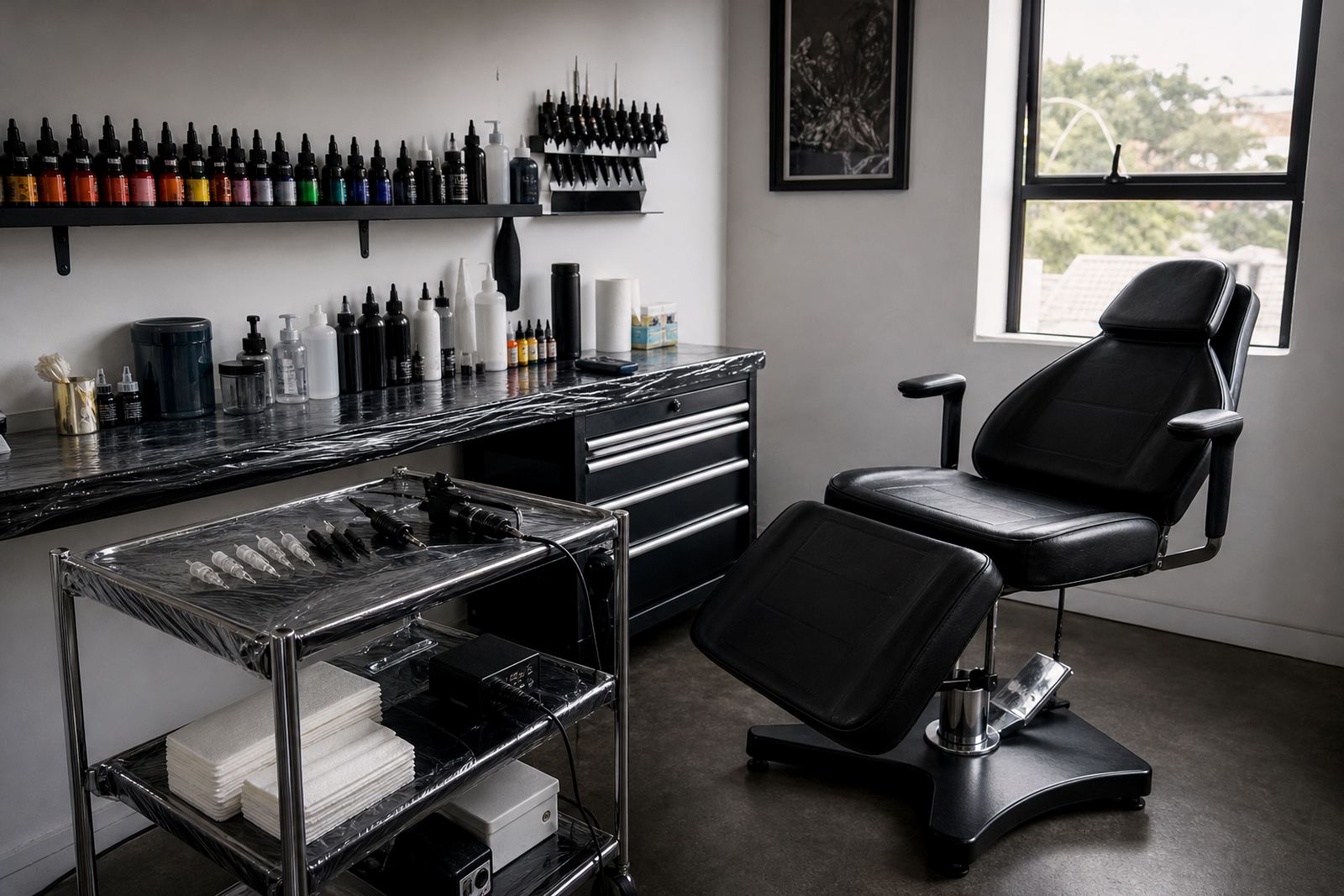
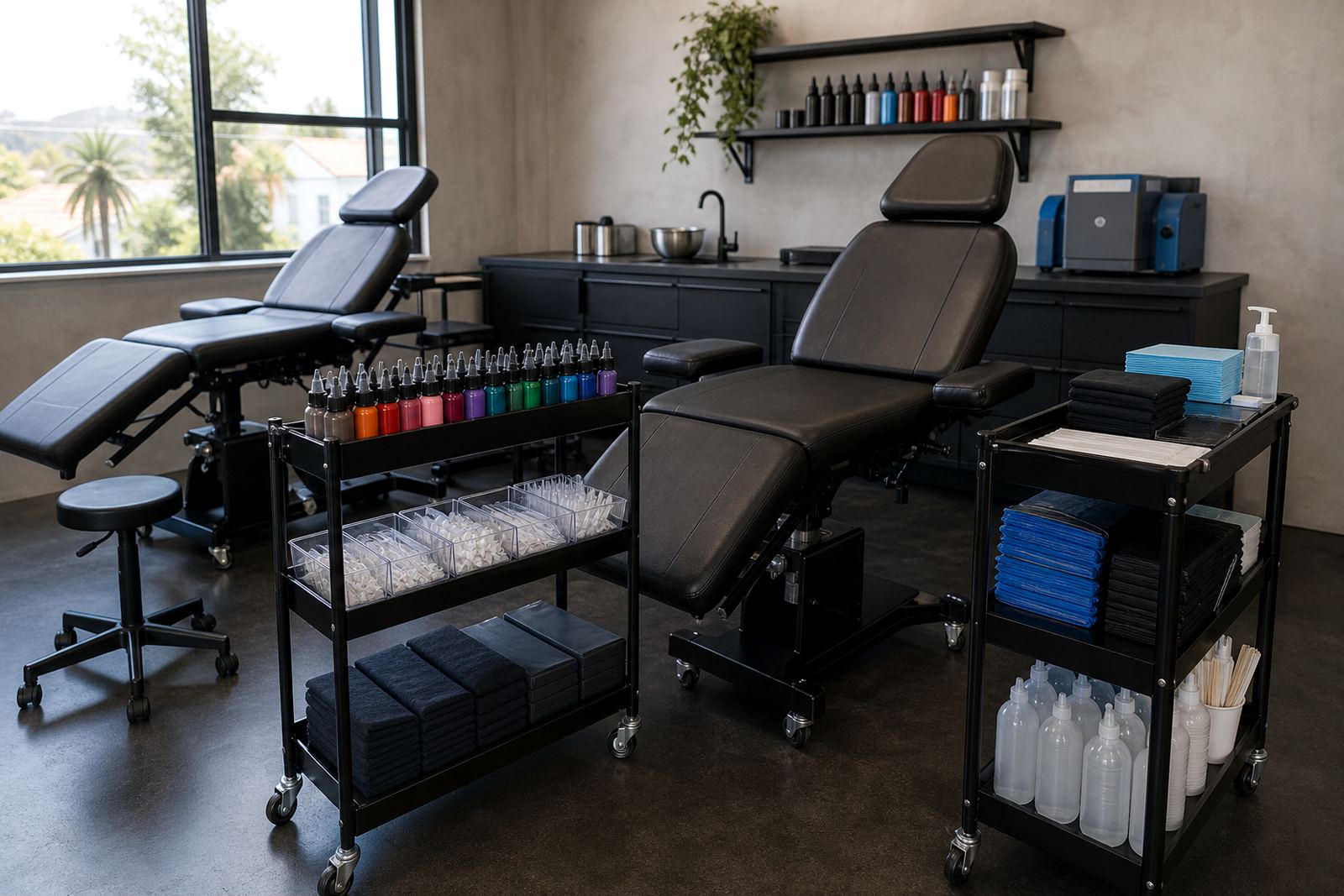
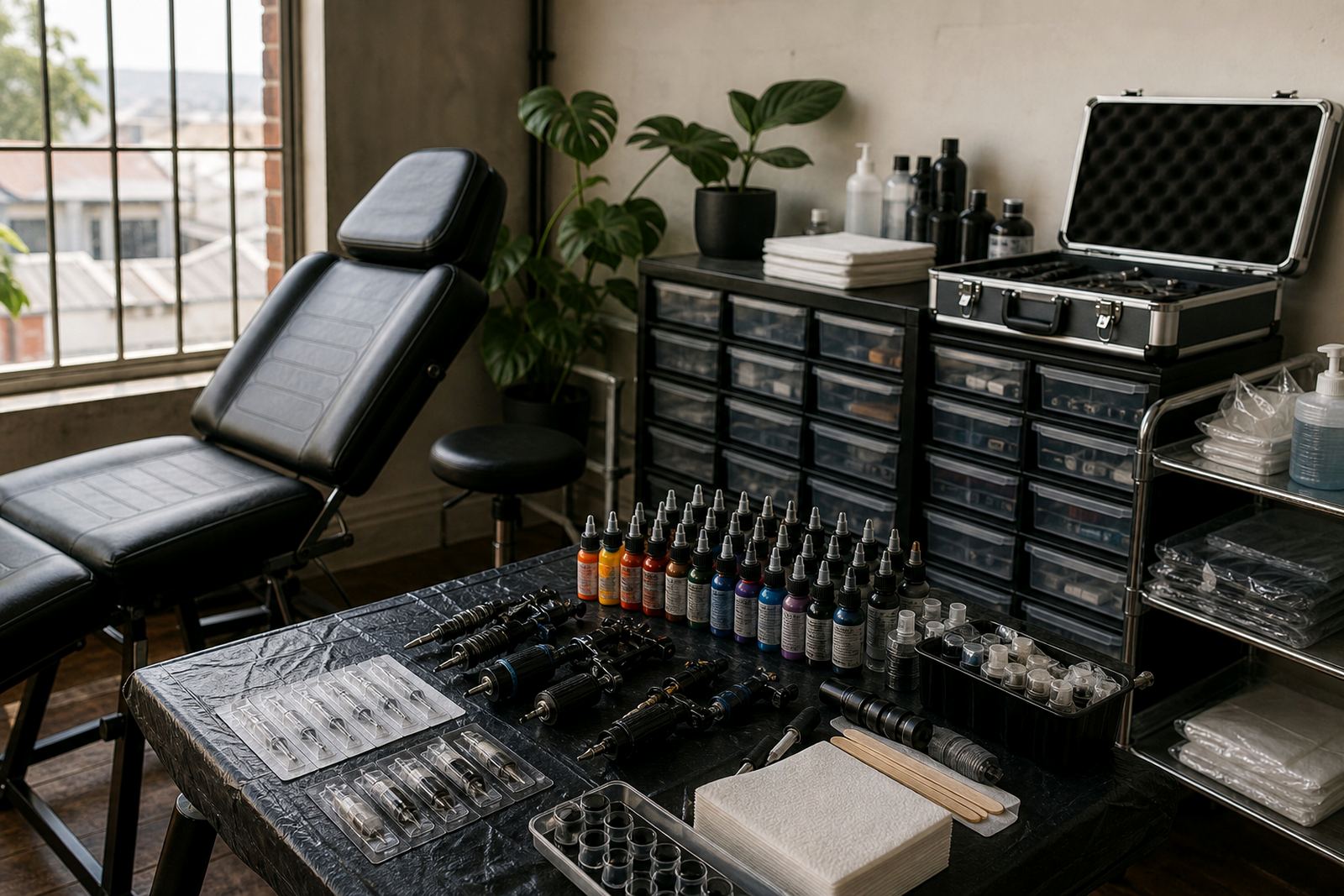
An apprentice station is usually built for supervised practice, not full production work, so the stock list should stay practical and easy to control. Most studios begin with a compact set of practice inks, a small range of needle groupings, cartridge options, machine choices for learning, barrier protection, and storage for sealed consumables. The layout should make it obvious what is open, what is sterile, and what belongs to the day’s session.
In Observatory and other busy parts of Cape Town, space is often tight, so a training station works best when each item has a fixed place. A clear surface, a rinse area, a waste point, and separate storage for clean stock help keep the station calm during supervised work. That also makes stock counts easier after a class or demo day.
- Practice inks in a limited colour range for technique drills
- Needles and cartridges grouped by liner, shader, and mag style
- Clip cords or cordless machine units where relevant
- Barrier film, clips, grips, ink caps, and disposable covers
- Sealed storage tubs or drawers for clean consumables
What Usually Sits On The Apprentice Worksurface
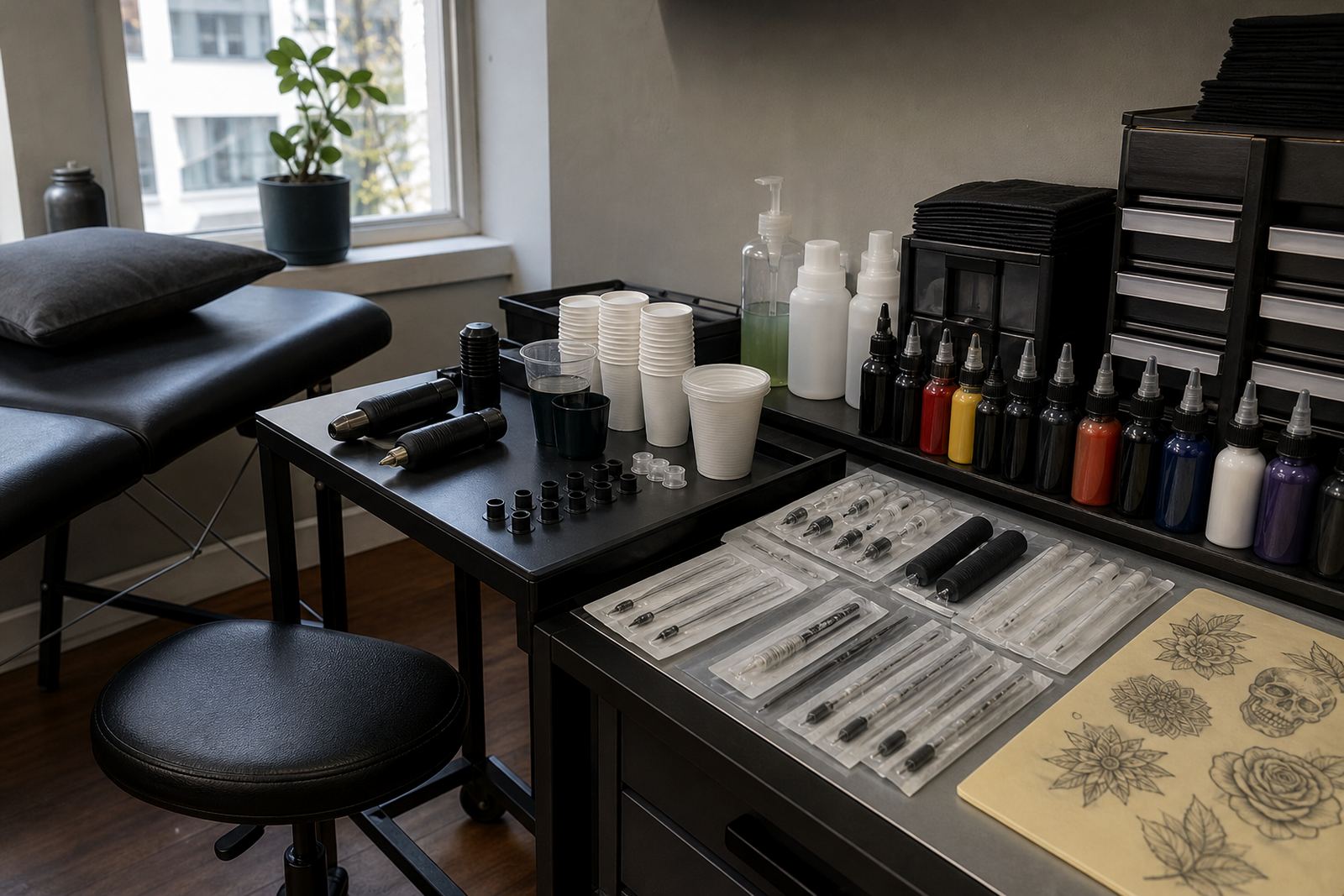
A typical apprentice station does not need a full wall of equipment. It usually starts with a machine suitable for learning line control, shade control, and hand speed, then a set of needles or cartridges selected in the sizes most often used for training. A few bottle sizes of ink, rinse cups, transfer consumables, and sterile single-use items complete the station. If the studio runs several trainees, it helps to keep each person’s set grouped by tray or container.
For stores serving Johannesburg, Durban, Pretoria, and Gqeberha, the usual order pattern is a mix of high-use consumables and a smaller number of larger items for stock holding. Studios often choose more of what gets used every day, then keep speciality items in lower quantity. That limits clutter and reduces mix-ups when several people are setting up at the same time.
- One or two machines matched to the trainee’s learning stage
- Needle groupings or cartridges in common sizes for line and shade work
- Ink caps, grip wraps, clip cord covers, and work surface covers
- Disposable razors, wipes, gloves, and similar single-use consumables
- Labelled storage for opened boxes and sealed back-up stock
Layout That Helps A Learner Work Cleanly
Good station planning is about flow. Clean items should stay on one side, used items on the other, and anything that can be contaminated should never cross back over the clean area. This matters in training rooms where people are still learning hand habits and moving around the chair more than they should. Separate containers for unopened stock, opened stock, and waste keep the workstation easier to manage.
In coastal spaces such as Cape Town and Gqeberha, humidity can affect how tidy a station feels over a long day if storage is poor. Closed containers, wipeable shelves, and dry drawer space are worth planning from the start. It is also wise to keep the ink area away from direct sunlight and heat, then rotate stock so older sealed items are used first.
Studios should also follow local health regulations and their own internal studio rules for hygiene, single-use handling, and disposal. If the apprentice station is shared, the supervisor should set a fixed reset routine so every session begins with the same placement of items.
Common Mistakes In Training Setups
One common mistake is buying too much too soon. Apprentice stations work better when the first order covers the essentials, then expands once the team sees what gets used most. Another mistake is mixing learning stock with production stock, which makes it harder to track sealed items and can lead to waste. A third problem is overfilling the table, especially in small studios where every centimetre of surface matters.
Some studios also underbuy consumables and then have to stop mid-session for replacements. That breaks the training rhythm and causes extra handling. A better approach is to keep a small buffer of the busy items, such as cartridges, gloves, barrier covers, rinse cups, and transfer consumables, with a separate count for the slower-moving items.
- Too many sizes of the same consumable, which slows selection
- Open boxes stored next to sealed stock
- No labelled place for waste or used disposables
- Ink bottles left in warm or direct light exposure
- Shared tools not reset between sessions
Budget Bands For A Practical Apprentice Station
Budgeting depends on whether the station is a light training set-up or a fuller supervised unit with multiple consumables on hand. A lean apprentice station in South Africa can often be built with the essentials in the lower Rand range, while a more complete setup with extra needles, cartridges, storage, and machines will sit higher. The biggest cost difference usually comes from machine choice and how broad the consumable range needs to be.
As a guide, many studios plan in stages. A basic learning station might sit around R2,500 to R6,000 for initial consumables and core tools, while a fuller station can move into the R7,000 to R15,000 range depending on quantities and machine selection. Larger studios training several apprentices often budget by station rather than by single item so they can keep each setup consistent.
For delivery to Cape Town, Johannesburg, Durban, Pretoria, Gqeberha, Stellenbosch, Bellville, and Somerset West, it helps to group orders by station and by restock cycle. That way the stock list stays clearer, and the supervisor can see what needs topping up before a busy week starts.