What a show day kit needs to carry
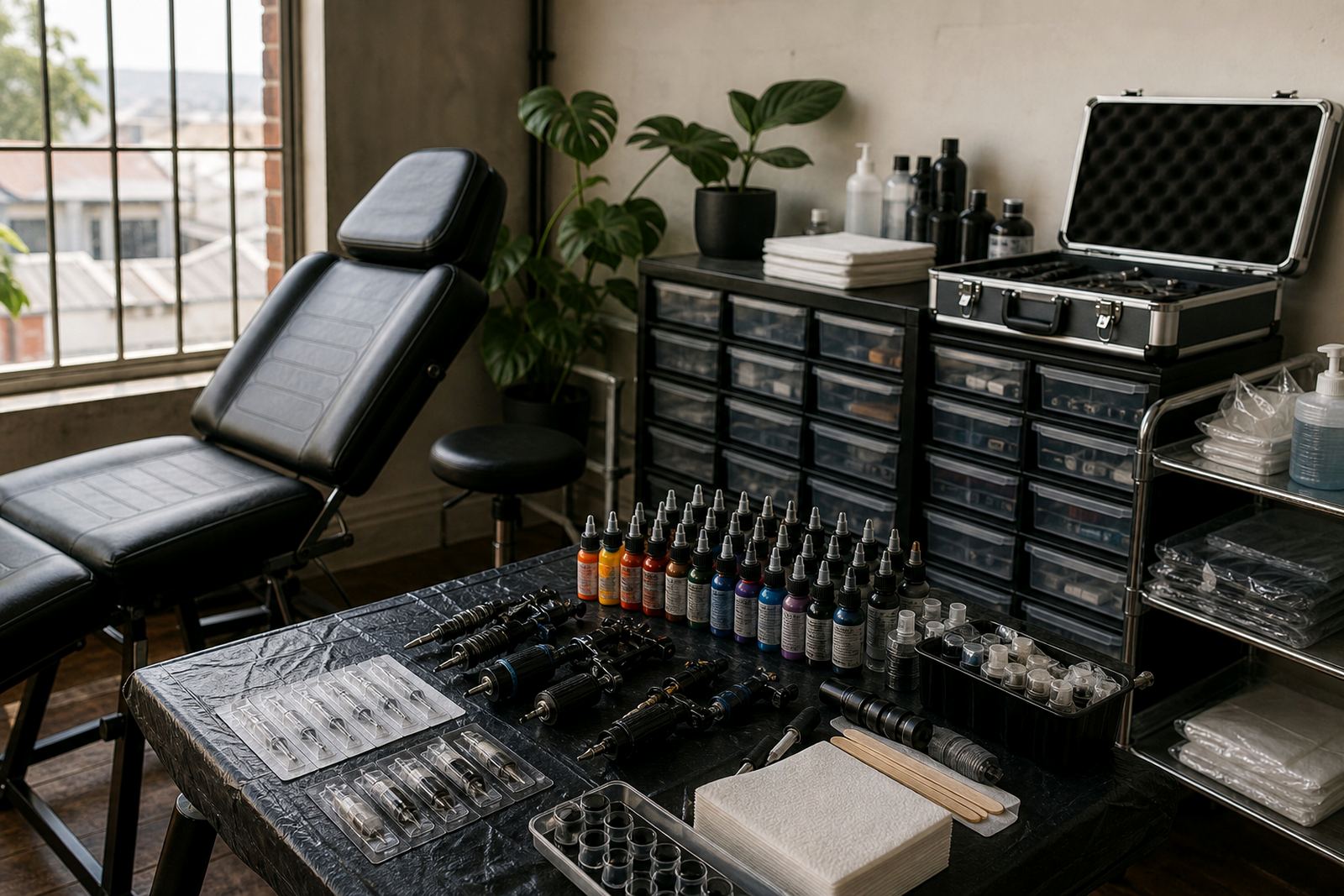
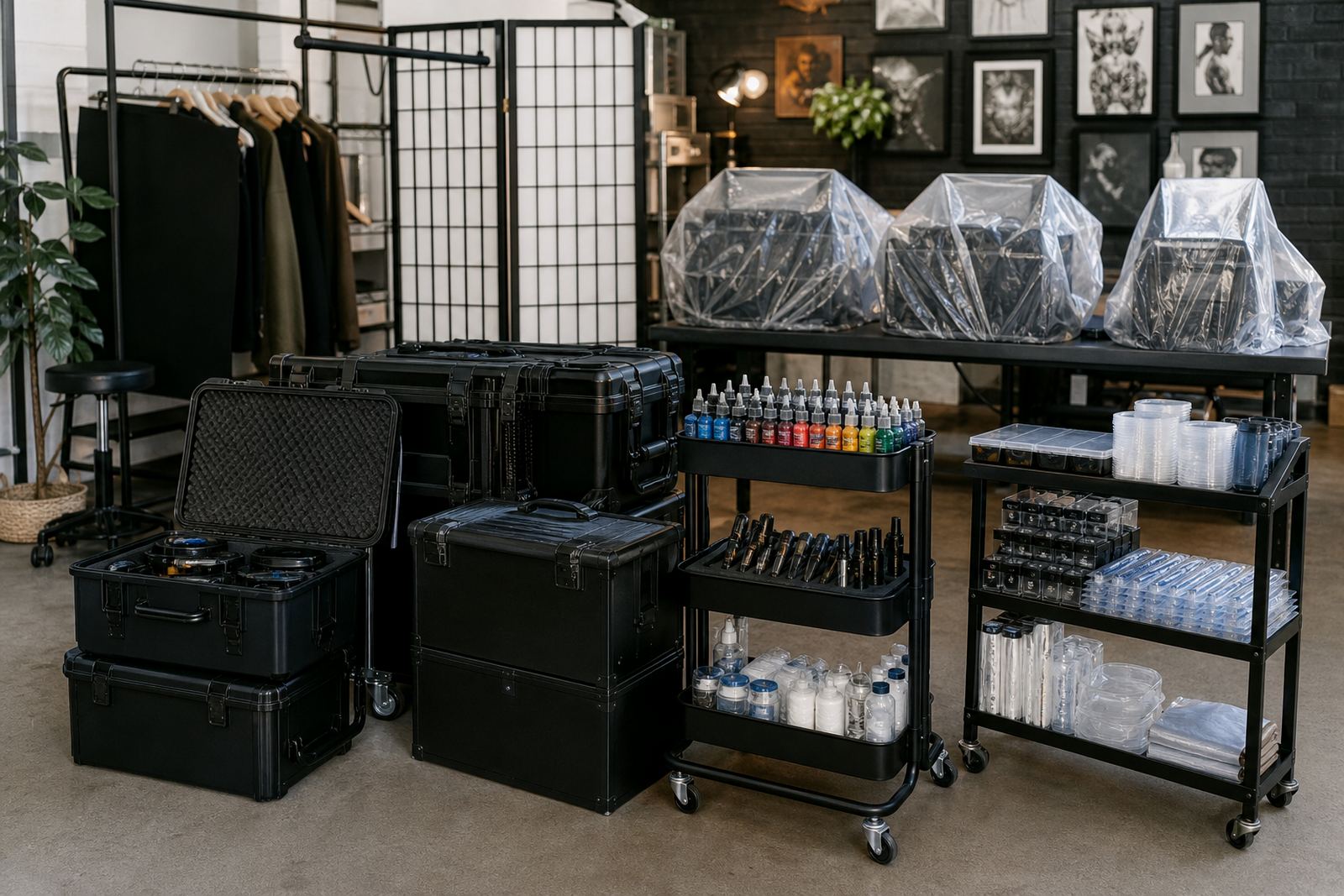
A convention setup is not the same as a fixed studio station. Space is tighter, the table is smaller, and you need to carry only what you will use in a controlled, repeatable order. Most artists work best with a compact station that includes machines, clip cords or batteries where relevant, a clean power plan, barrier items, ink cups, disposable wraps, skin prep consumables, and a clearly counted needle or cartridge set.
For packout planning, it helps to split the load into three groups: the core tattooing kit, the sterile single-use consumables, and the support items that keep the table in order. That keeps the drawstring bags, trays, and storage boxes from turning into one mixed pile when the venue is busy and people are moving around you.
- Primary machine or machines for linework and shading
- Needles or cartridges grouped by configuration
- Ink sets arranged by use, not by random bottle order
- Single-use barriers, caps, wipes, gloves and wrap materials
- Sanitising and station-cleaning consumables allowed by the venue
- Charging, backup cables, batteries, and spare fitted parts where needed
How to group inks, needles and cartridges
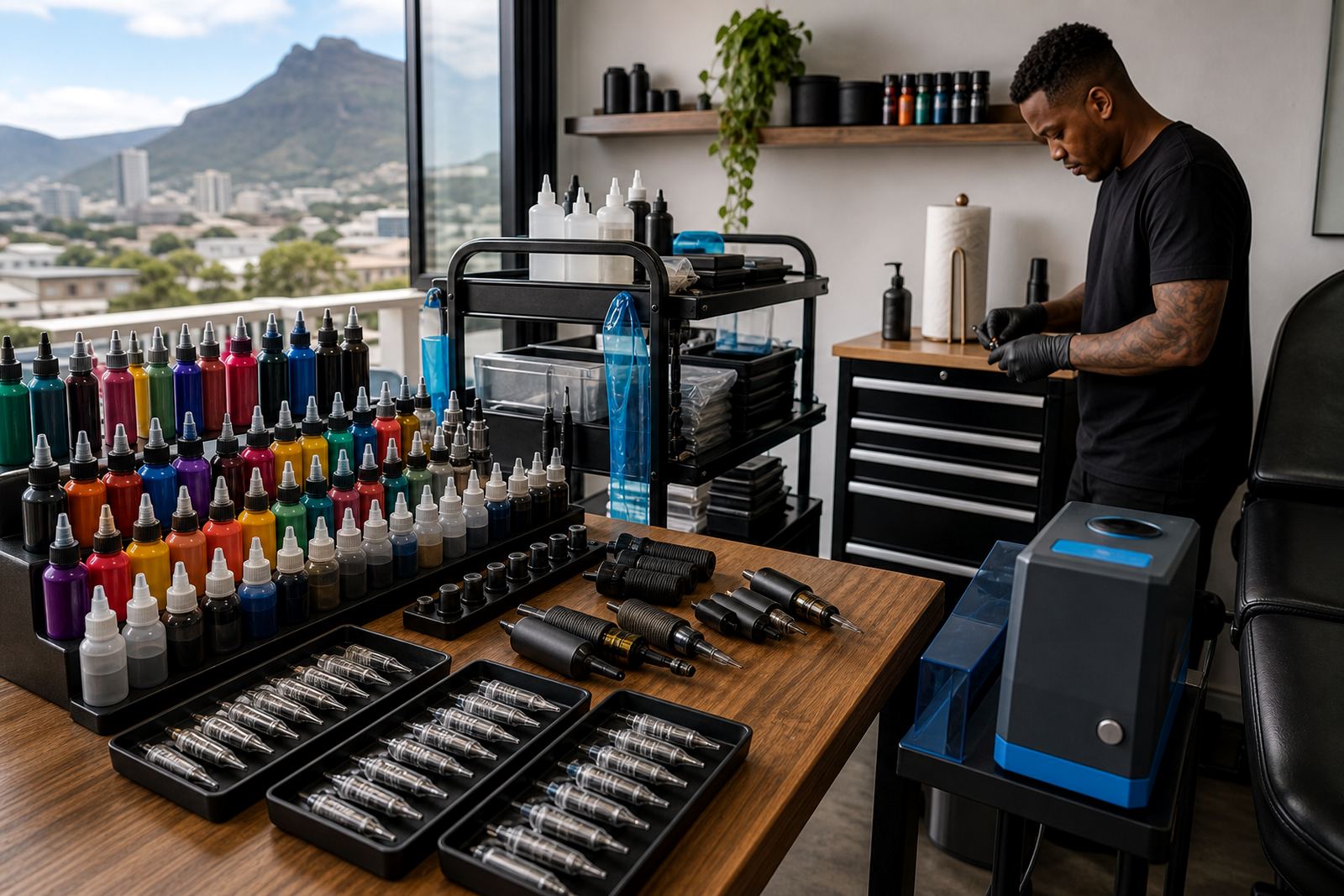
At an event, it is easier to work from grouped sets than from loose stock. Keep your inks separated by the colours you actually use on the day, then pack a small reserve for touch-ups and repeat work. Needle and cartridge groupings should follow the kind of work you book most often, such as lining, fine detail, packing, soft shading, and larger fill work. That way you are not opening multiple boxes under pressure.
For Johannesburg, Durban, Pretoria, Cape Town and Gqeberha events, artists often need to think about transport heat and coastal humidity as well as the show itself. Bottles, cartridge boxes and paper labels should travel in sealed organisers so they stay readable and dry. If the pack is for a full weekend, store the daily-use sets separately from the back-up stock.
- Linework cartridges or needles kept in one marked pouch
- Shading and packing groupings kept apart from fine detail items
- Black and grey sets separated from colour sets
- Ink bottles upright in leak-resistant containers
- Replacement cartridges, tubes or grips packed as a counted reserve
Layout planning for a cramped convention table
Small tables punish bad layout. The cleanest convention stations usually use a left-to-right or right-to-left workflow with no backtracking. Put the active machine, the current needle or cartridge line, and the most used ink cups closest to your dominant hand. Put spare stock, secondary fluids, bags and cleaning items further back or to the side. That keeps the working surface open and cuts down on reaching over fresh consumables.
A good rule is to set the table before the doors open and leave only what belongs to the current piece within arm's reach. If the event has shared surfaces, bring your own barrier layers and tray liners. A packed station should be easy to reset after each client, because convention work can move faster than a normal studio day and mistakes happen when the surface gets cluttered.
- Work from one clear direction across the table
- Keep a waste point separate from clean stock
- Label every pouch or container before travel
- Use shallow organisers so small items do not disappear
- Leave space for signed forms, if the venue requires them
The mistakes that cause trouble on event floors
The most common packout error is bringing too much of the wrong thing. Some artists load every cartridge size they own, then waste time choosing between them. Others pack too little wrap, too few gloves, or not enough barrier material for the day. A convention kit works best when it is planned around the actual booking pattern, not a wish list.
Another mistake is poor storage. Ink bottles shifted in transit can leak into trays, cardboard sleeves can crush, and loose cartridges can open in the bag. It is also easy to mix sterile and non-sterile items in the same container, which creates confusion when you are tired and the queue is moving. Keep the count tight and do a final check before leaving the hotel, studio, or home base.
- Mixing used tools with unopened stock
- Taking bulky items that never leave the bag
- Forgetting spare clamps, grips, wraps or batteries
- Packing without a written count list
- Ignoring the venue rules for waste, water and clean-up
Budget ranges for a practical packout
Budgets depend on how self-contained the station must be. A lean event pack for a single artist can sit in the low thousands of Rand if the main tools are already owned and only consumables, organisers and backup stock are added. A more complete pack for a full weekend, with several cartridge groupings, extra storage and broader consumable cover, can move into the mid-thousands or higher. The cost changes quickly when you add multiple machine setups, larger ink selection, and heavier backup stock.
For planning, many artists break the budget into one-off gear, repeat consumables and transport packaging. That makes it easier to see what is reusable and what must be reordered before the next show. If you travel between Cape Town, Stellenbosch, Bellville, Somerset West and other nearby areas, factor in the wear on cases and the need for reliable storage that handles repeated loading and unloading.
- Lean packout: basic reusable gear plus consumables in the low thousands of Rand
- Mid-range packout: broader cartridge and ink groupings, often several thousand Rand more
- Large event setup: multi-day reserve stock, storage systems, and extra machine support at a higher total
Packout support that makes the table easier to run
InkX Tattoo helps with stock list help, range grouping advice, station planning, consumable reorders, bulk order support, new studio kits, machine match help, cartridge match help, storage planning, dispatch updates, product substitutions, and seasonal restock plans. For convention work, that support is most useful when you need to turn a loose wish list into a counted pack with clear groups for inks, needles, cartridges and hygiene stock.
If your event schedule changes often, it also helps to keep one master list and one travel list. The master list covers every item you keep in the studio. The travel list covers what actually goes into the case for the show. That small split saves time, reduces overpacking, and keeps the station easier to reset when the day gets busy. Follow local health regulations and venue rules for all sterile handling, waste control and set-up requirements.