
Small marks, tighter setup
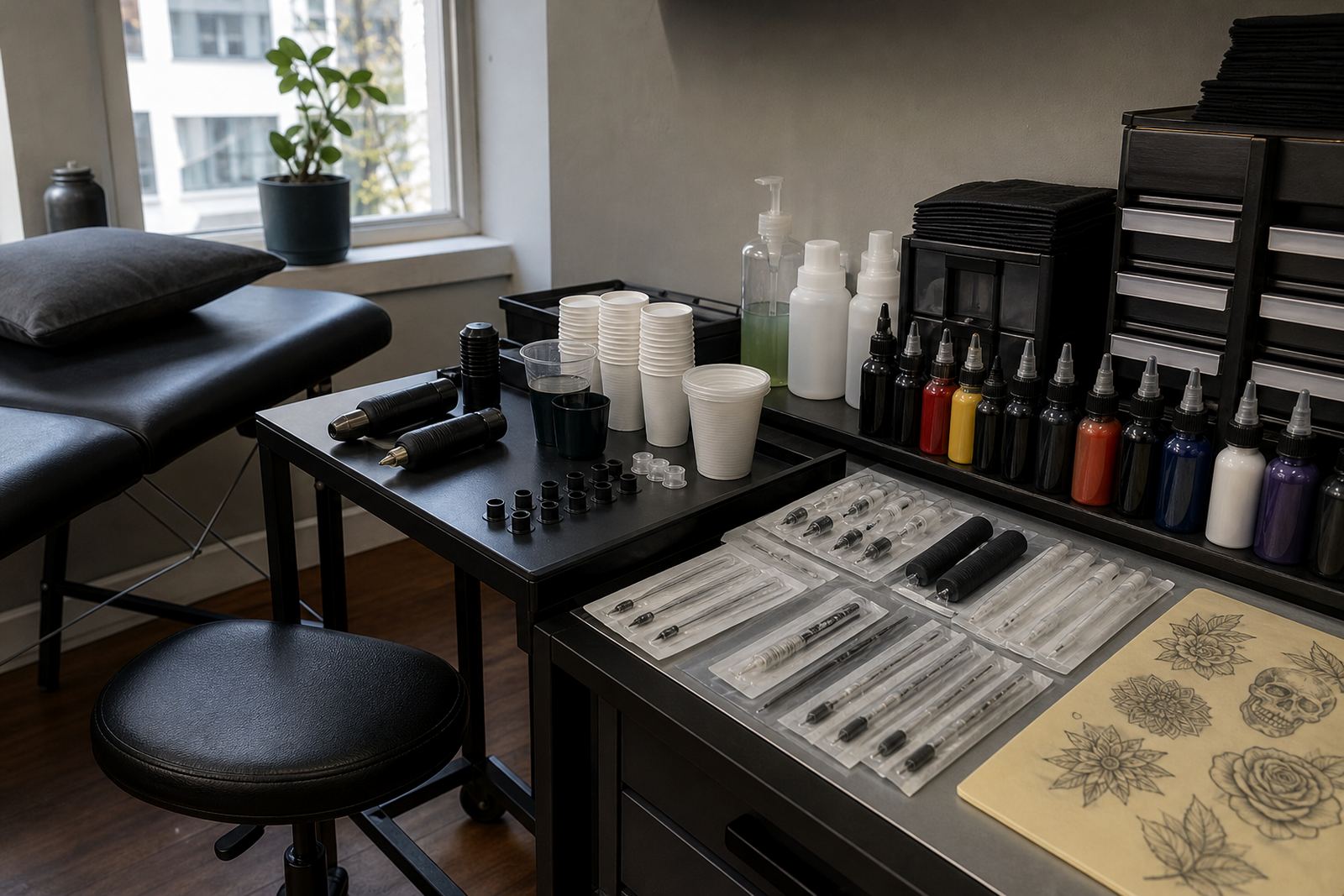
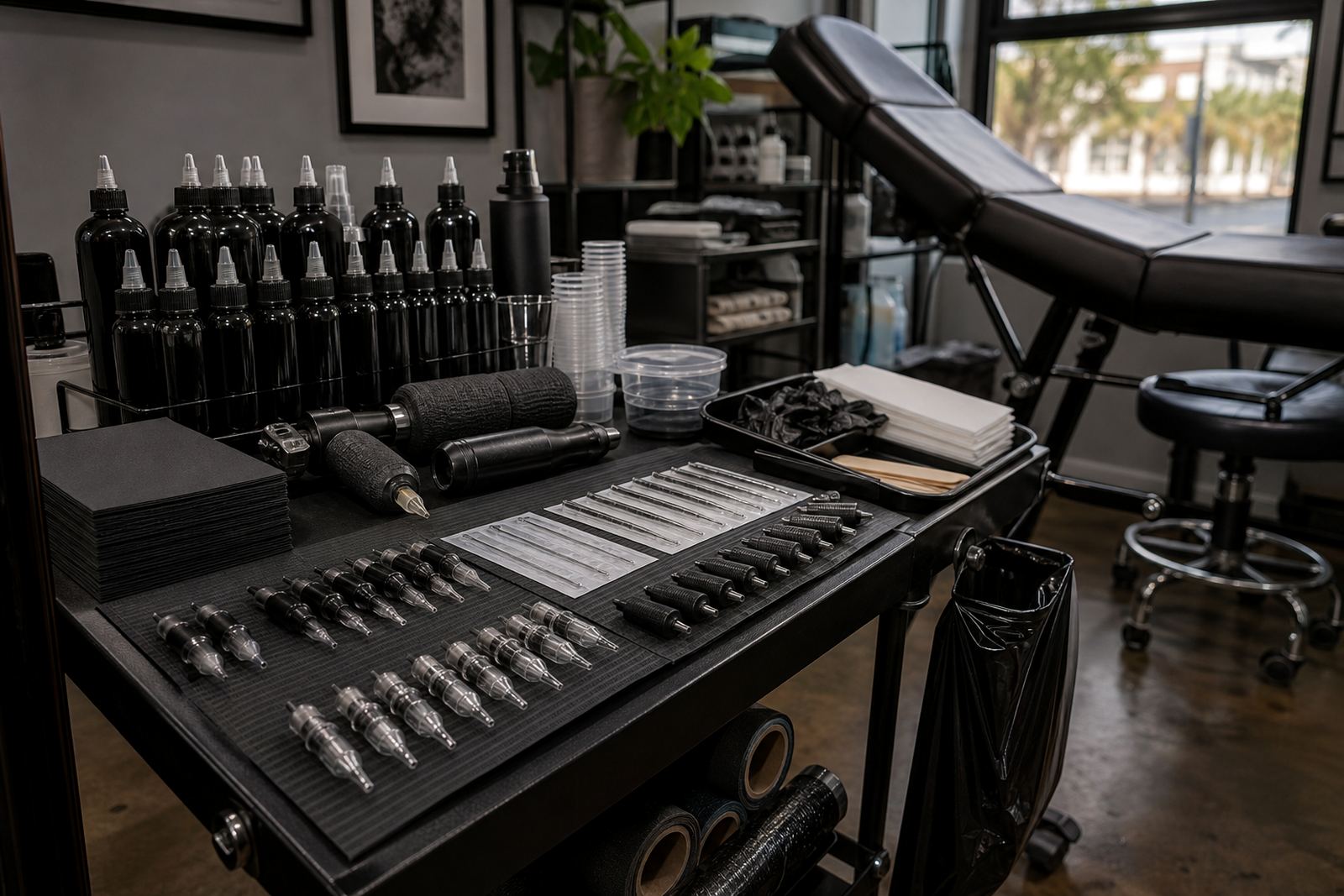
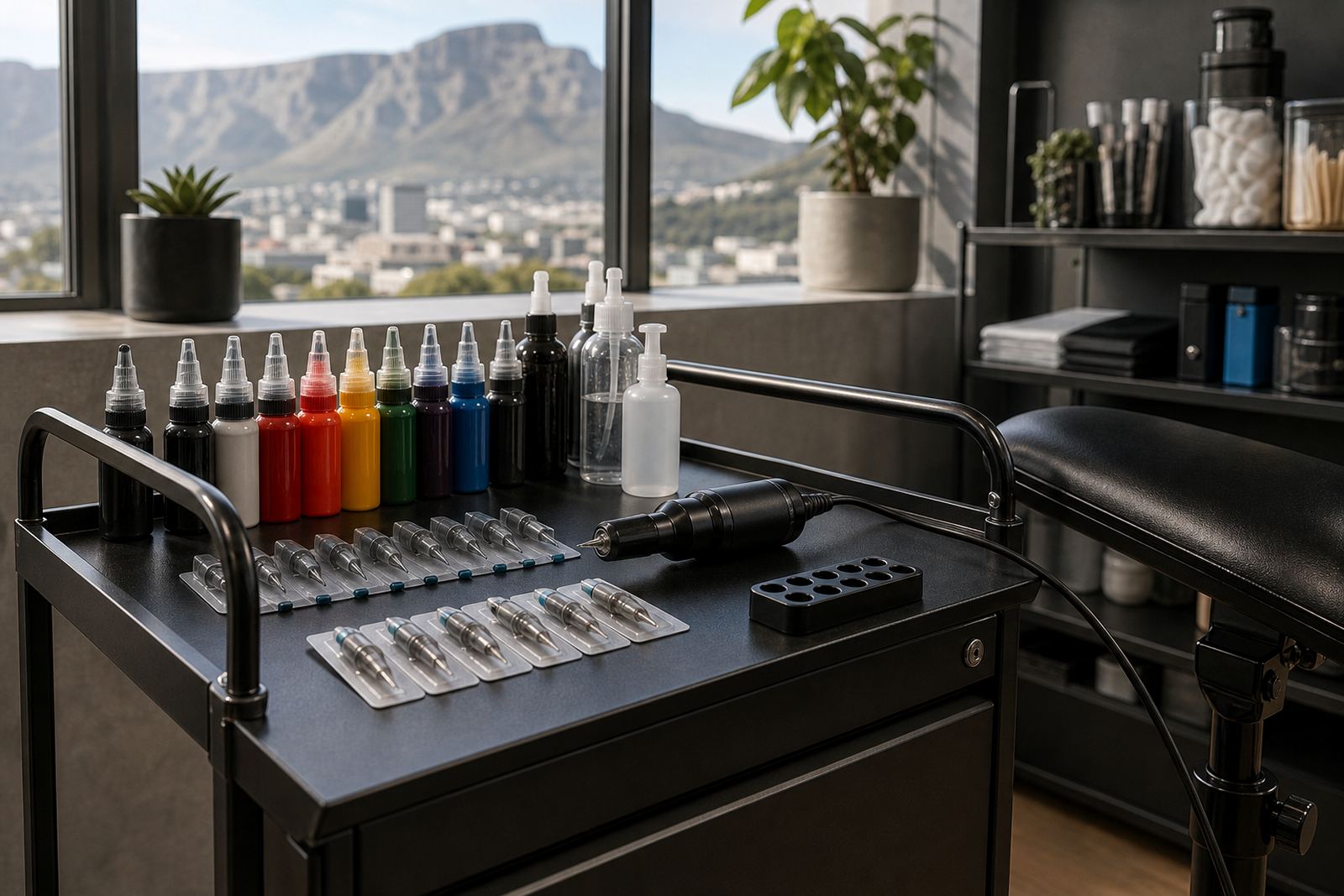
Fineline work puts pressure on the station because every item needs to sit where the artist can reach it without crowding the mat. In a Cape Town studio or a busy Johannesburg room, the usual setup is compact: slim machines, grouped cartridge boxes, a narrow ink tray and sterile single-use supplies laid out in a clean sequence. The aim is not a full bench loaded with extras, but a workstation that stays organised while line work moves from stencil to finish.
Artists doing fineline pieces often want a lighter hand feel, steadier control and less rummaging through stock during a session. That means the station should keep needles, cartridges, grips, clip cord or battery gear, barrier film and disposables close together, with storage that protects small items from dust and moisture. In coastal areas like Durban and Gqeberha, sealed storage matters more because humidity can affect outer packaging and general studio order.
Typical groupings for fineline work
A fineline station usually runs on narrow groupings rather than large open bins. Ink bottles, cartridge boxes and sterile singles are best sorted by size, gauge and use, so the artist can lift one group and work from it without mixing stock. Needles and cartridges are often kept in clearly marked trays, while inks are set in a separate line with caps or cups placed in a stable holder. That simple grouping reduces clutter and helps when the station needs to be reset between clients.
- Slim rotary machines for controlled line work
- Grouped cartridges by configuration and gauge
- Needles kept in sealed, sterile packs until use
- Ink caps, holders and barrier film in a fixed place
- Disposable gloves, wipes and wrap stored within reach
- Clip cord sleeves, tube covers and other single-use items kept separate from clean stock
For studios in Pretoria or Stellenbosch, the layout often includes a small prep zone and a second clean shelf for unopened consumables. That keeps the working surface clear, especially when the artist is moving through fine script, dotwork or delicate shading around the same station.
How to plan the station without crowding it
Good fineline planning starts with reach. The artist should be able to pick ink, change a cartridge and place a fresh wipe without crossing over the whole station. A narrow trolley or side shelf can help, but only if it is kept for one job and not overloaded with extra stock. In smaller studios, a wall shelf for sealed items and a single clean tray at hand level is usually enough.
Keep the workstation split into three parts: clean storage, active supplies and used items. Clean storage can hold unopened cartons, spare needles and backup cartridges. Active supplies stay on the station in the exact quantities needed for the session. Used items go straight into the correct waste container in line with local health rules. That pattern helps staff in Cape Town Delivery areas, Durban Delivery rooms and Bellville studios keep turnover tidy without wasting surface space.
- Leave a clear path from chair to trolley and bin
- Use shallow trays instead of deep boxes for small items
- Mark ink groups by colour family or working use
- Store cartridges upright where labels stay visible
- Keep sterile stock apart from opened consumables
Common mistakes in fine line stations
The most common problem is too many loose items on the worktop. When cartridges, caps and wraps are mixed in one tray, the station slows down and the artist spends too much time sorting. Another mistake is buying heavy machines for work that calls for a lighter, more controlled setup. That can make long line sessions harder and the station feels cluttered instead of focused.
Some studios also under-order the right sizes. A fineline room that only carries one cartridge grouping or one ink selection ends up scrambling before every appointment. Another issue is poor storage, especially in coastal suburbs where boxes can sit in warm or damp back rooms. Sealed shelving, regular stock checks and simple rotation help avoid damaged outer packaging and mixed batch piles. It is worth keeping the station plain and practical rather than filling it with gear that never gets used.
Stock levels that suit smaller precision work
Fineline setups do not need large bulk orders every time, but they do need the right balance of fast-moving consumables and backup stock. A small studio in Somerset West may keep only a limited range on the floor, while a larger shop in Johannesburg or Pretoria may hold more cartridge groupings and backup machines. The point is to avoid tying up cash in slow stock while still having enough on hand for booked work and walk-ins.
For budgeting, many studios plan fineline station stock in bands rather than one fixed figure. A lean starter station might sit around R2,500 to R6,000 for a basic machine, starter cartridges, inks and single-use consumables. A more complete working station can sit around R8,000 to R18,000 depending on machine count, cartridge range, ink selection and storage needs. Larger studio restocks, especially when several artists share supplies, can run higher if the order includes multiple needle groupings, extra sterilised consumables and reserve stock for the month.
What a practical fineline order often includes
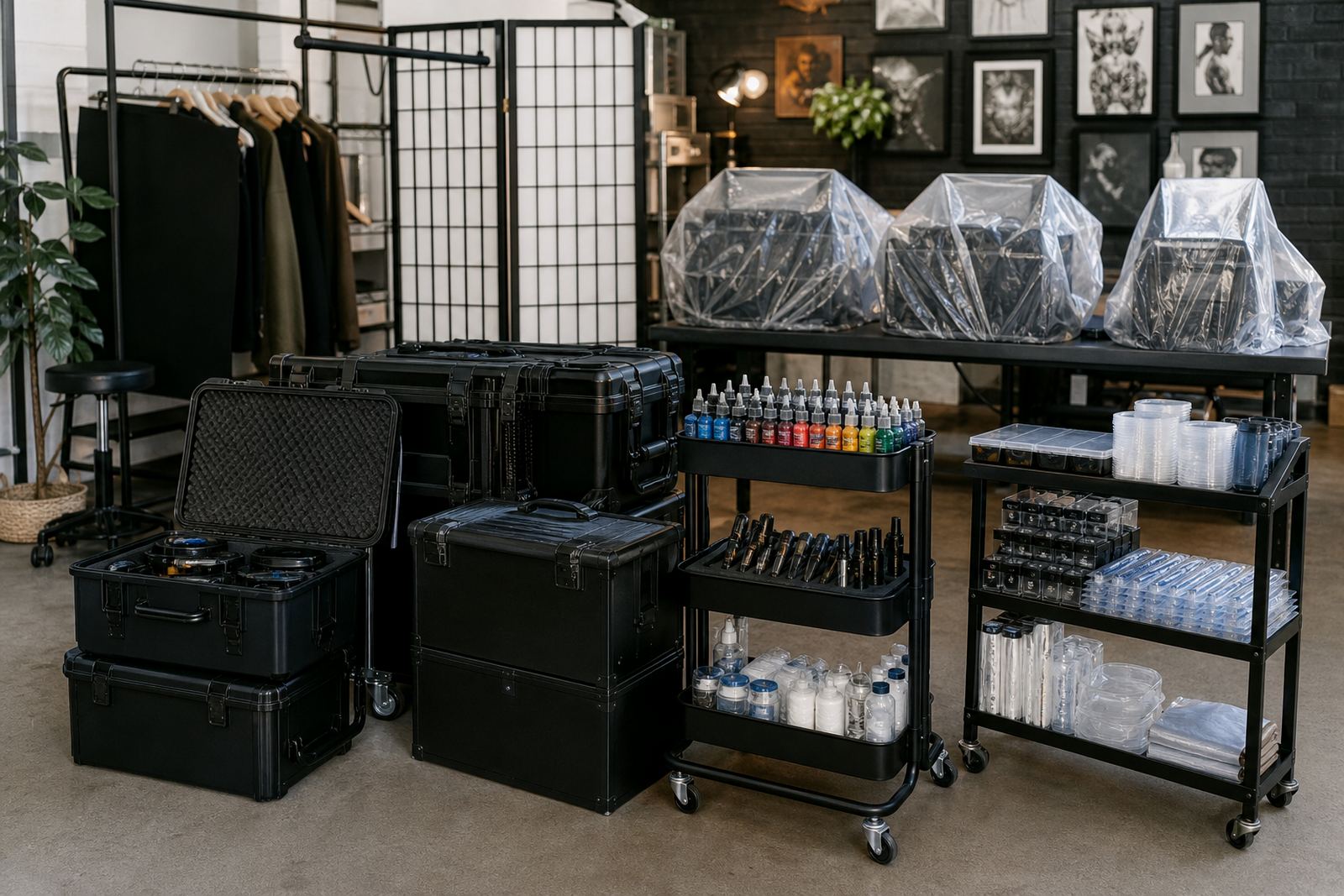
When a studio builds for fineline work, the order usually has a steady mix of ink, needles, cartridges and cleaning stock rather than a wide spread of everything. That keeps the station ready for precise work and makes reordering easier. It also helps when the team needs to match supplies to different artists, because each person may prefer a slightly different machine feel or cartridge grouping.
- Fineline-friendly inks in the shades the studio uses most
- Needles and cartridges grouped by configuration and size
- Slim machines suited to controlled line work
- Sterile single-use wraps, cups and barrier items
- Station covers, tray liners and wipe stock
- Storage boxes or sealed organisers for clean consumables
For studios across South Africa, from Gqeberha Delivery to Stellenbosch Delivery, the best order is the one that keeps the workstation calm and ready. If the bench is easy to reset, the artist can work with fewer interruptions and the station stays practical through a full day of appointments.