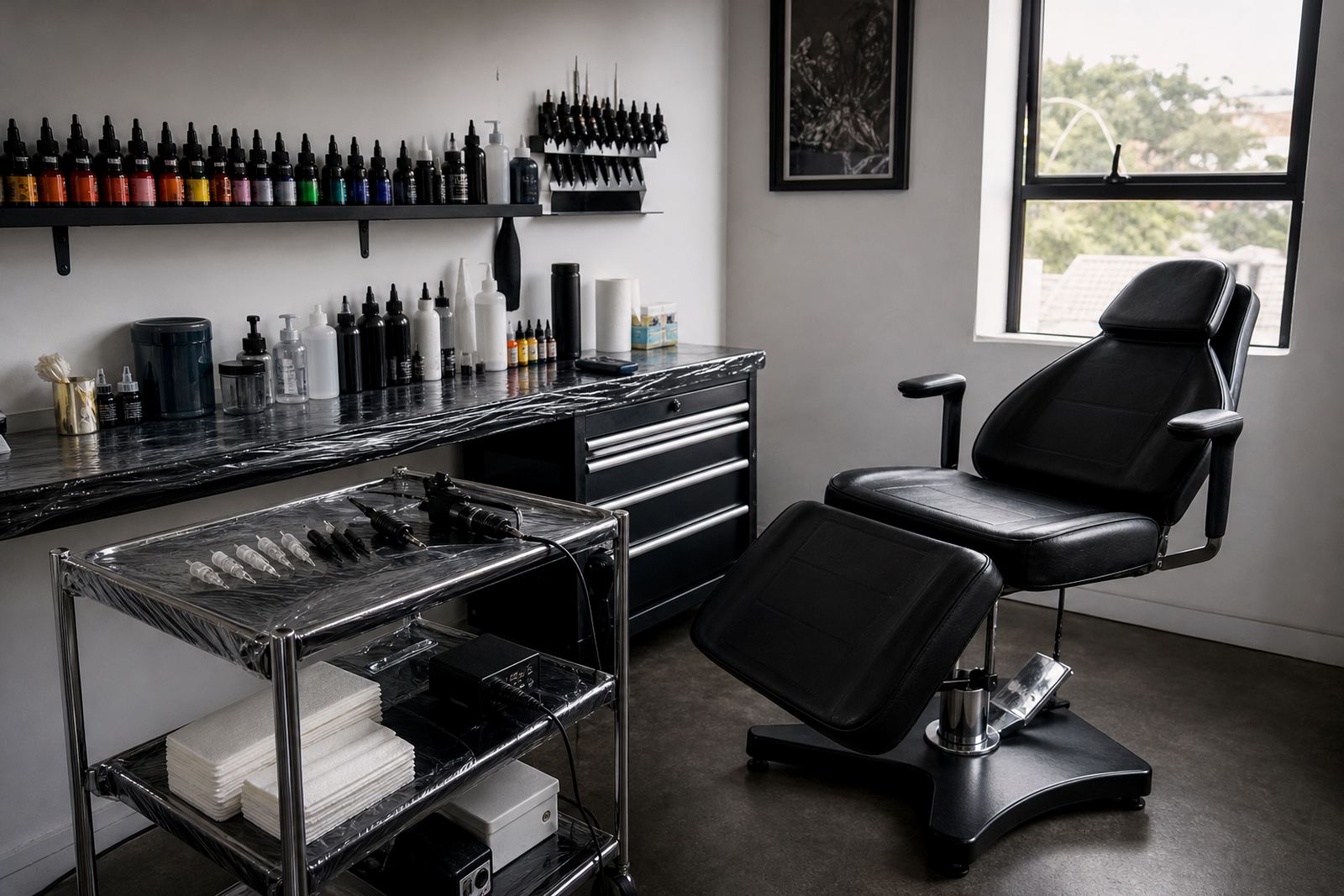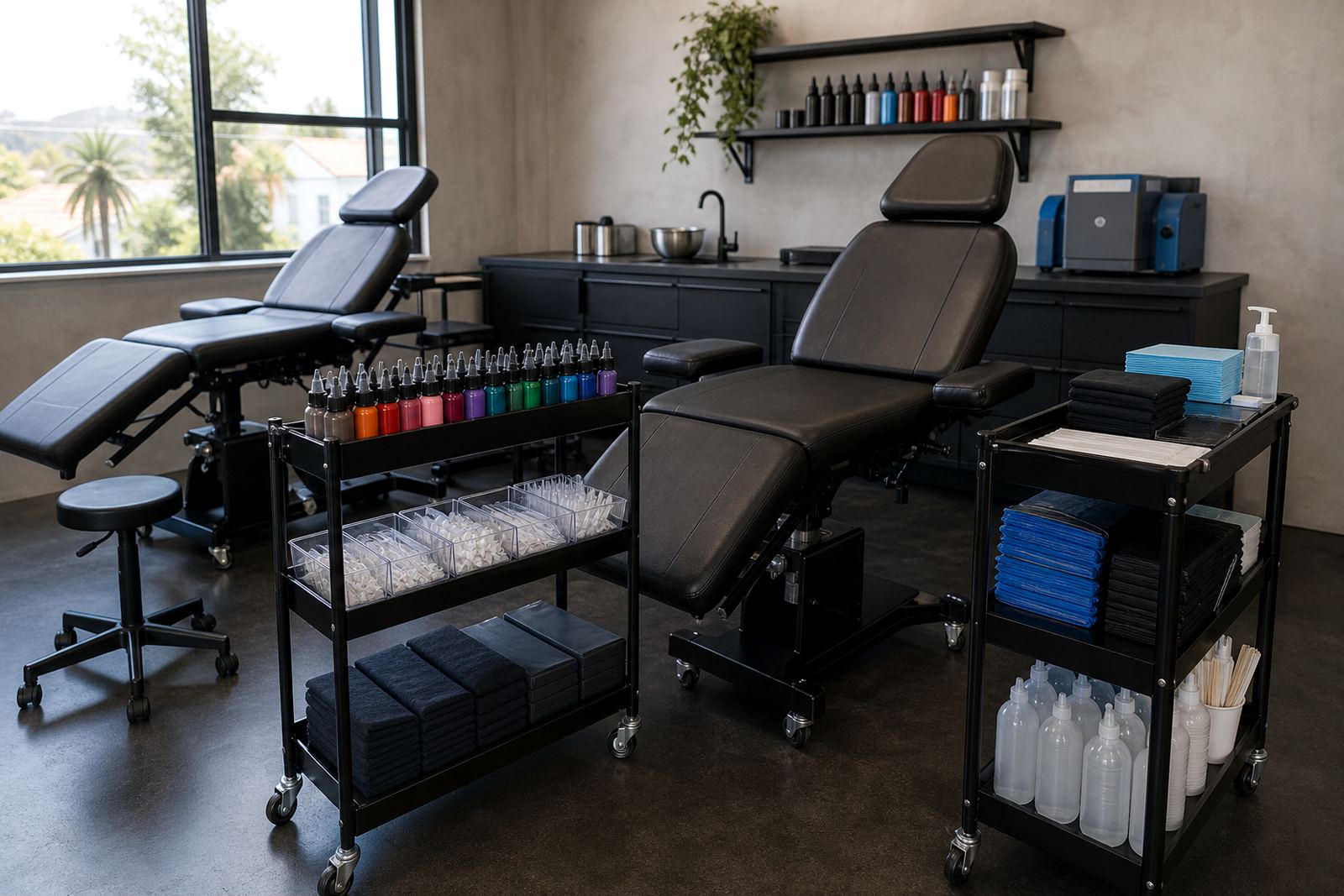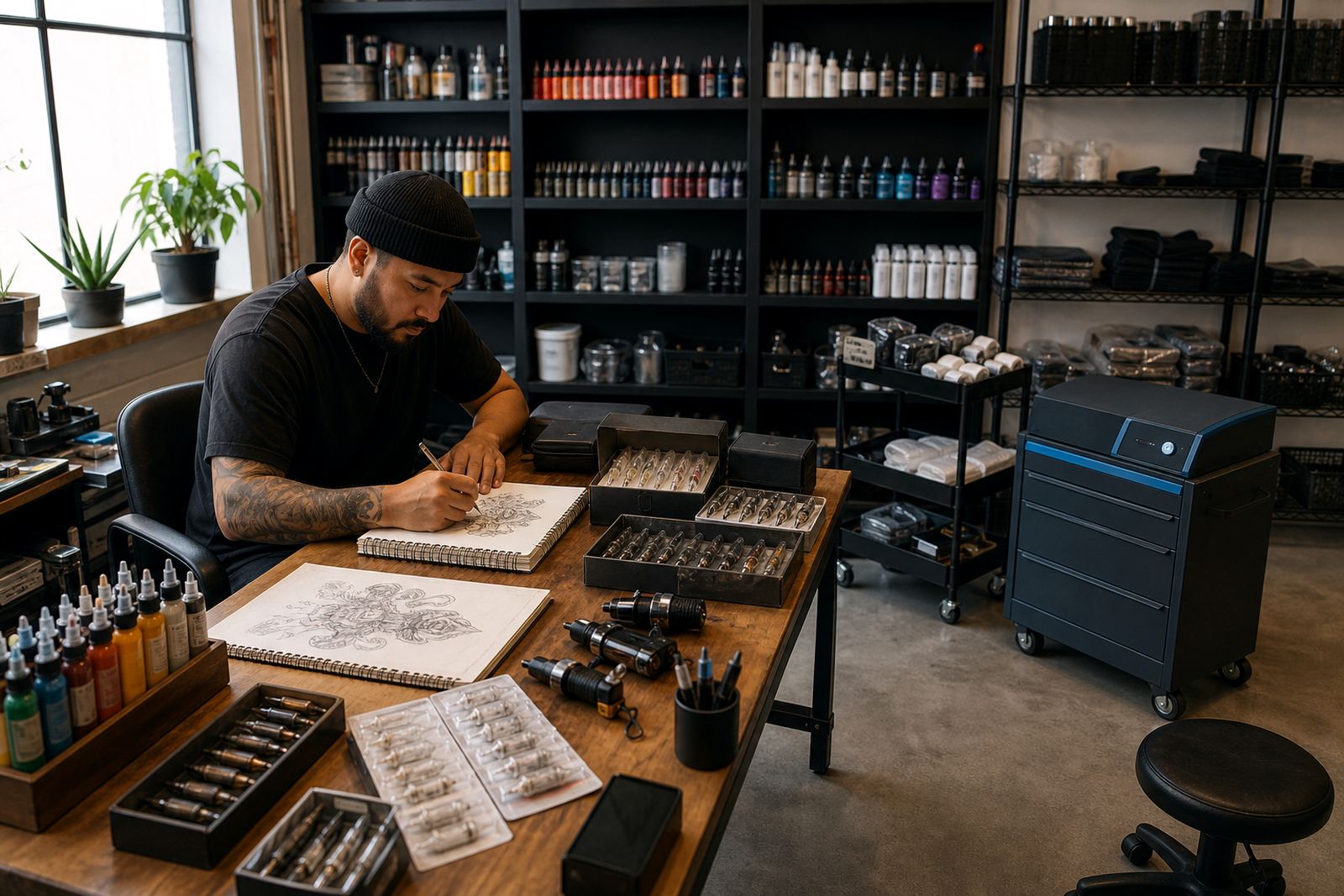

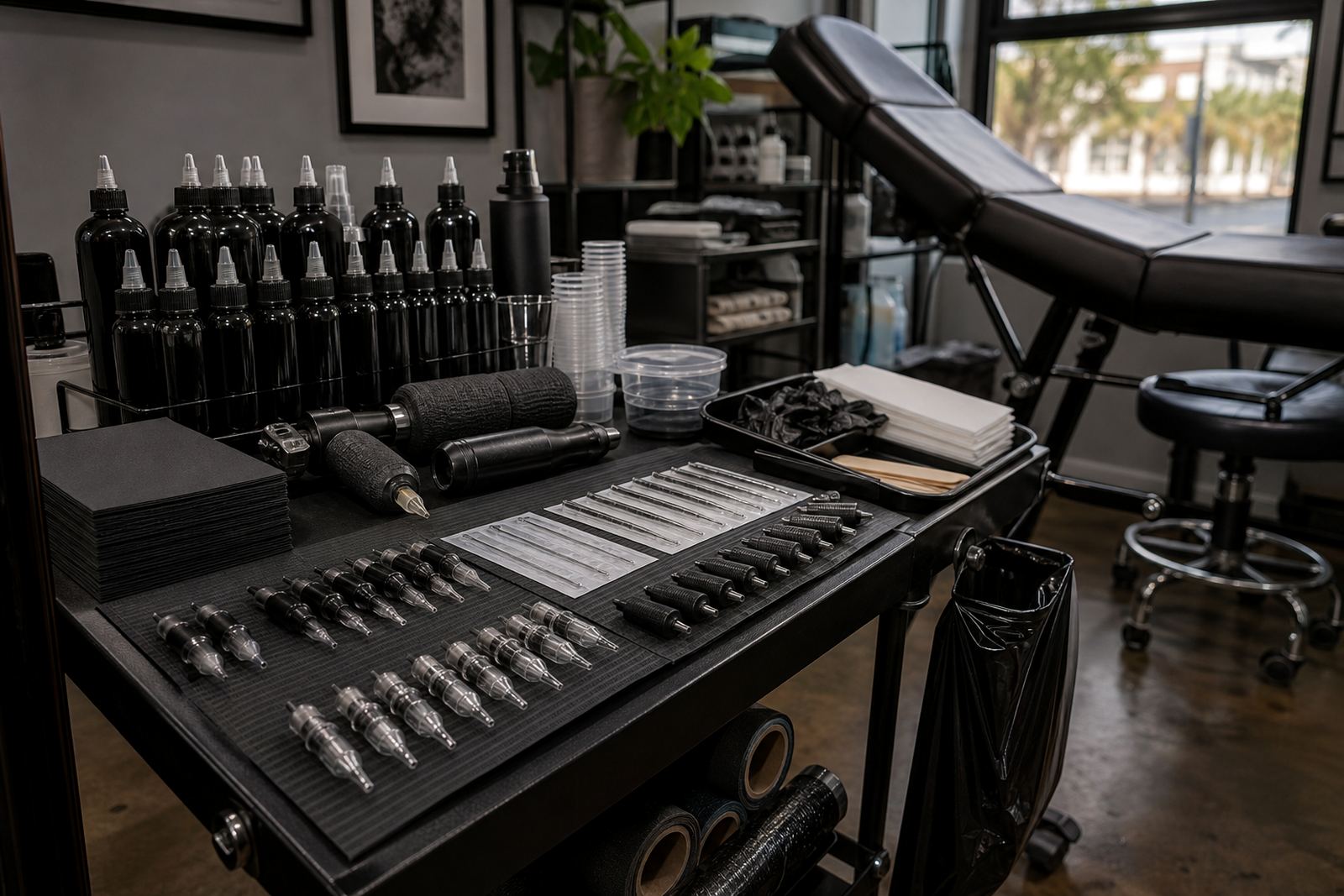
What a blackwork station usually needs on the table
Blackwork work tends to move between firm outlines, solid fills and repeated passes over larger areas, so the station has to stay ordered from the first setup to the final wipe-down. Most studios keep a small set of black inks in different viscosities, liner groupings for fine structure, larger magnum groupings for packing, and a few machines matched to the kind of hand speed the artist prefers. The point is not to crowd the workstation, but to keep each item in reach and clearly separated.
A useful blackwork setup also needs sterile single-use items arranged in a way that keeps the working area tidy. That usually means barriers, grips, caps, clip cord or battery supplies as required by the machine type, and enough consumables for a full appointment without constant stopping. In Cape Town studios and inland shops alike, humid coastal air or dry storage rooms can affect how neatly stock holds its shape, so sealed storage matters more than people sometimes think.
- Black inks in a few blends for line, fill and layering work
- Needle groupings for fine lining, bold lining and wide saturation
- Cartridges suited to the machine system in use
- Clip cord or battery accessories where needed
- Single-use barriers, caps, wipes and workstation wrap
- Clean storage tubs, labelled trays and sealed packs
Linework and fill groupings that suit black-heavy pieces
Blackwork stations usually do best with a narrow set of needle groupings rather than a wide spread of options. Lining work often relies on tight round groupings for crisp edges, while fill sections call for mags that can move ink across larger fields with fewer passes. Some artists prefer cartridges for switching quickly between line and fill, while others keep traditional needle and tube arrangements for a more fixed feel.
For planning, it helps to think in batches. If the studio does a lot of geometric patterning, script, or repeat black motifs, stock more of the liner sizes that get used every day and less of the specialist groupings that only appear on certain pieces. If the work leans towards bold coverage, heavier fill cartridges and a few larger mags should sit higher on the reorder list. Keep the ink shelf close to the station, but not in the working splash zone.
- Fine liners for detail, border work and tight corners
- Medium liners for general black outlines and shape control
- Curved or flat mags for broad fill and soft packing
- Cartridges for quicker changes during mixed-session work
- Small backup packs for bookings that run longer than planned
Machine pairings for consistent black output
Blackwork puts pressure on the machine set-up because the artist often wants a steady stroke, predictable hit and enough control to move from line to fill without fighting the tool. Some studios keep one machine tuned for lining and another for packing, while others use a single machine with a careful cartridge choice. Either way, the machine should match the hand style and the amount of black coverage expected on the day.
For station planning, it helps to separate machine area from supply area. Keep the working side clean, with spare sleeves, caps and wipes within reach, and store the unopened stock just behind or below the main tray. That saves time and cuts down on clutter, which is a common mistake in busy rooms where everyone is rushing. A blackwork station can look minimal, but if the layout is poor the artist spends half the session hunting for the next cartridge.
- One machine for crisp lining
- One machine or second setup for broad fill and saturation
- Compatible power or battery accessories for the chosen system
- Wrapped surfaces and easy access to sterile disposables
- Labelled storage for unopened inks and grouped cartridges
Storage and hygiene habits that keep black ink work orderly
Black inks stain quickly, so storage and hygiene need to be practical. Bottles should be kept closed, upright and away from dust, and cartridge packs should stay sealed until they are needed. In coastal areas like Gqeberha or Durban, moisture can make outer packaging soften or warp if stock is left open, so dry shelves and closed tubs help keep the station neat.
Studio hygiene also depends on flow. Used items should move out of the active area fast, and fresh stock should not touch contaminated surfaces. That sounds obvious, but it is where many blackwork stations slip up. A clean station is easier to manage when the operator has a set place for waste, a separate place for active tools, and a fixed place for unopened supplies. Follow local health regulations and keep the room arranged to suit the kind of service being offered.
- Closed shelving for unopened inks and consumables
- Separate storage for active and used items
- Small wipeable trays rather than loose piles of stock
- Labels for liner, mag and cartridge groupings
- Enough barrier film and wraps for long sessions
Common blackwork ordering mistakes
One mistake is buying too many random sizes and not enough of the groups that get used every week. Another is pairing fill-heavy work with a setup that is only comfortable for lining, which slows the session and creates more waste. Some studios also under-order single-use items, then end up splitting packs and mixing storage halfway through the month, which makes the station look untidy and makes counts harder.
Budgeting helps. For a lean blackwork station, a basic opening order might sit around R3,500 to R7,000 if the studio already has a machine and only needs inks, groupings and disposables. A more complete station with two machines, a wider cartridge spread, storage items and heavier consumable cover can move into the R9,000 to R18,000 range. Bigger studios, or shops setting up several work points at once, will spend more depending on the number of artists and the amount of stock held on site.
- Buying every size instead of the sizes used most often
- Mixing liner and fill stock without a clear count system
- Underestimating the amount of disposables used in long sessions
- Storing sealed stock too close to the active work zone
- Setting one machine for all work and expecting it to suit every task
How InkX Tattoo helps shape a blackwork station
InkX Tattoo supports blackwork stations with grouped stock for inks, needles, cartridges and studio supplies, plus help with stock lists, range grouping, station planning and replenishment. That is useful for studios in Observatory, but also for teams working in Cape Town, Johannesburg, Durban, Pretoria, Gqeberha, Stellenbosch, Bellville and Somerset West. The aim is to keep the buying side practical so the working side stays calm.
When a studio is setting up a black-heavy service mix, the best results usually come from a measured stock plan rather than a pile of mixed supplies. A few well chosen ink options, the right line and fill groupings, clean storage and a sensible reorder rhythm will do more for day-to-day work than shelves full of items that do not get used. If the station is organised before the first booking starts, the session runs smoother and the room stays easier to manage.
- Stock List Help for blackwork-focused buying
- Range Grouping Advice for liner and mag sizes
- Station Planning for small and larger studios
- Consumable Reorders for steady monthly use
- Bulk Order Support for multi-artist rooms