
Stock That Matches a Session-Based Diary
When a studio works by appointment, the stock room usually moves in blocks rather than constant counter sales. That means the main task is matching supplies to the number of booked artists, the styles they work in, and the amount of consumables used over a normal week. A compact setup in Observatory can run well with a clean shelf system, labelled tubs and a fixed count for each core item, instead of loose boxes spread across the room.
For most appointment-only spaces, the buying pattern starts with inks, needle groupings, cartridge groupings, machine covers, clip cord covers where used, grips, razors, disposable ink caps, barrier film and cleaning consumables. Studios that focus on fine line work often keep tighter needle counts, while larger custom shops usually hold a wider mix of liners, shaders and mag groupings. The right mix depends on the kind of bookings you take, and on how many artists are on the floor at one time.
- Keep the most used colours and groupings at eye level
- Separate fast-moving consumables from slower stock
- Store sealed items in a dry cupboard away from direct sun
- Use one shelf for new arrivals and one for open stock
Typical Equipment For A Booked-Only Studio
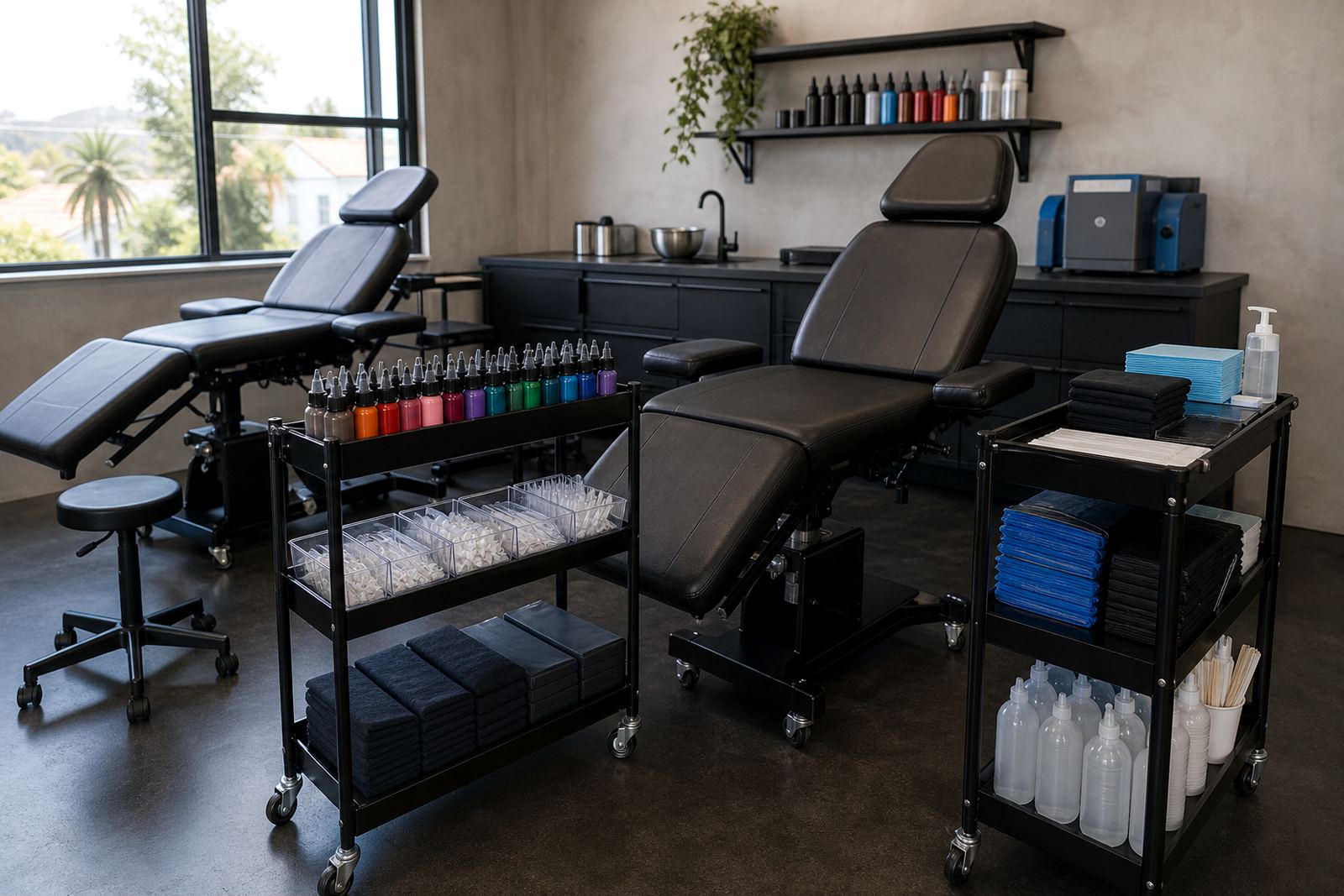
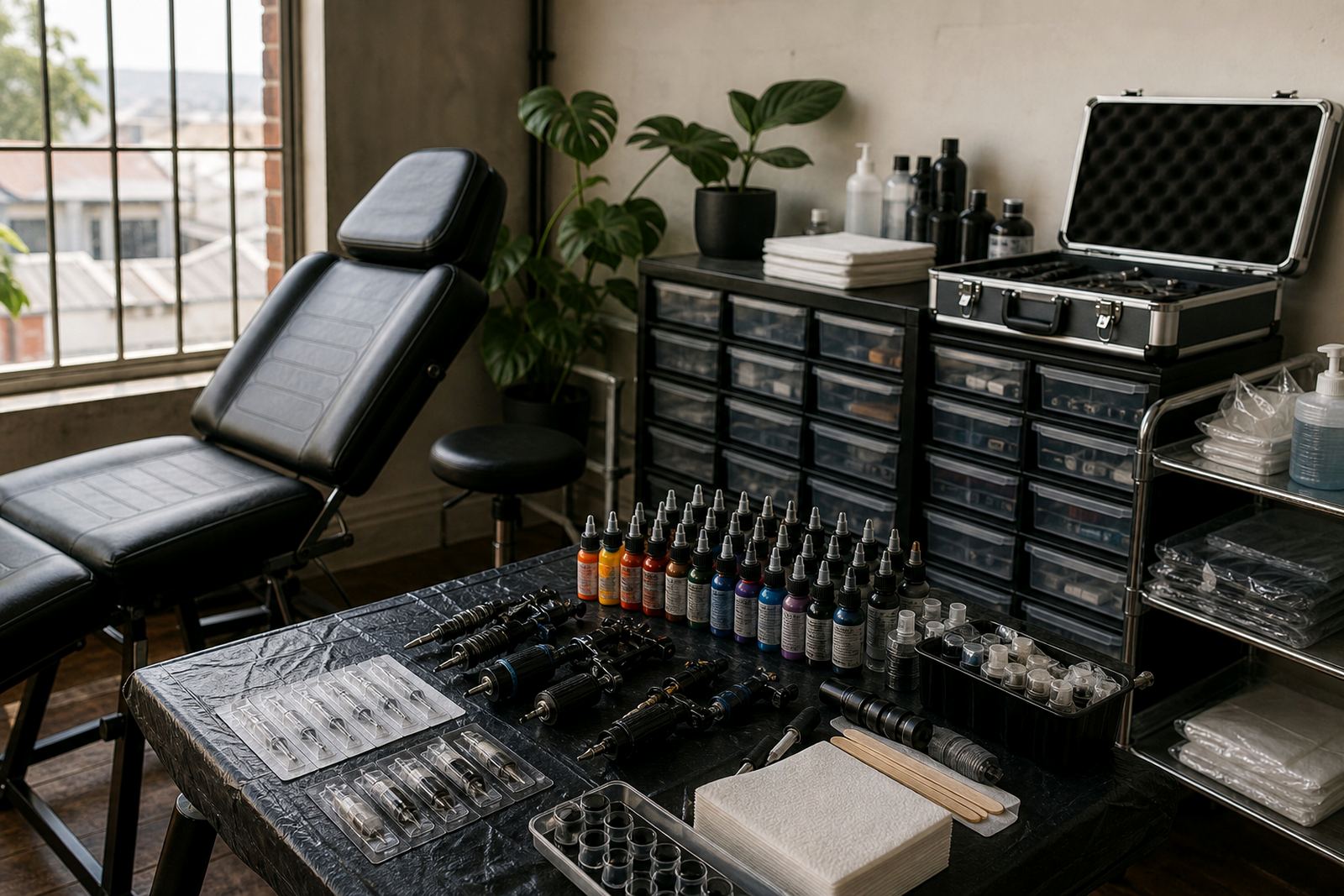
Most appointment-only studios work with a smaller front-of-house footprint and a tighter prep area, so the buying list needs to be practical. A typical setup includes tattoo inks in the colours that move most often, cartridge and needle groupings for lining, shading and packing, machines suited to the artist's hand style, and single-use items that are opened for each session. In Cape Town's coastal humidity, closed containers and tidy shelving help keep paper goods, adhesives and labels in better order.
There is no need to overfill the room with every size of every item. A better plan is to group supplies by function, then by artist, then by restock frequency. That gives clearer counts and reduces waste when the diary is full but the floor space is limited.
- Inks grouped by black work, colour work and mixing use
- Needles and cartridges grouped by liner, shader and mag use
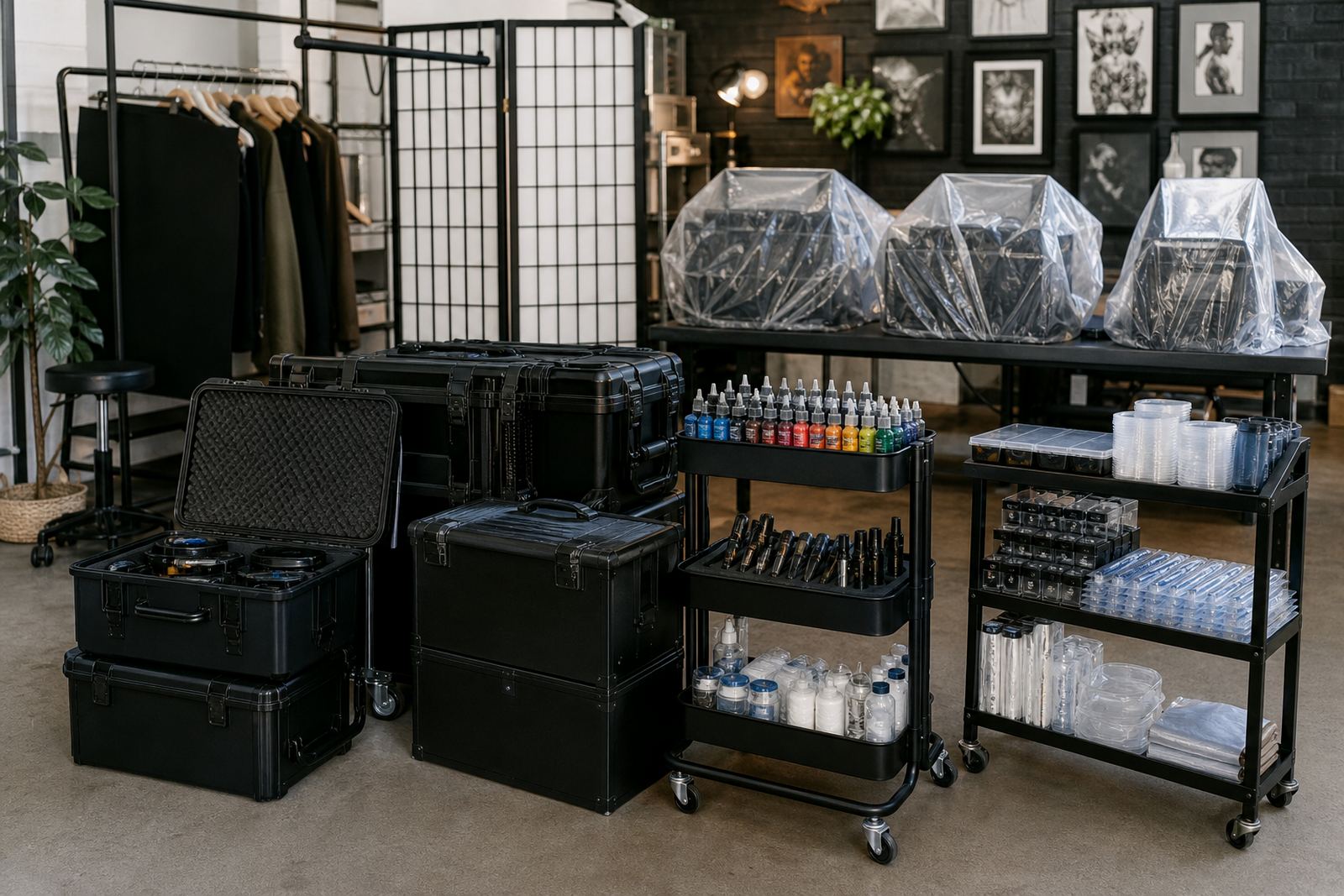
- Disposable cups, wraps, sleeves and covers kept together
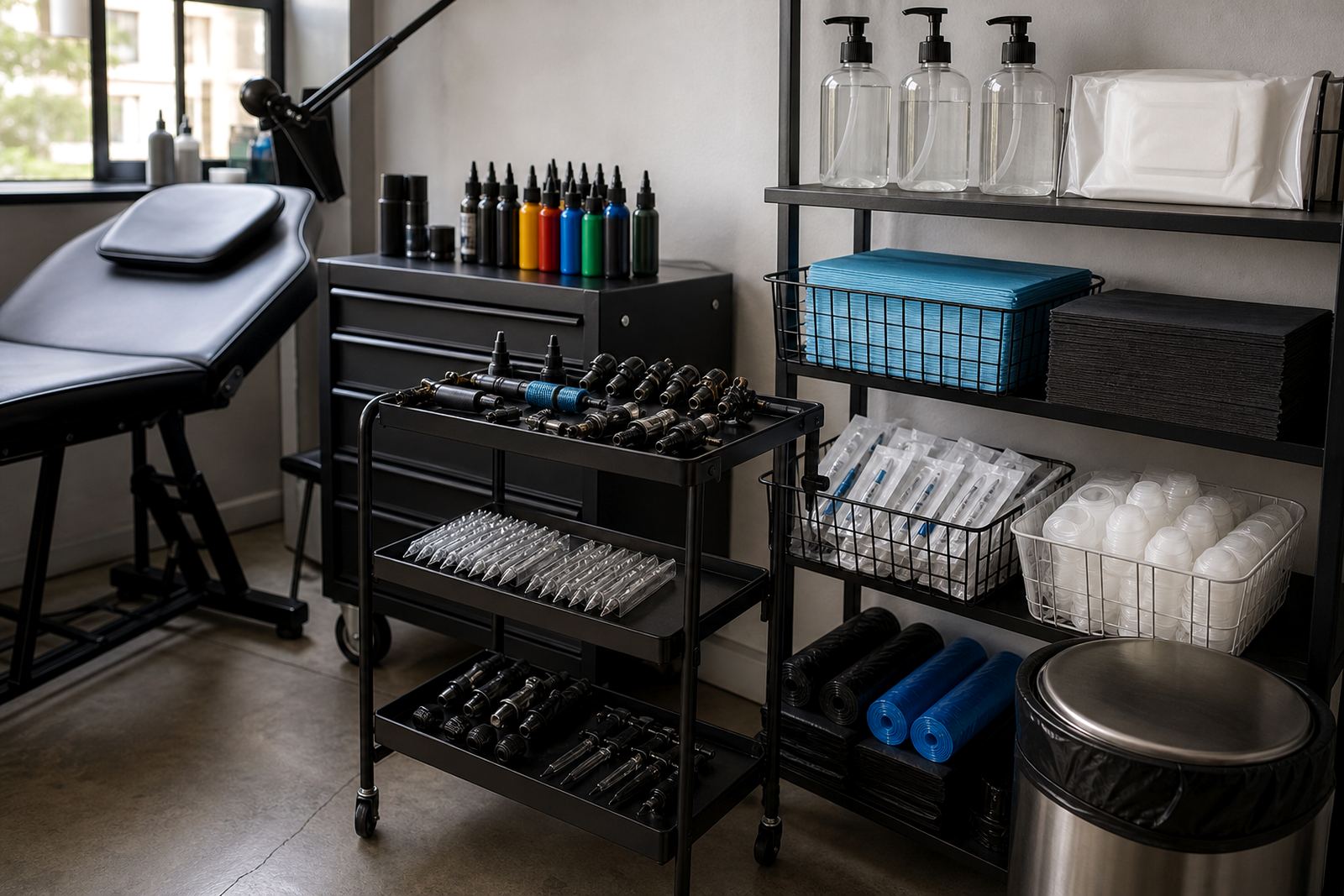
- Cleaning and wipe-down items stored separately from tattoo stock
Layout Choices That Save Time Between Sessions
A booked-only studio works better when the prep station is set up like a small parts line. The items used before each session should be closest to the artist, while bulk stock stays in a separate cupboard or shelf bank. That keeps the room clear and cuts down on unnecessary movement when sessions are stacked close together. In places like Johannesburg and Pretoria, where studios often run tighter daily schedules, this kind of layout also helps staff hand over stations more cleanly.
Good planning usually means one prep trolley, one clean supply shelf, one waste point and one locked area for higher-value stock. Labels should be plain and visible. If three artists use the same cartridge sizes, keep those in one pull-out container rather than split across drawers. It sounds small, but it saves time when a client is already in the chair.
- Keep session-day stock in small batches, not mixed boxes
- Mark open packs with a simple date and count system
- Use transparent tubs for fast visual checks
- Separate artist-specific items so nobody reaches for the wrong pack
Common Buying Mistakes In Small Appointment Studios
Many small studios overbuy one cartridge size and leave themselves short on other essentials. A shelf packed with one item can look tidy, but it helps very little if the studio also needs lining, shading and colour supplies. Another problem is splitting stock between too many spots, which makes counts unreliable and can trigger avoidable reorders. One missing tray or an unlabeled box can unsettle the whole week.
Another mistake is treating every consumable as if it moves at the same speed. In reality, black inks, certain liners and basic barrier items tend to move faster than niche colours or special sizes. Studio owners who track usage by month usually get a better feel for what should stay close and what can sit deeper in storage. The same thinking helps when planning stock for seasonal peaks, student work, guest artists or flash days.
- Buying mixed supplies without checking actual session patterns
- Leaving sterile items near open bottles or cleaning liquids
- Using the same storage box for active stock and dead stock
- Ignoring shelf space before placing a larger order
Budget Bands For A Lean Or Well-Stocked Room
Appointment-only studios usually plan stock in layers. A lean starter room with one or two artists may keep a tighter monthly supply order, often in the low thousands of Rand, depending on how much ink and how many cartridges move. A busier studio with several artists, more colour work and backup consumables can sit in a higher monthly band, especially when it keeps extra stock for scheduled weekends and booked art events.
For planning purposes, many studios separate budget into three parts: core working stock, reserve stock, and special-order items. Core working stock covers the items used every day. Reserve stock covers short lead items and last-minute gaps. Special-order items cover less common inks, sizes or grouping types. That split makes it easier to manage cashflow without running the shelves too thin.
In South African studios, it also helps to budget for delivery into Cape Town, Johannesburg, Durban, Pretoria, Gqeberha, Stellenbosch, Bellville or Somerset West as part of the stock cycle, rather than as an afterthought. When the room is booked out, a delayed consumable can affect the whole day, so a planned reorder rhythm matters more than buying in a rush.
How InkX Helps A Studio Stay Ordered
InkX Tattoo works with studios that need a practical supply line rather than a big mixed pile of stock. That includes stock list help, range grouping advice, station planning, consumable reorders, bulk order support, new studio kits, machine match help, cartridge match help, storage planning, dispatch updates, product substitutions and seasonal restock plans. For appointment-only spaces, that support is most useful when the diary is full and the stock room has to stay calm and countable.
Clients in Observatory and across South Africa use the enquiry form on the contact page to sort stock queries, order planning and delivery needs. The aim is to keep the working room tidy, the consumables grouped properly and the shelves ready for the next booked session, without guesswork or clutter.