When the station has to hold many colours at once
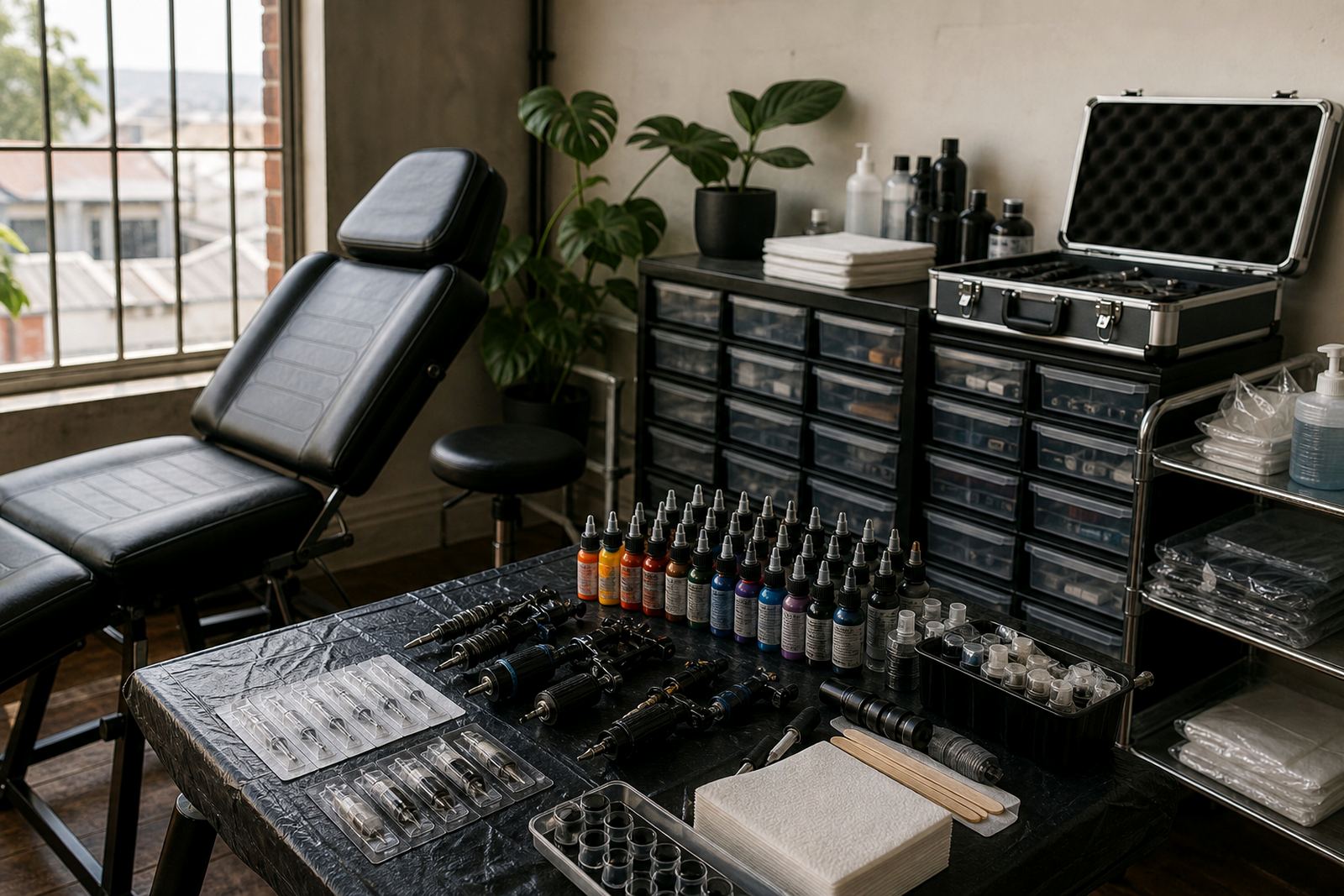
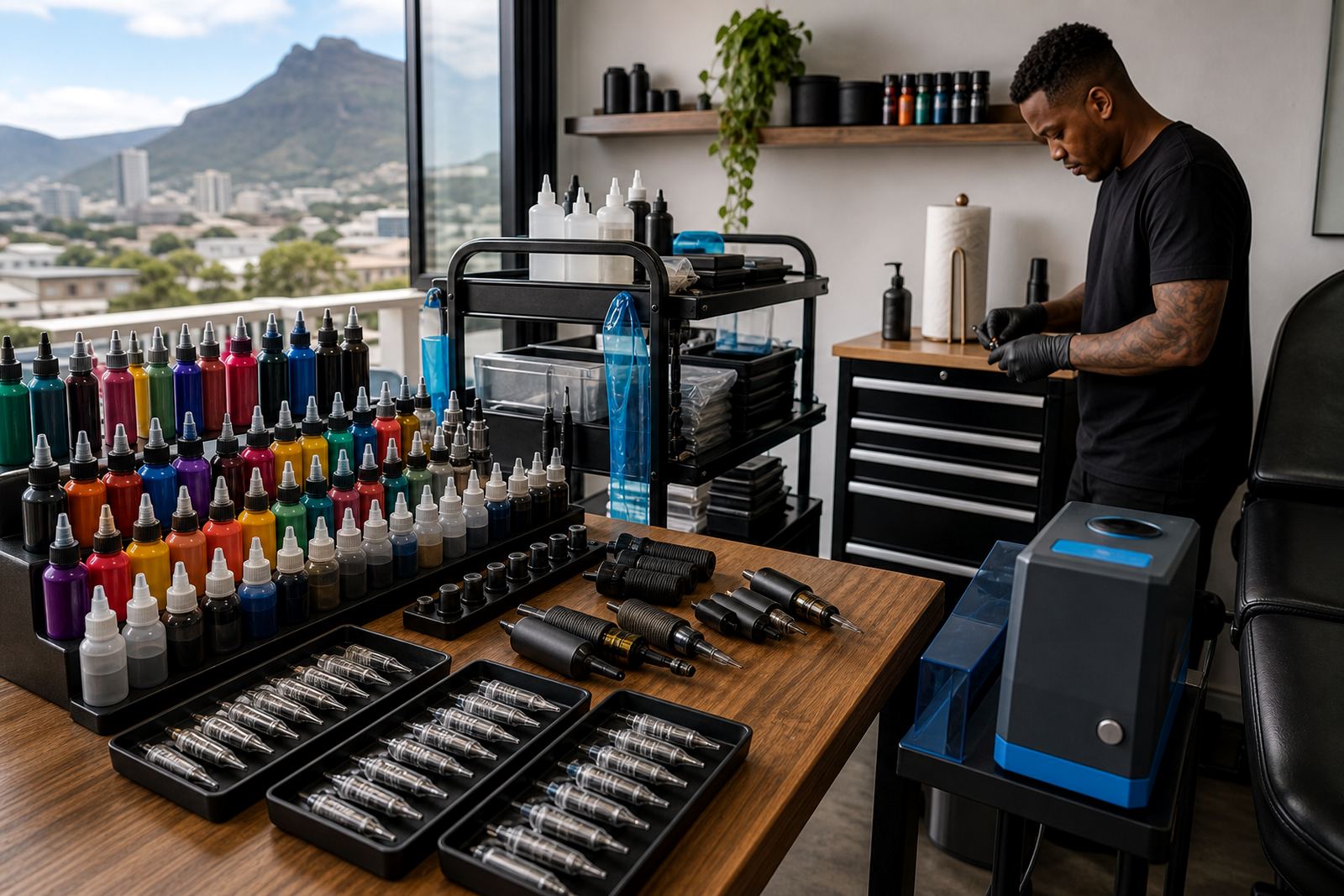
This use case suits studios that work with packed colour sections, smooth gradients and large areas that need several tones close at hand. Instead of opening one bottle at a time and shifting supplies around the surface, the station is set up so inks, caps, cartridges and wipes sit in a fixed order for the whole session.
In practice, that means planning for more than the machine alone. A good colour packing station needs space for ink sets, spare needles or cartridges, barrier film, rinse cups, clip cords or charging leads where relevant, and a clean landing area for used items. In coastal areas like Cape Town or Durban, covered storage matters too, because humidity can affect how neatly supplies stay organised between sessions.
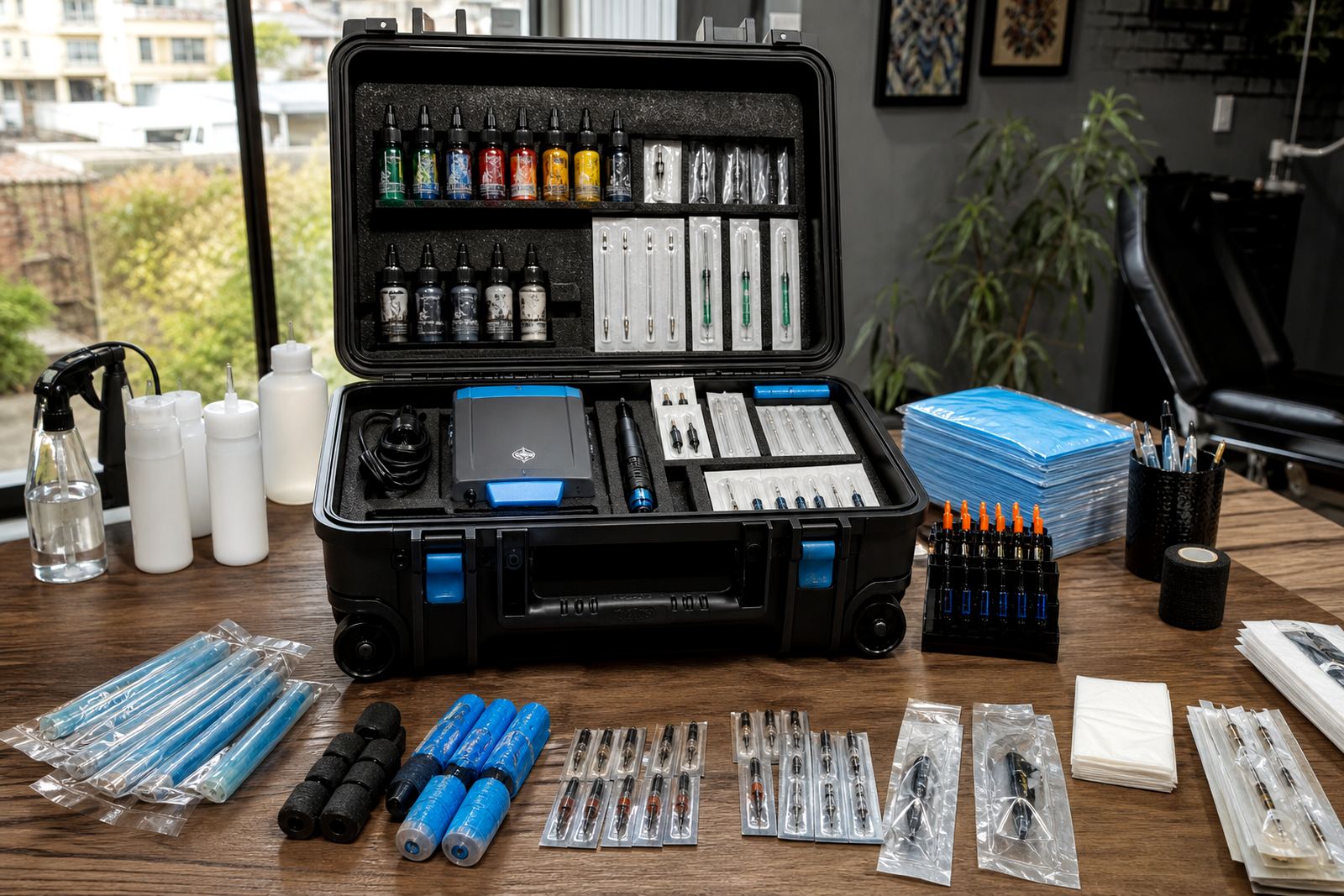
Typical kit for colour packing work
Most studios build this station around a few core groupings rather than a single all-purpose set. The aim is to keep colour changes easy, limit cross handling and give the artist a clear system for warm tones, cool tones and shading support.
- Tattoo inks grouped by colour family, with labels that are easy to read from the chair side
- Needles and cartridge groupings for line work, packing and blending passes
- Machines suited to steady colour saturation and controlled hand speed
- Single-use grips, tips, barrier covers, caps and wrap for studio hygiene
- Wipes, surface protection, clip cord covers or charging cable covers where needed
- Rinse cups, bottle holders and small trays that do not tip when the session gets busy
For many Cape Town and Johannesburg studios, this is also the point where storage planning becomes part of the supply order. If everything has a fixed place, the team spends less time searching and more time keeping the work area organised.
Layout that keeps colour changes tidy
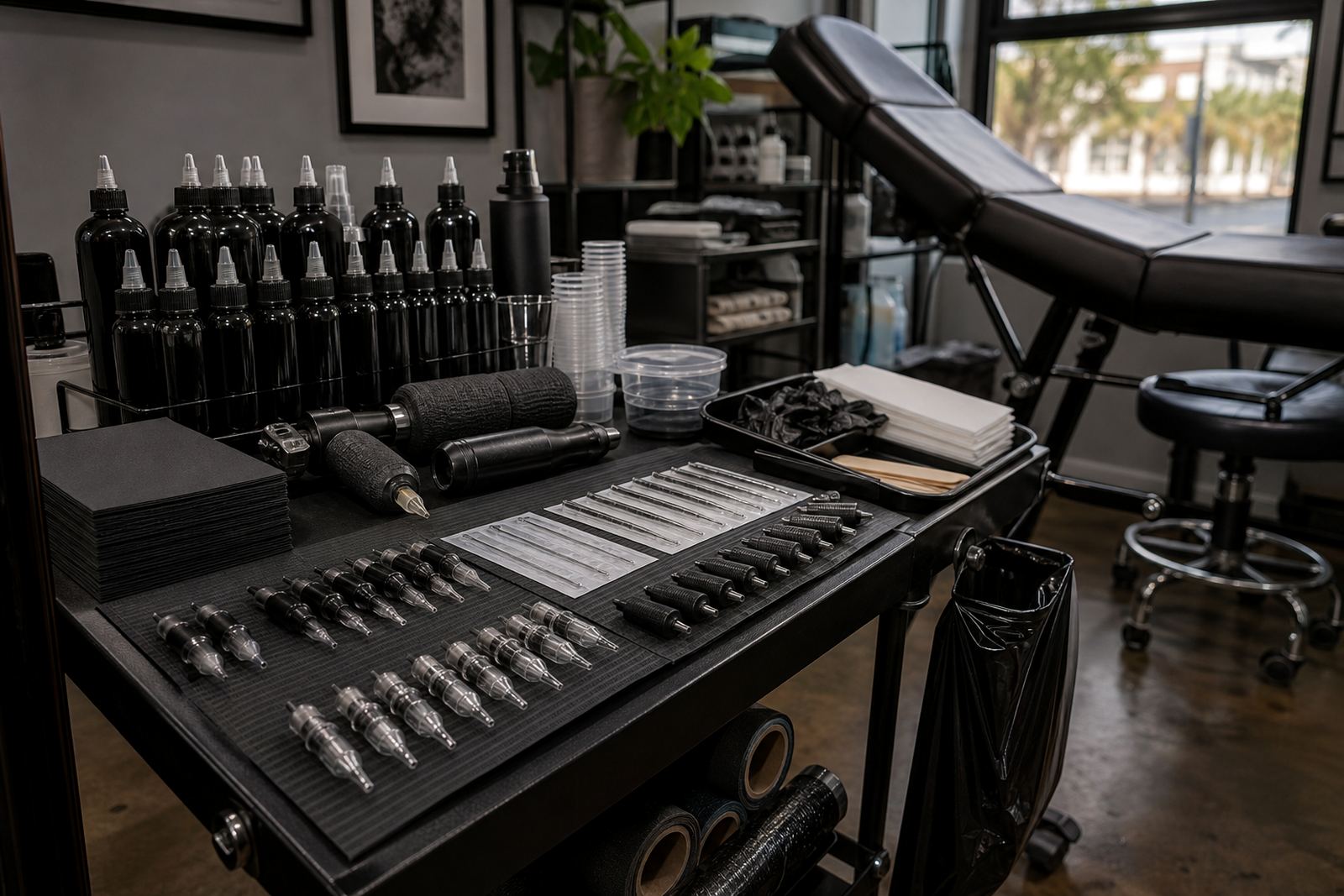
A colour packing station works best when the most used items sit within easy reach and the lesser used items stay out of the way. The front of the station should hold the active inks, caps and the current cartridge set. Spare stock can sit in labelled drawers or covered containers nearby, sorted by size and use. Keep the clean side separate from the used side so there is no confusion during a long appointment.
For studios in places like Pretoria, Gqeberha and Somerset West, the layout also needs to suit the room itself. Smaller rooms need a compact footprint with vertical storage. Bigger studios can use wider tables, but the principle stays the same: one clear zone for clean items, one for active items, and one for waste. That makes restocking easier when the day is busy and the station has to reset fast.
Common mistakes that slow the session
Colour packing stations usually go wrong when they are treated like a general purpose setup. That leads to too much stock on the surface, loose caps, mixed needle groupings and a table that fills up before the first pass is complete. Once that happens, colour changes take longer and the working area becomes harder to manage.
- Mixing all cartridges into one container instead of grouping them by use
- Keeping open inks too far from the active work area
- Using too many bottle sizes for the same job
- Leaving barriers, wraps and wipes stacked where they can be knocked over
- Buying bulk supplies without checking storage space first
Another common problem is under-ordering the items that disappear fastest. Caps, barrier film, wipes and cartridge packs are the things that catch a studio out, especially when several artists work in the same week. A colour packing station should have a restock plan, not just a pile of supply boxes.
Budget ranges that make sense in Rand
Budget depends on how many artists use the station and how wide the colour range needs to be. A light setup for one artist may sit around R1 500 to R4 000 if the focus is on core consumables, a few needle and cartridge groupings, and basic storage. A more complete colour packing station for a busy studio can move into the R6 000 to R15 000 range once ink variety, backup cartridges, station protection and storage pieces are included.
For larger studio orders, the biggest cost driver is usually the repeated consumables rather than the machine. It is often better to spend on the items that move through the station quickly and keep the hardware list smaller and more practical. That gives the team more control over colour work without filling the room with stock that sits untouched.
Ordering for Cape Town and other studio hubs
InkX Tattoo supplies studios across South Africa from Observatory, Cape Town, with delivery to Cape Town, Johannesburg, Durban, Pretoria and Gqeberha, plus nearby areas such as Stellenbosch, Bellville and Somerset West. The same order structure can be used for a single chair room or a larger multi-artist studio, as long as the station list is clear from the start.
Clients use the enquiry form on the contact page for stock list help, range grouping advice, station planning, consumable reorders, bulk order support, new studio kits, machine match help, cartridge match help, storage planning, dispatch updates, product substitutions and seasonal restock plans. For colour packing work, that support is useful when a studio wants the same supply pattern week after week instead of changing the station setup every time.
What a cleaner colour workflow looks like
When the station is planned well, colour packing sessions move in a simple sequence: set out the active inks, prepare the right cartridge grouping, keep the clean tools separate, and reset the space as soon as the session ends. That keeps the bench readable, lowers mistakes and makes it easier for the next artist to work without hunting for supplies.
It also helps the studio buy with more confidence. Rather than overloading the shelf with random stock, the team can keep the right shades, the right cartridge mix and the right hygiene supplies in regular rotation. For a colour packing station, that sort of order matters more than having too much of everything.