
A front room that can handle conversation and prep
In many Cape Town studios, the consultation space sits right at the front of the shop, close to the door and visible from the waiting area. That room has to do a few jobs at once: hold design discussions, show sample sets, organise paperwork and keep selected supplies within reach without letting the space feel busy. For a studio in Observatory, that often means planning around a compact room with good light, a clean surface for drawings and a storage point for small stock that is used often.
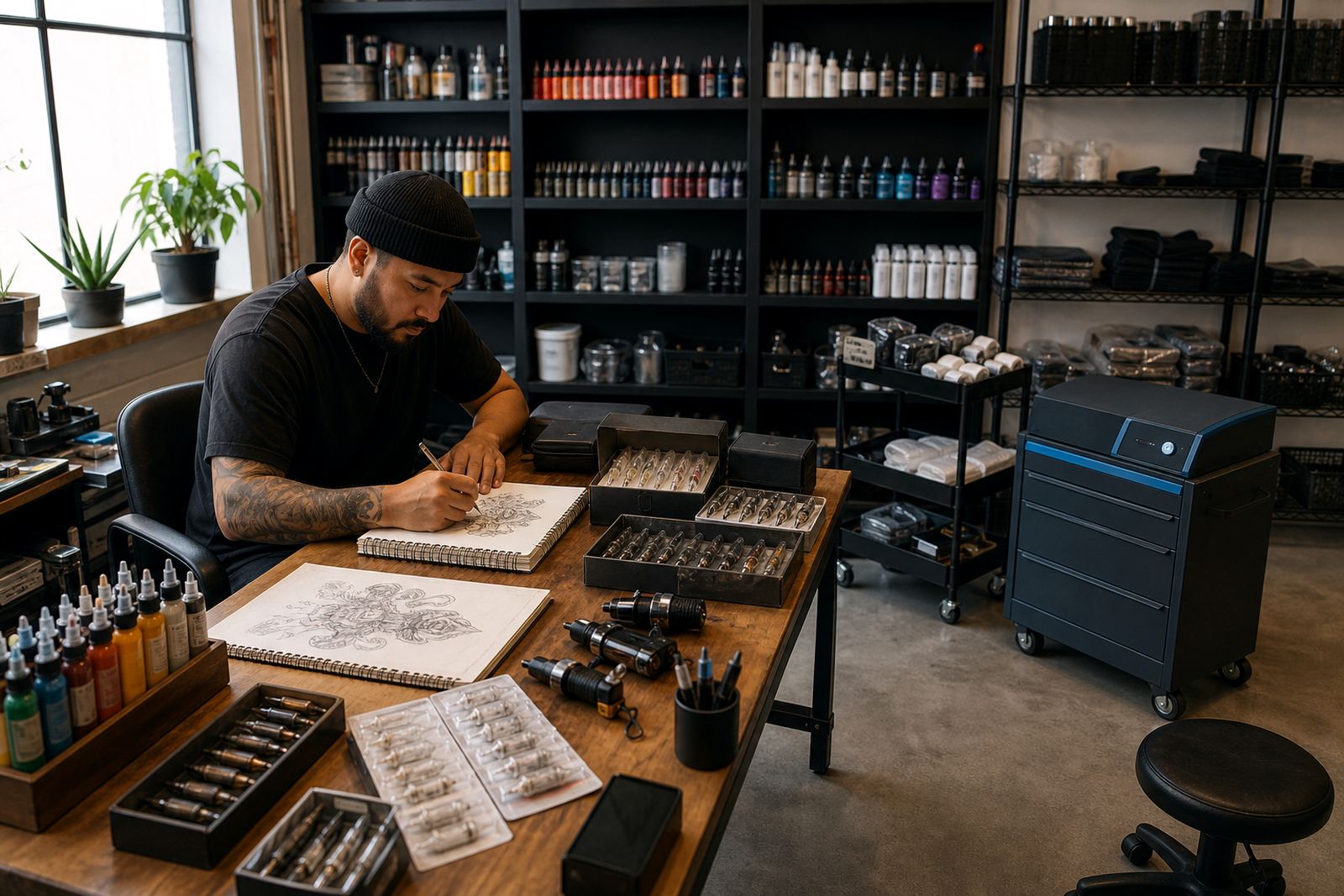
The best layout leaves a clear seat for the client, a work surface for the artist and a separate spot for samples, sketch pads, aftercare packs and booking forms. If the room is used for both consultation and intake, the flow matters even more. People should be able to sit down, look through reference material and see ink ranges or cartridge groupings without having to move boxes around.
- One main work surface for drawing and note taking
- Open shelf or drawer space for sample displays
- Small sealed storage for sterile single-use items
- A separate bin point for packaging and outer wraps
What usually sits in a consultation room
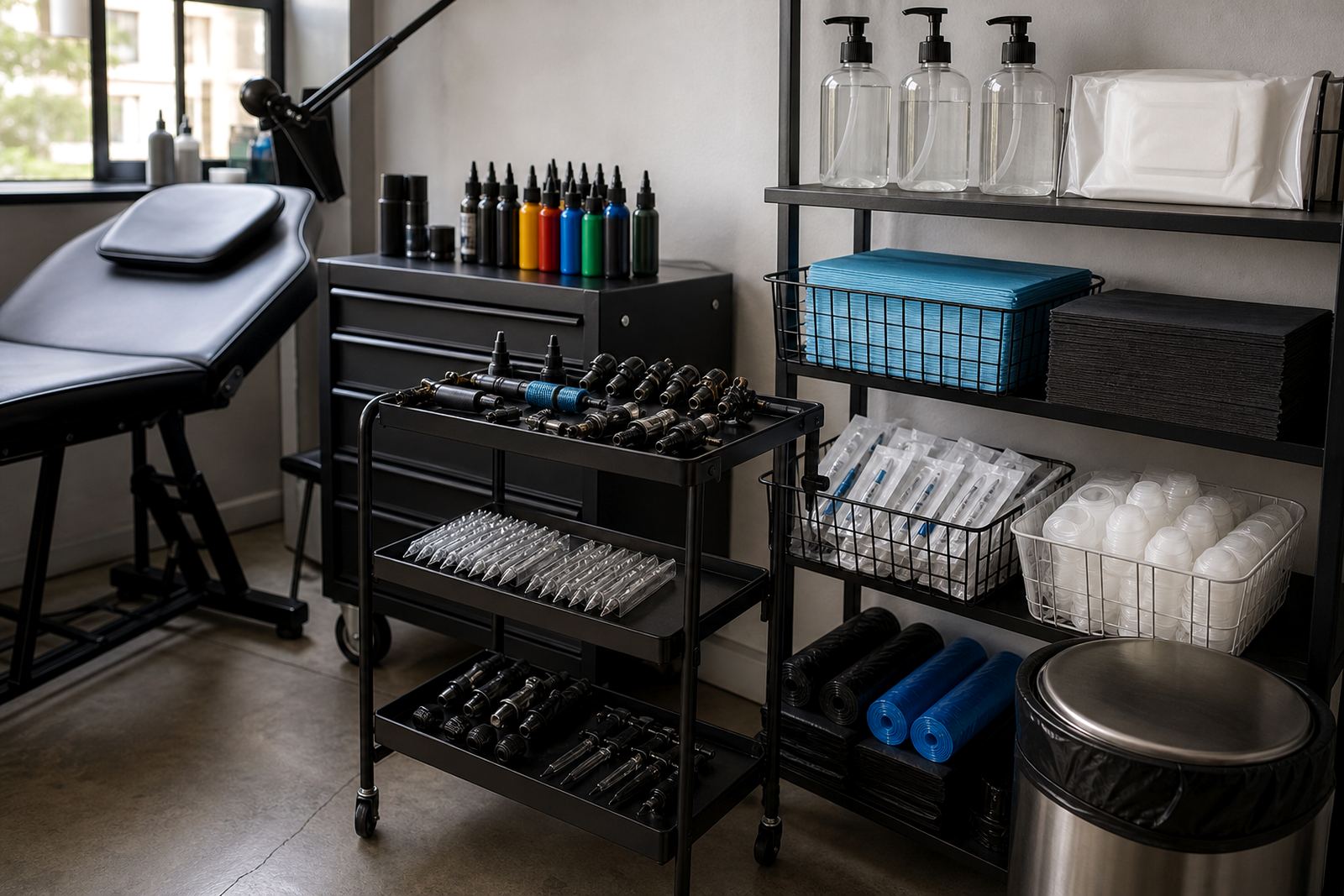
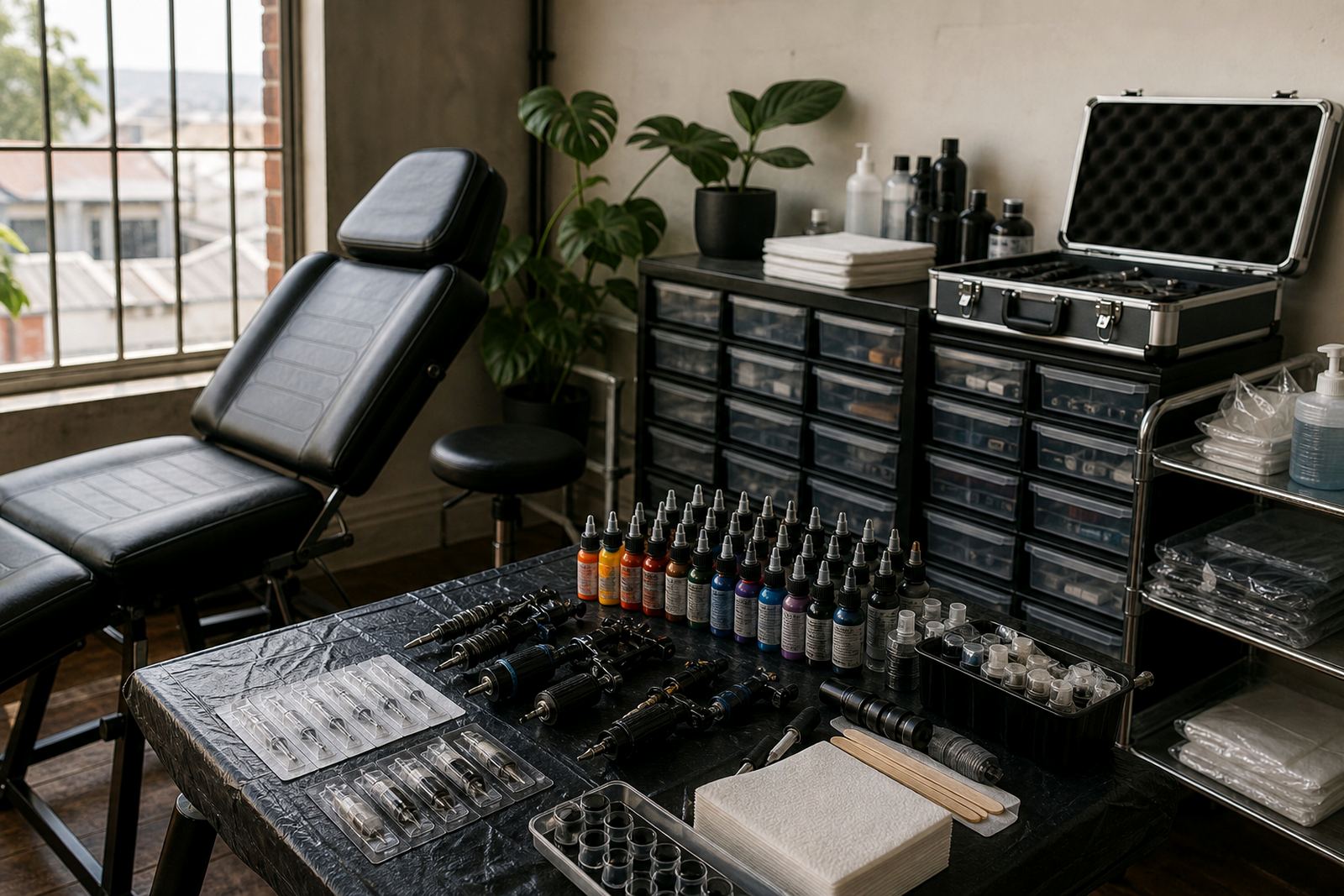
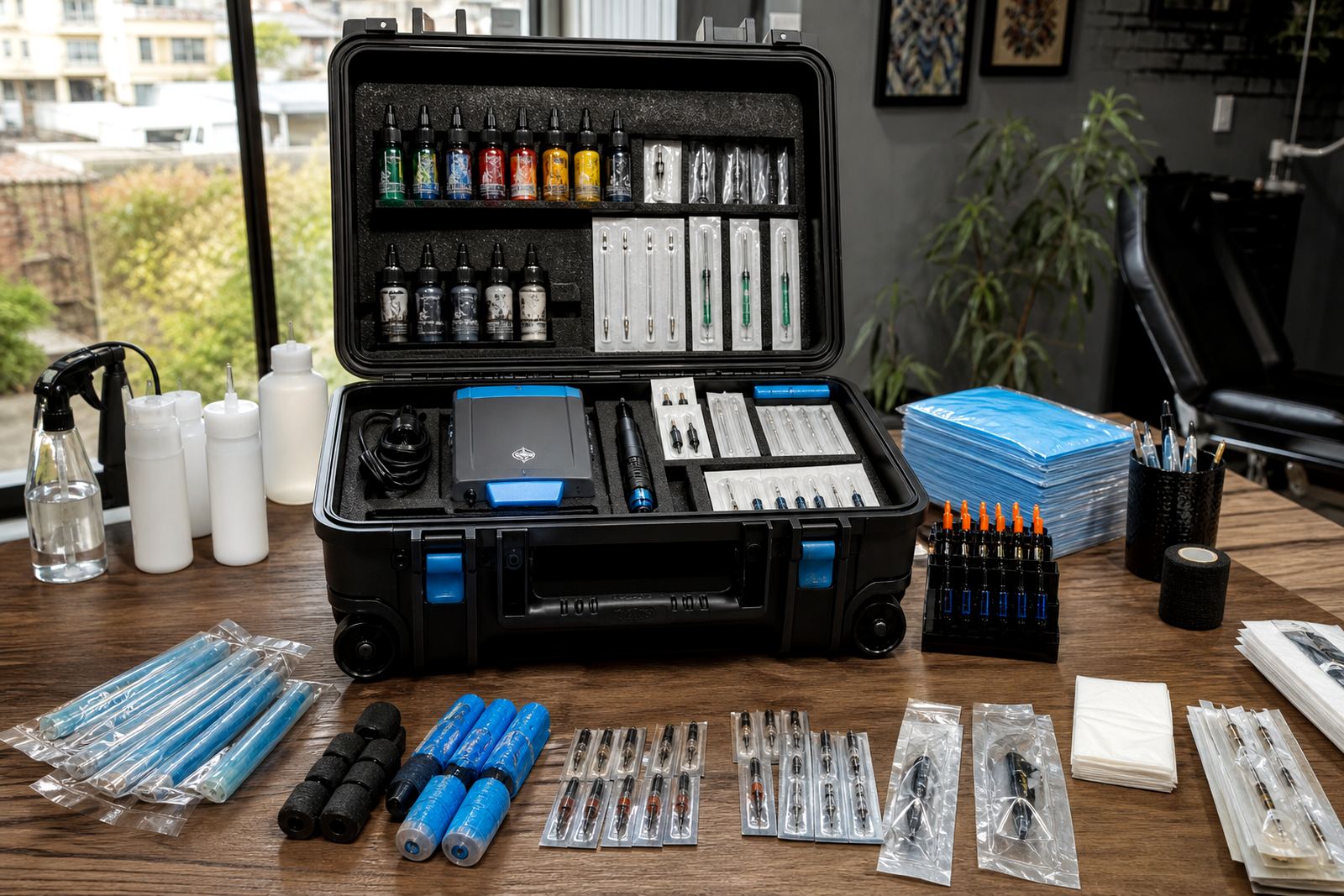
The supply mix in a front room is smaller than the back room stock, but it still has to be practical. Most studios keep a curated set of tattoo inks for showing colour families, plus needle and cartridge groupings that help with lining, shading and general work planning. Some teams also keep a few machines on display for machine match discussions, although the final setup is often stored elsewhere until needed.
Common items in a consultation space include sample sheets, printed consent forms, design mock-ups, sterile single-use grips or barriers where relevant, covered trays, pen-style markers, measuring tools and sealed consumables. Storage should keep these items sorted by use, not by whatever space is left. If the room is a bit tight, wall-mounted shelves or shallow drawers usually work better than deep cupboards that get messy quickly.
- Ink display sets arranged by tone or use
- Needle and cartridge boxes grouped by configuration
- Barrier film, clip cord covers and wrap materials
- Disposable cups, wipes and single-use prep items
- Labelled containers for clean stock and opened stock
How to set the room up so it works daily
A consultation room should feel calm, but it still has to support fast movement between discussion and prep. Good layout starts with keeping the cleanest items highest and the most frequently used items easiest to reach. In humid coastal areas like Cape Town and Gqeberha, sealed storage matters because open cartons and loose sleeves can pick up moisture and dust more easily than in a dry room.
For studio planning, think about where someone stands when showing colour charts, where notes are written and where stock is checked before a session. If the room doubles as a sales point for consumables, keep the display compact and avoid overloading the counter. A small locked cupboard for sterile supplies is useful, especially where several artists share the same front room. In larger studios, a second storage point near the back can reduce crossing traffic during a busy day.
We also see studios make better use of the room when they plan for replacement stock at the same time as the display set. That means deciding where extra cartridges, needles and inks will sit once the front samples are out on the shelf. It sounds minor, but it saves a lot of shuffling later.
Common mistakes that make a consultation space hard to use
One of the most common issues is trying to show too much stock at once. A front room packed with every bottle, box and accessory can feel cramped and makes it harder for the client to focus on the design discussion. Another problem is mixing sealed sterile items with open sample stock. Even when the room looks neat, the system becomes harder to manage and harder to restock properly.
Studios also run into trouble when they choose the wrong size furniture. A table that is too narrow leaves no room for drawings, while a shelf that is too deep turns into a dumping point for mixed items. It helps to keep the room specific, not general purpose. The consultation space is there for planning and selection, not for every loose consumable in the building.
- Too many open boxes on the counter
- Sample stock mixed with daily-use stock
- No labelled place for reorders or substitutions
- Furniture that blocks the walking line to the chair
- Loose packaging left near clean items
Budget ranges for a practical consultation setup
Budget depends on how polished the room needs to feel and how much stock is shown in front of clients. A lean setup for a small studio in Pretoria or Stellenbosch might sit around R3 500 to R8 000 for shelving, storage tubs, display holders and a starter stock presentation set. A more complete room, with better furniture, larger displays and organised storage for inks, cartridges and sterile consumables, can sit between R9 000 and R18 000.
For larger operations in Johannesburg, Durban or Cape Town, the spend can climb higher if the room is used for training, sales support and stock planning as well as consultations. The best money is usually spent on storage that lasts, clear labelling and a layout that reduces clutter. Cheaper fittings can work, but only if they hold up to daily handling and can be cleaned easily. In a busy studio, that matters more than appearance alone.
A good rule is to build the room around what is actually used each week. If a studio often runs machine match help or cartridge match help, then those groupings should have dedicated space. If the room only handles first consultations, then a tighter display with a few strong sample sets is usually enough.
Stock support for studios that plan ahead
InkX Tattoo supports consultation spaces with stock list help, range grouping advice, station planning, consumable reorders and new studio kits. That support is useful when a front room has to do more than look tidy. It helps teams decide what should sit on display, what should stay in sealed storage and what should be kept in the back for daily use. For studios across South Africa, that can make the difference between a room that looks full and a room that functions properly.
Our supply range covers tattoo inks, needles, cartridges, machines and studio consumables for planning, display and replenishment. Deliveries go to Cape Town, Johannesburg, Durban, Pretoria, Gqeberha, Stellenbosch, Bellville and Somerset West. Clients reach us through the enquiry form on our contact page when they need help choosing groupings or setting up seasonal restock plans that fit the room they have.
Using the room without losing order
A consultation space works best when the room is treated like part of the production flow, not a spare corner. Keep the display set lean, label the storage properly and make room for the items that move most often. A front room that is organised from the start saves time later and gives clients a clearer view of the work being discussed. It also makes it easier for the team to follow local health regulations and maintain a clean, orderly studio environment.
When the layout is right, the room can support creative work, stock checks and day-to-day client planning without feeling cramped. That is what a useful consultation space should do.