What a flash day station has to handle
A flash day setup is different from a standard appointment flow. The station has to cope with repeated prep, quick changeovers, and a steady run of small designs without the table or trolley becoming cluttered. In Observatory, Cape Town, many studios plan for a mix of walk-ins, pre-booked slots, and short gaps between artists, so the supply layout must be direct and easy to reset.
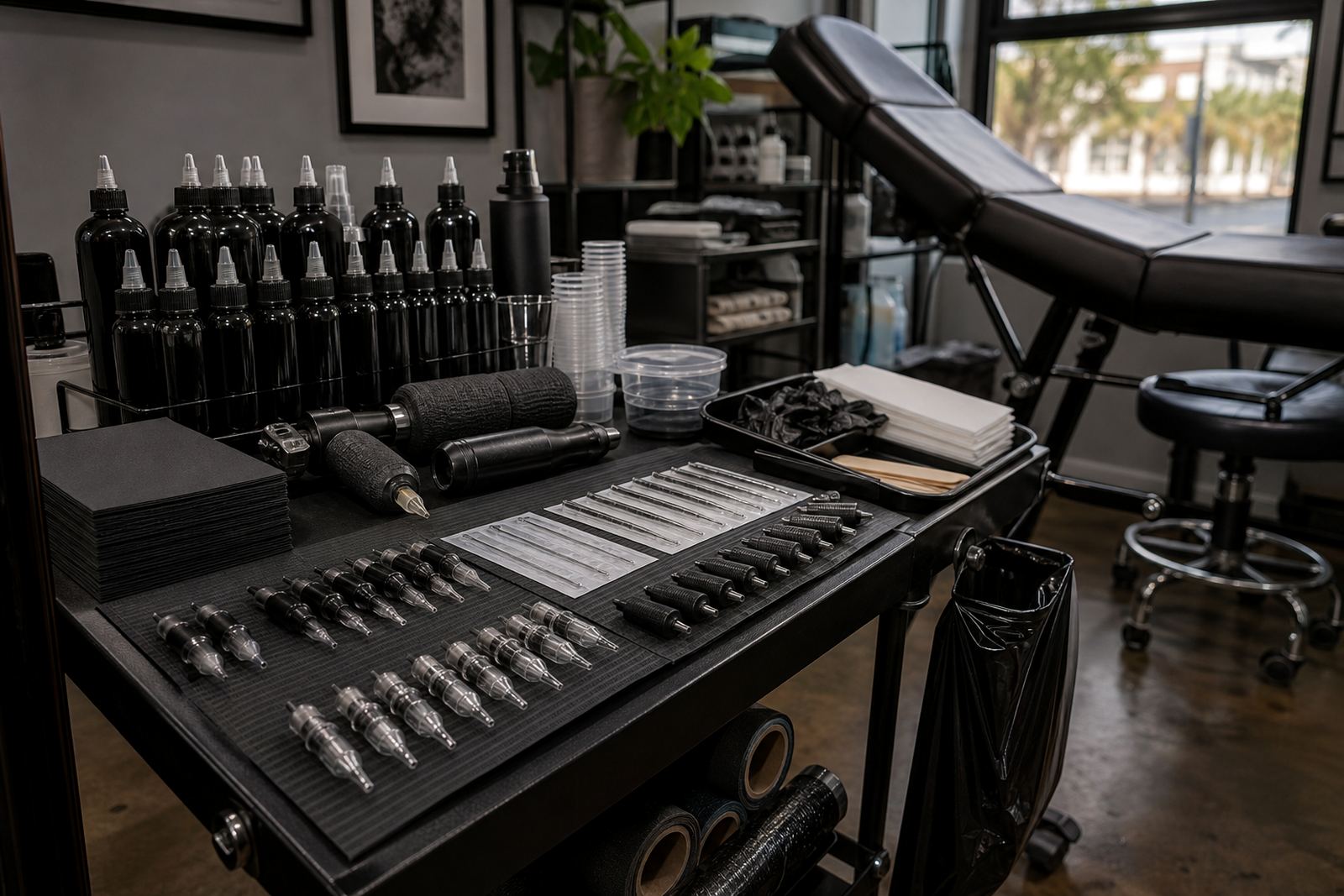
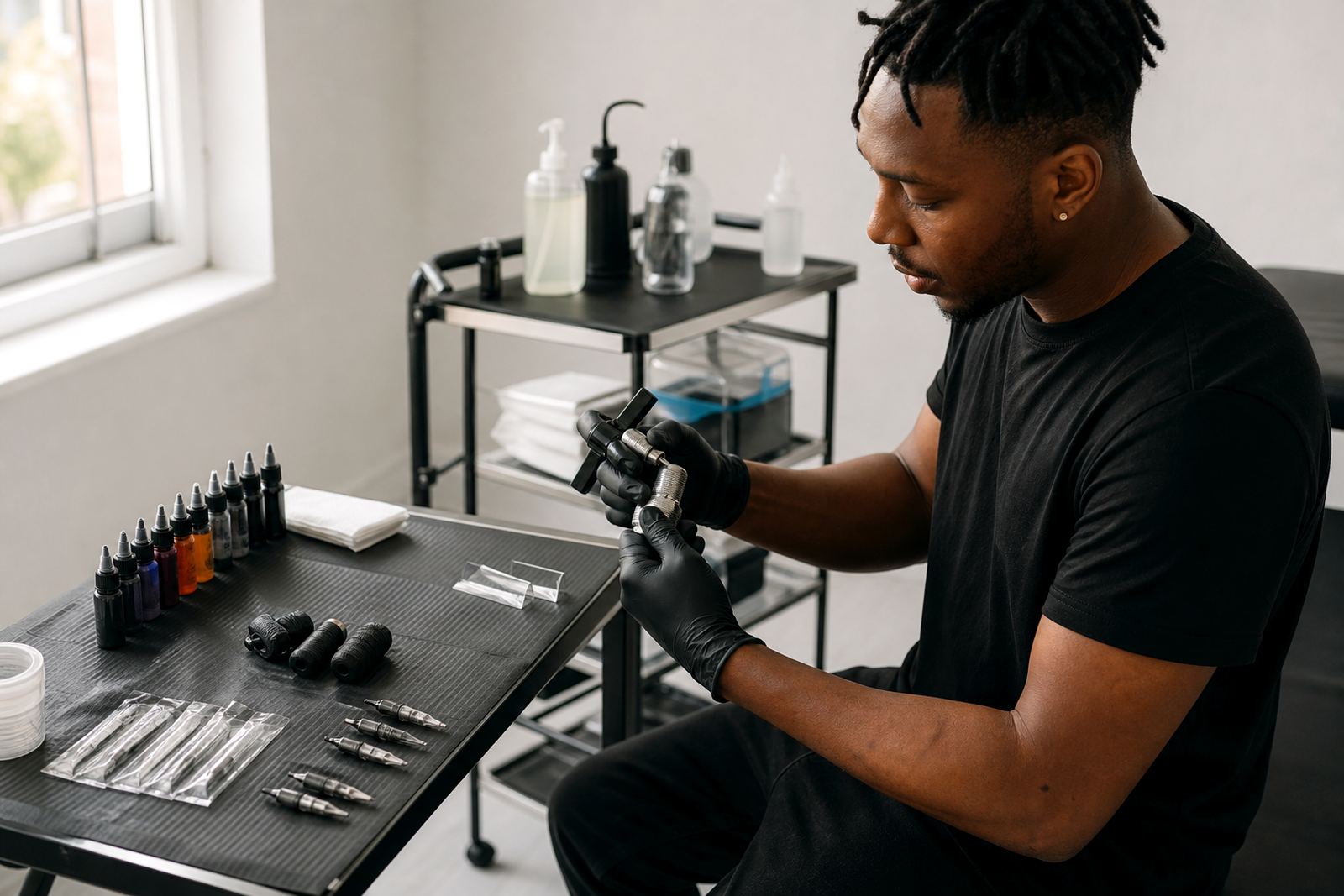
For this kind of day, the working set usually includes tattoo inks in a limited but balanced palette, grouped needles, cartridge boxes in the sizes that suit linework and shading, cartridges for different passes, clip cord or battery-supported machines, grips, clip cords where needed, barrier film, wrap, razors, stencil paper, cleaning wipes, disposable cups, gloves, and surface covers. The goal is not to carry everything on the day, but to carry what will be used often and stored in a way that makes each reset quick.
- Keep inks sorted by colour family and wash strength
- Group needles and cartridges by size and purpose
- Set out sterile single-use items in the order they are opened
- Leave space for used items so the clean side stays clear
Station layout that works during repeated resets
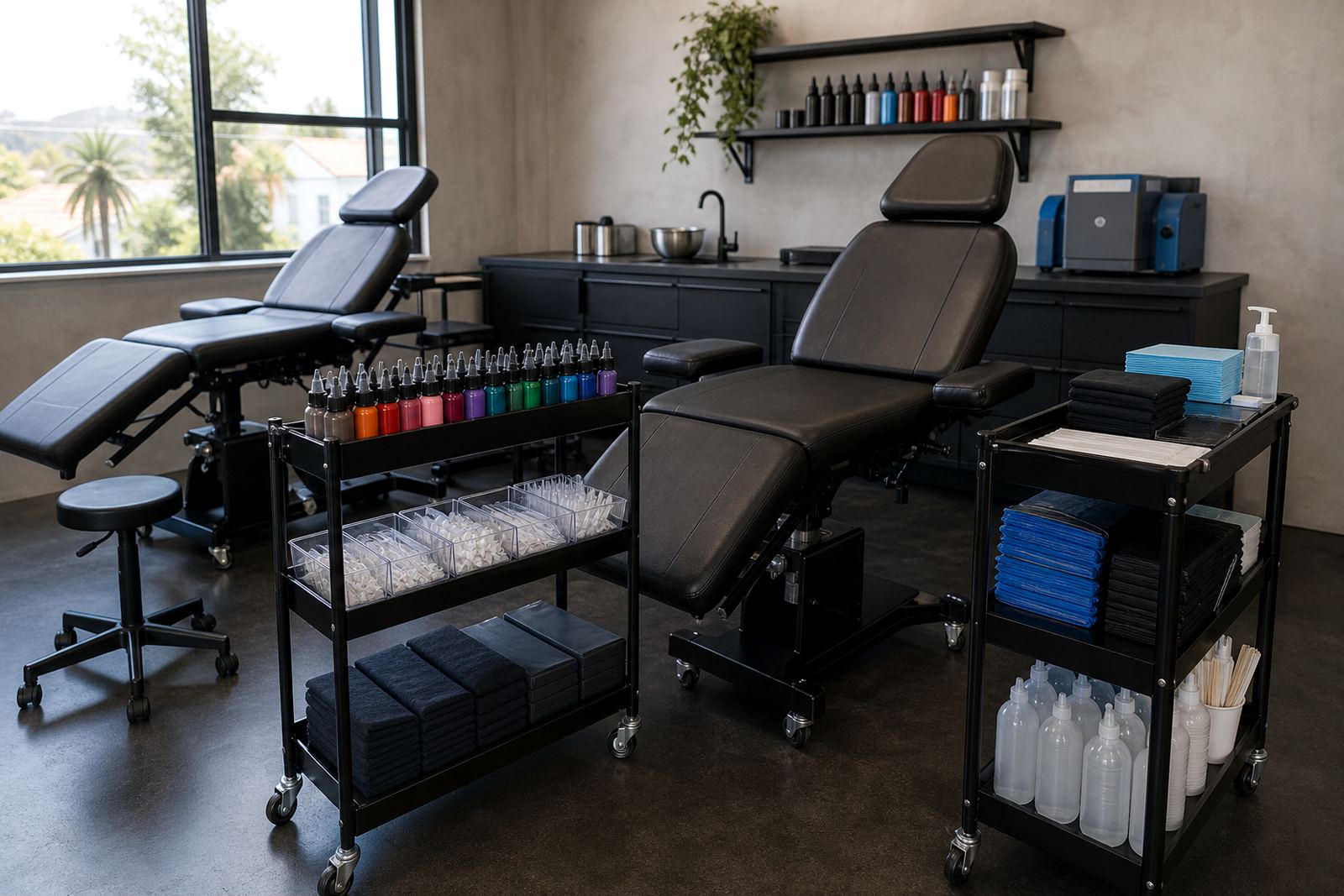
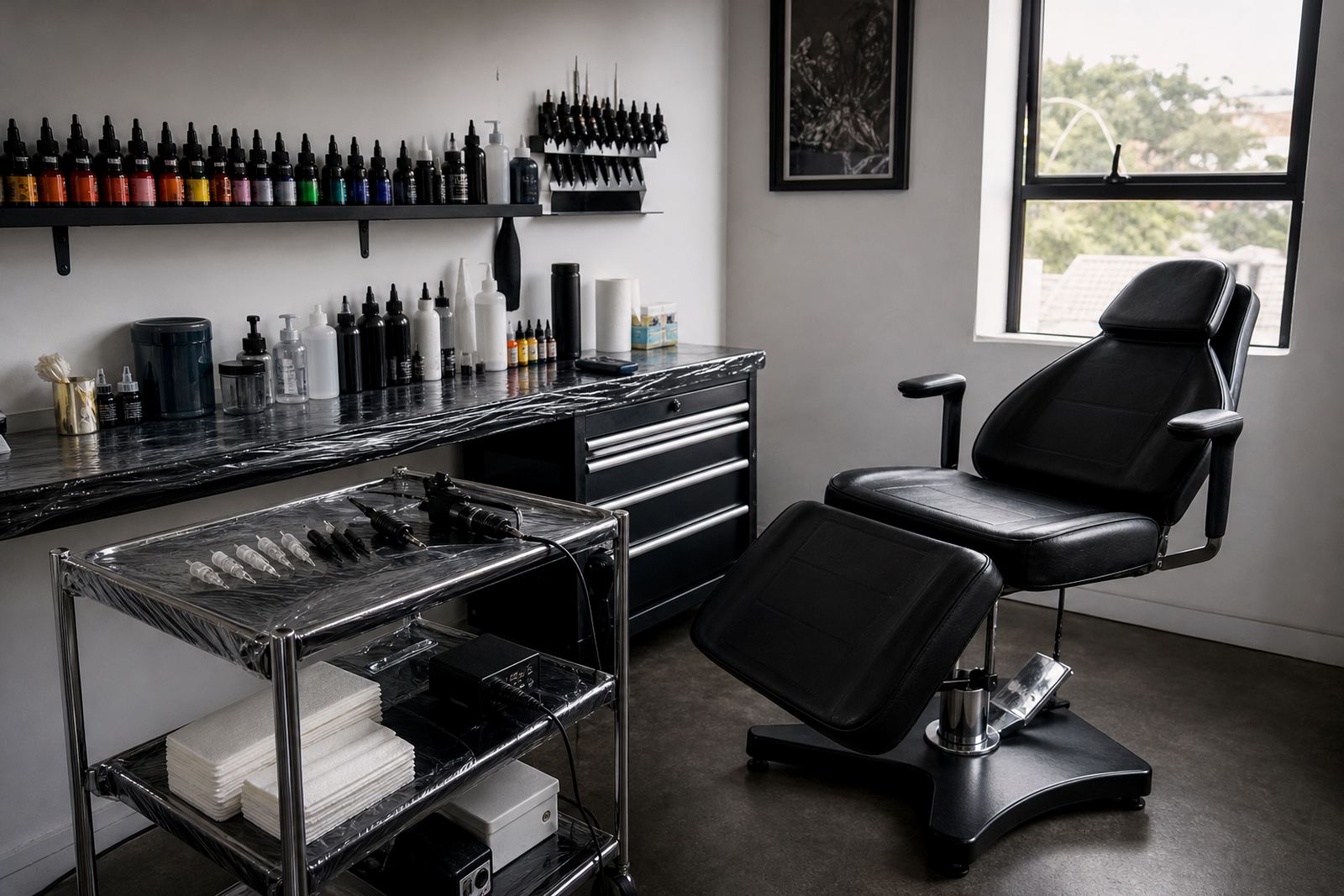
Good flash day planning starts with the surface, not the tattoo machine. The main work area should allow the artist to reach ink caps, cartridges, gloves, wipes, and covers without crossing over the client area more than needed. A small side trolley often helps, especially where the front station is busy and there is limited floor space.
For studios sending work to Cape Town, Johannesburg, Durban, Pretoria, or Gqeberha, the layout should also suit the room itself. Coastal humidity in places like Cape Town and Gqeberha can affect how you store cartons, paper goods, and adhesive items, so sealed containers and dry shelving matter. Inland studios may deal with dust and higher turnover, which means the same principle applies: protect the stock and keep the daily pull easy to see.
- Use one tray for fresh consumables and one for waste or used items
- Store spare cartridges and needles in clearly marked boxes
- Keep inks upright and away from direct heat or window glare
- Leave a clean reset point for each new client or walk-in
The usual equipment set for event-style tattooing
Flash day work calls for equipment that is dependable and simple to manage through a full shift. Artists often use one main machine for lining and a second setup for shading, or a machine with a fast changeover plan that suits the artist’s hand speed. Cartridge groupings should be matched to the designs on the sheet, so there is no guessing once the queue starts moving.
Typical packs for this use case include fine liners, round shaders, bugpin style groupings where a softer pass is needed, and magnums for broader shading. Ink selection usually leans toward black, grey wash, and a focused colour range rather than a full shelf of options. Single-use items should be opened in a measured way, because over-opening creates clutter and wasted stock.
- Machines suited to repeat linework and short shading runs
- Cartridge groupings for outlines, fills, and controlled shading
- Pre-counted gloves, barriers, razors, cups, and wipes
- Ink sets kept to the colours actually used on the flash sheet
Planning stock for one busy day or a full weekend
Flash day stock planning is about counting touches, not just counting orders. If a studio expects several artists to work from the same sheet, the number of cartridges, gloves, wipes, and ink cups can climb fast. A sensible plan allows for the main session, the mid-day reset, and a small buffer for rework or late additions.
Budget ranges in Rand vary with the number of artists, the size of the flash sheet, and whether the studio is using a starter set or a fuller event pack. A smaller one-station setup can sit in the lower range, while a multi-artist event kit with extra cartridges, more ink colours, and added sterile single-use stock will move higher. It helps to separate consumables from permanent equipment so the spend is clearer.
- Smaller flash day supply set: about R1,500 to R3,500
- Mid-sized multi-artist supply set: about R4,000 to R9,000
- Heavier event stock with extra cartridges and inks: about R10,000 and up
Common errors that slow the table down
The most common mistake is packing too wide a range of stock and then spending time searching for the right item during the day. Another issue is opening too many sterile single-use items before they are needed, which makes the station crowded and harder to keep in order. Some teams also undercount basic consumables like gloves and wipes, then end up short when the pace picks up.
Storage is another weak point. Ink bottles left loose in tote bags can tip, labels can rub off, and cartridges stored without clear grouping take longer to find. In South Africa, where studios may move stock between locations or deliver to clients across city routes, it is better to keep a fixed pull list for flash days and store it in the same order every time. Follow local health regulations for studio handling, cleaning, and waste control.
- Do not overpack the table with rarely used items
- Do not mix fresh stock with used or unopened items
- Do not change cartridge groupings at the last minute without checking the sheet
- Do not leave cleaning and disposal supplies as an afterthought
How InkX Tattoo supports flash day prep
InkX Tattoo supplies tattoo inks, needles, cartridges, machines, and studio supplies that suit quick-turn event work in Observatory and across the country. The range is useful for studios that want stock grouped in a practical way, whether the requirement is stock list help, range grouping advice, station planning, or consumable reorders. New studio kits, machine match help, cartridge match help, storage planning, dispatch updates, product substitutions, and seasonal restock plans are all part of the support side.
For flash day prep, the value is in keeping the supply list tight and the grouping logical. A studio with a clear pull list can set up faster, reset faster, and avoid the kind of mid-day scrambling that slows an event. Clients reach the team through the enquiry form on the contact page, which keeps the ordering and planning side neat for studios in Cape Town, Johannesburg, Durban, Pretoria, Gqeberha, Stellenbosch, Bellville, and Somerset West.
MD Mikhail Johannes van Wyk works with the team to keep the operation practical, with support from Anele Mlambo, Tamlyn Adams, Willem Masilela, Nokuthula Khanye, Riyaaz Parker, and Karabo Moagi.