White ink for sharp highlights and tonal lift
White highlight inks are used where an artist needs a brighter point in the design, extra contrast against darker pigment, or a softer lift when mixing custom tones. In practice, white can be worked into fine detail, used for reflective points, blended into grey washes, or added to settle a composition once the main structure is already in place. The right white should hold its body in the cup, move evenly through the machine, and place cleanly without becoming watery or clumpy.
For studio use, white is often kept close at hand for finishing passes, touch work and gradual tonal build up. On certain skin tones and in heavier contrast pieces, a clean white can help define edges, soften transitions, or give a brighter finish where the design calls for it. Artists often compare how the ink behaves with lining and shading setups before using it on a client because some whites settle slower and need a steadier hand during the session.
InkX Tattoo supplies white inks alongside the needle, cartridge and consumable range that studios use for day to day work. Orders are packed for delivery to Cape Town, Johannesburg, Durban, Pretoria and Gqeberha, as well as surrounding studio areas including Stellenbosch, Bellville and Somerset West.
Pack sizes, bottle options and the look of the ink on the table
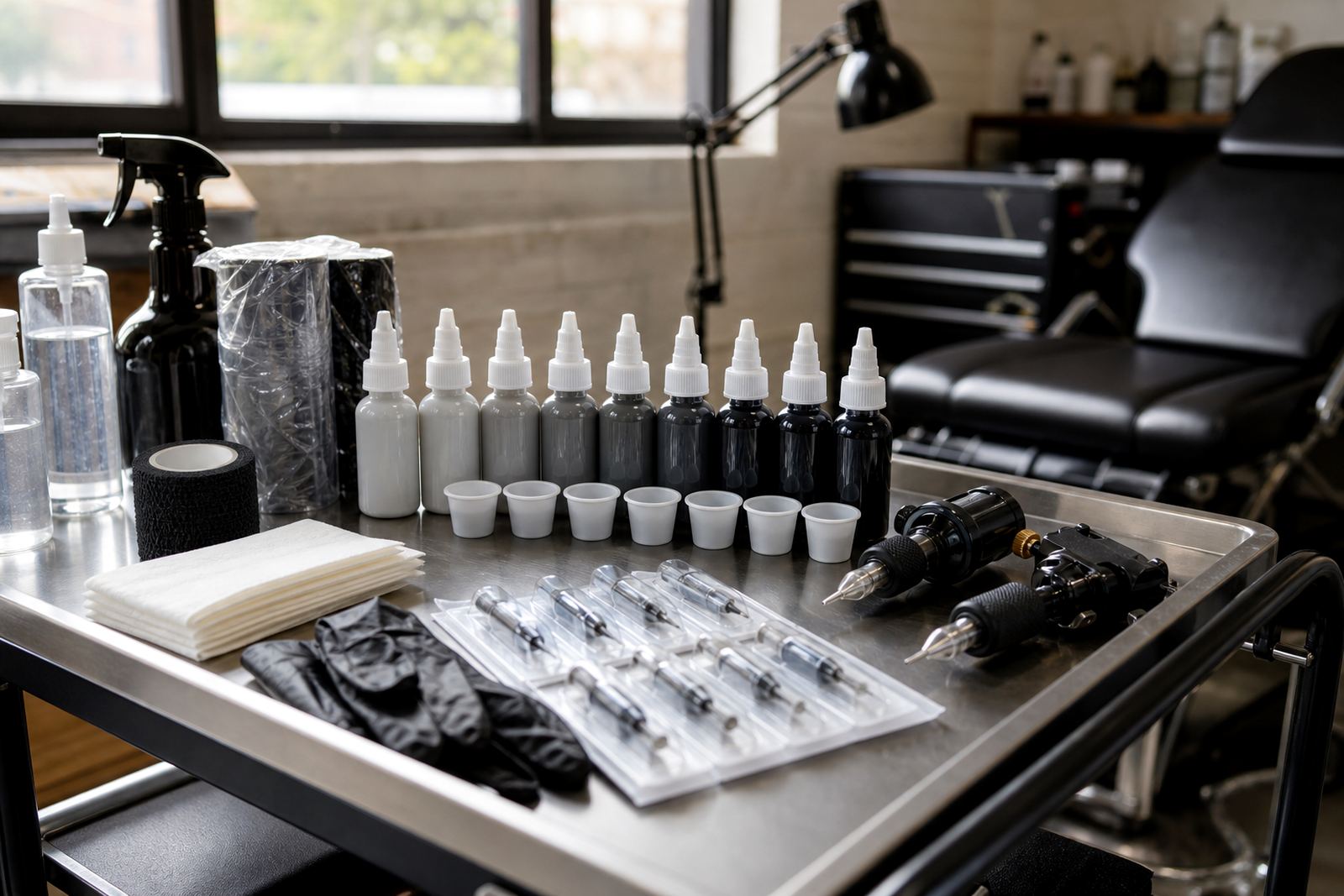
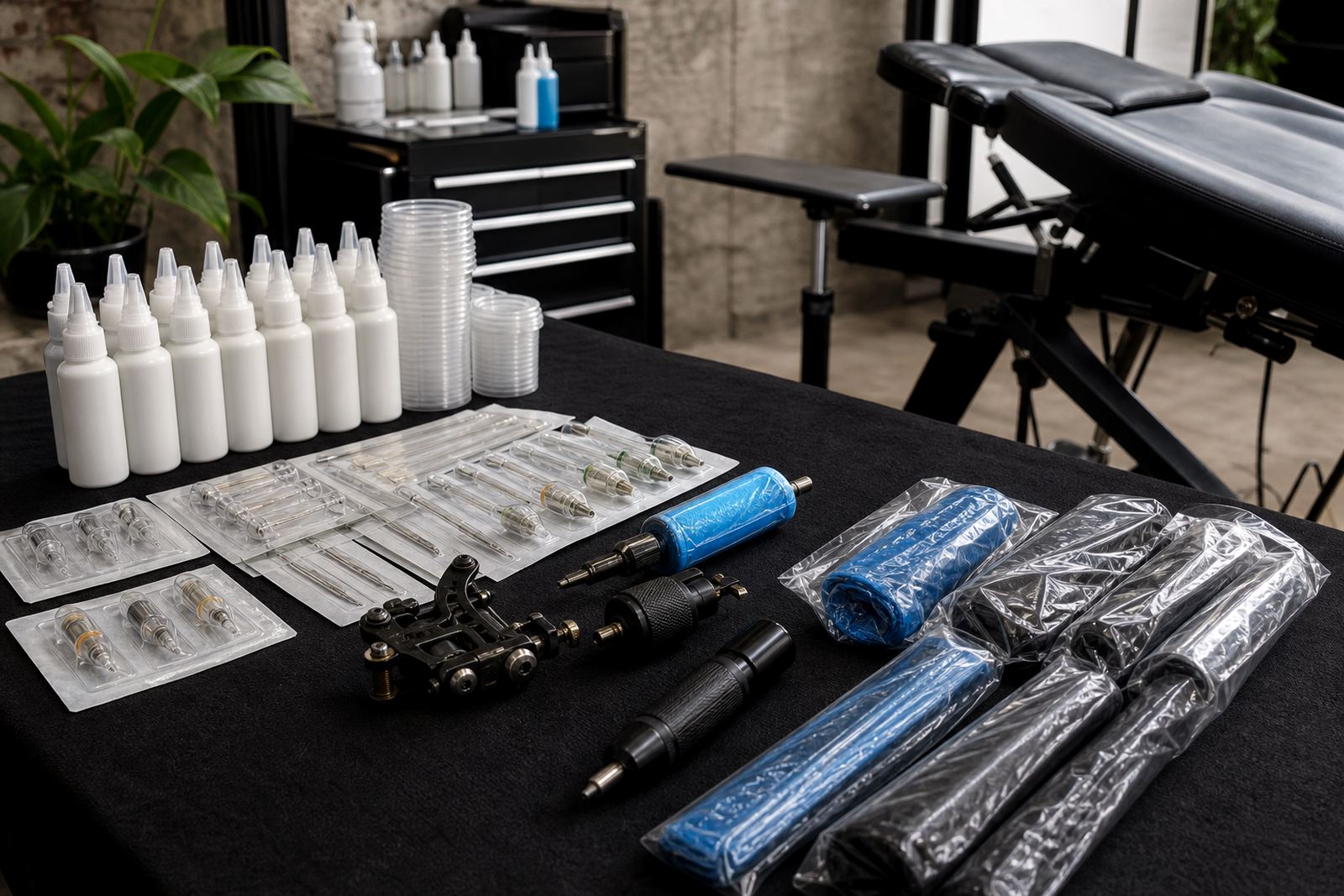
White highlight inks are commonly supplied in practical studio sizes so artists can match stock to usage. Smaller bottles suit testing, limited use, or specialist finishing work, while larger bottles are better for busy studios that use white across multiple appointments each week. The important part is not just volume, but how the ink behaves after opening and whether the bottle stays easy to dispense in a busy work station.
- Small bottles for detail work, trial use and limited tonal applications
- Mid-size bottles for regular studio use and mixed appointments
- Larger bottles for higher volume studios and repeat finishing work
- Secure caps that reduce spills in storage and during prep
- Labelling that lets staff identify the bottle quickly at a glance
White inks can vary in thickness, settling rate and opacity. Some are better suited to crisp highlight lines, while others are preferred for softer blend work or mixed tonal use. In a warm studio, especially around coastal Cape Town or Durban, it helps to check whether the bottle is storing evenly and whether pigment settles quickly after standing on the shelf.
When comparing options, confirm the bottle size, the texture of the ink, and whether the studio prefers a thicker white for brighter marks or a smoother white for subtler passes. That choice affects how the ink sits in the cap, how often it needs to be stirred, and how it fits into the artist’s usual workflow.
Where white highlight inks fit in the working setup
White inks suit studios doing contrast work, detail finishing, fine line accents and mixed tonal applications. They are often used with round liners, shaders and cartridges chosen for controlled placement. For a crisp highlight, the needle grouping and hand speed matter just as much as the ink itself. A white that works well in one setup may behave differently in another if the grouping is too tight, the stroke is too long, or the machine runs with a different give.
Many artists keep a separate white setup for finishing passes, especially when they want to avoid cross-contamination in caps or keep the ink from picking up darker residue. Cartridge users often pair white with groupings that allow steady pigment delivery, while coil or rotary users may prefer a slightly different feel depending on the line they want on the skin.
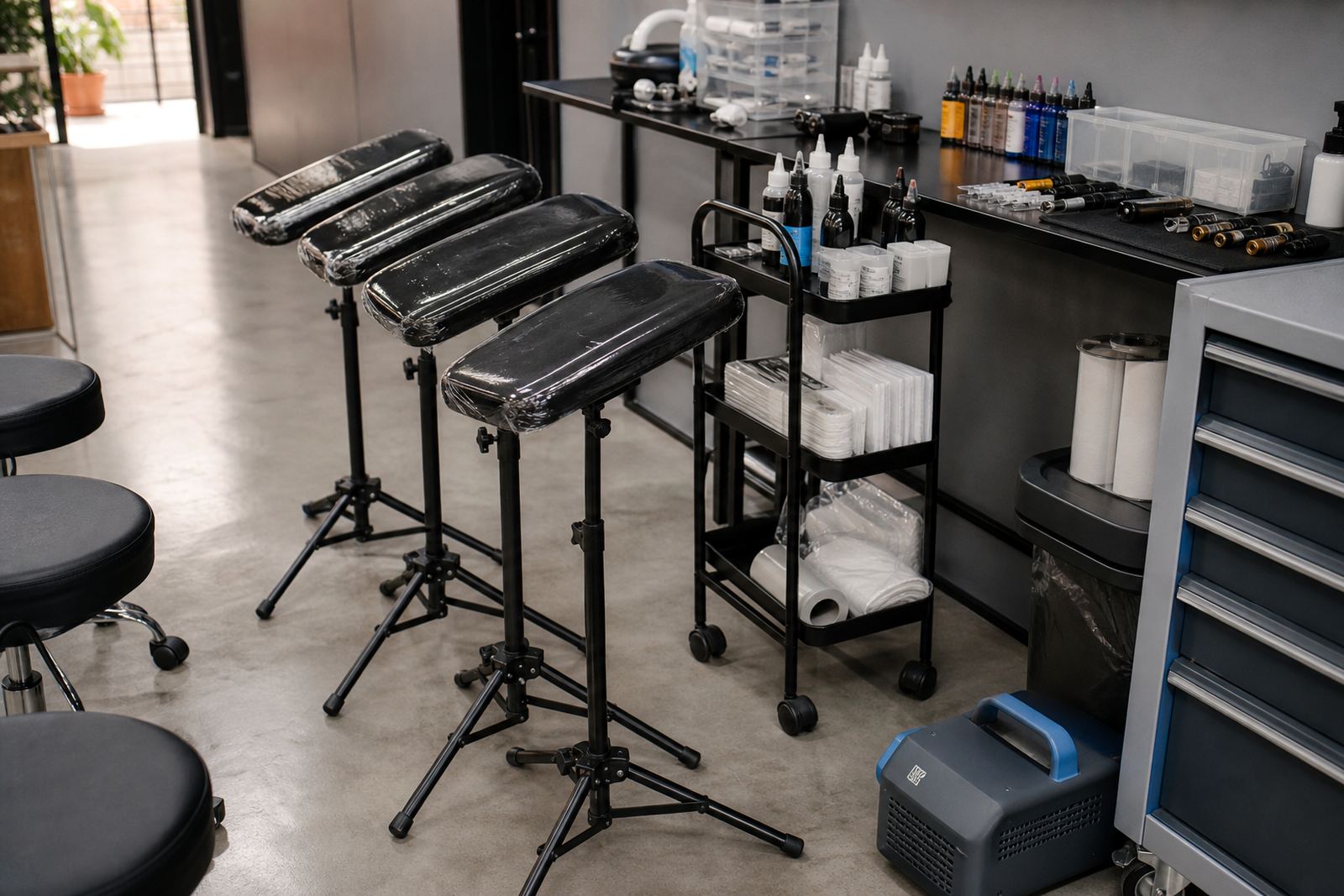
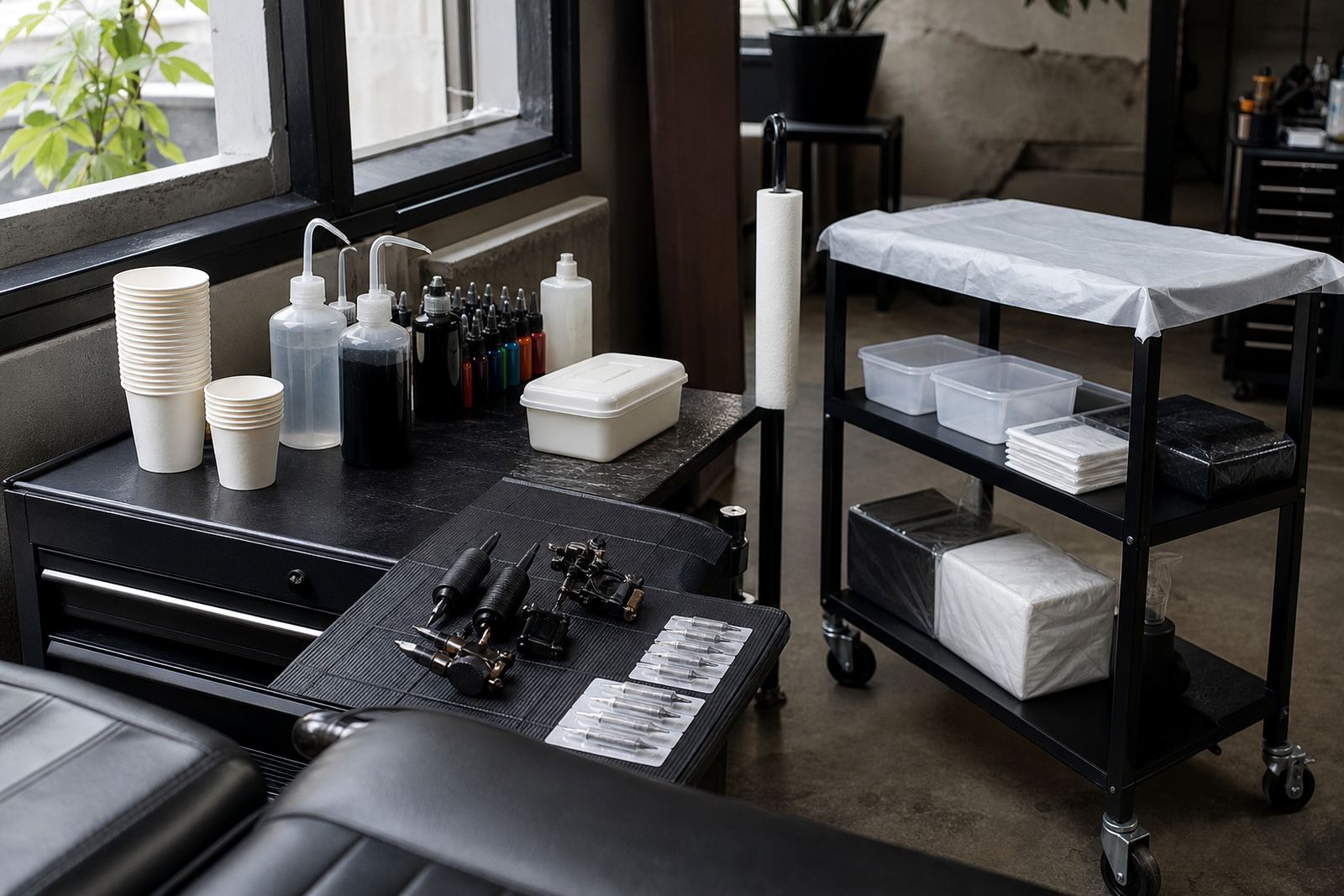
Studio planning also matters. If white is part of your regular service mix, it helps to keep enough sterile single-use stock, extra ink caps, cleaning products and wrap in place before a busy day starts. That keeps the station organised and makes stock control easier when multiple artists are working in the same room.
- Fine highlight work on details and reflective points
- Mixed tonal applications with grey or soft shading
- Contrast passes against darker healed or fresh work
- Finishing work where a brighter touch is needed
- Studio kits for artists who want a dedicated white setup
Needle and cartridge pairings that suit white ink work
White ink performs best when the needle grouping matches the job. For precision highlights, smaller groupings help keep the mark controlled. For broader fill or smoother tonal work, a shader grouping may give a more even result. Cartridge choice matters as well, especially when the studio wants a stable feed and less drag during longer sessions.
InkX Tattoo helps studios with range grouping advice, machine match help and cartridge match help, which is useful when white ink is part of a larger consumables order. The goal is to keep the whole setup balanced: machine speed, stroke, cartridge membrane feel, and the way the ink loads into the tip. If the groupings are too heavy for the task, white can sit unevenly or require more passes than planned.
For new studio kits or restock planning, it also helps to order the right mix of sterile single-use items alongside the white ink. That includes gloves, caps, clip cord covers where relevant, grips, wraps and barrier consumables, depending on the station layout and the artist’s working method.
- Small liner groupings for tight highlight placement
- Shader groupings for soft tonal work and wider mark-making
- Cartridges suited to steady feed and consistent pigment delivery
- Single-use consumables matched to the station setup
Storage, studio hygiene and day to day handling
White ink needs careful storage so the pigment stays mixed and ready for use. Keep bottles closed when not in use, store them upright, and avoid leaving them in direct sun or near hot equipment. In humid areas such as the coast, moisture and heat can make storage sloppier than it should be, so a clean shelf or drawer system is worth having in place. If the bottle has been standing for a while, check whether it needs gentle mixing before use, following the product instructions and the studio’s own procedures.
Good studio hygiene matters just as much as the ink itself. Use sterile single-use items where required, keep caps and work surfaces organised, and separate opened stock from sealed stock so the team knows what is ready for use. If a studio works under municipal or local health rules, those procedures should be followed in full. White ink is often used late in the session, so the bottle and cap area should stay clean and easy to identify throughout the appointment.
For dispatch and replenishment, a seasonal restock plan can help. White ink tends to move at different speeds depending on the type of work the studio does, so it helps to track how quickly it leaves the shelf and whether bottle sizes should be adjusted before a busy period.
Ordering the right white for the job
When ordering white highlight inks, confirm the bottle size, the intended use, and whether the studio wants a brighter opaque white or a smoother tonal white. It also helps to note which needle groupings or cartridges the artist uses most often, because that affects how the ink behaves in real sessions. If the order is for a new studio or a restock, include the usual station supplies so the team is not left short on caps, wraps or other consumables.
Details to confirm before dispatch include the exact white ink option, the number of bottles needed, the preferred size, and whether the order is going to one studio or split across several delivery areas. If a studio in Cape Town is holding stock for branches in Johannesburg, Durban or Pretoria, it is worth listing the destination clearly so the packing stays accurate. The same applies for Gqeberha and surrounding towns where regular replenishment is needed.
InkX Tattoo supports stock list help, bulk order support, consumable reorders, product substitutions and dispatch updates, which helps when white ink sits inside a broader working list. For studios that use white often, a simple reorder pattern makes it easier to keep the shelf ready without overbuying bottles that sit too long.
Key facts
| Product type | White highlight tattoo ink for contrast, finishing and mixed tonal work |
|---|---|
| Common use | Finishing touches, highlight points, soft tonal lift and mixed pigment applications |
| Available sizes | Small, mid-size and larger studio bottles, depending on stock |
| Texture options | Opaque whites and smoother flow whites, subject to range availability |
| Compatible setups | Needles, cartridges and machines used for controlled tattoo application |
| Delivery areas | Cape Town, Johannesburg, Durban, Pretoria, Gqeberha, Stellenbosch, Bellville and Somerset West |