
Clean wrap for arm pads and support cushions
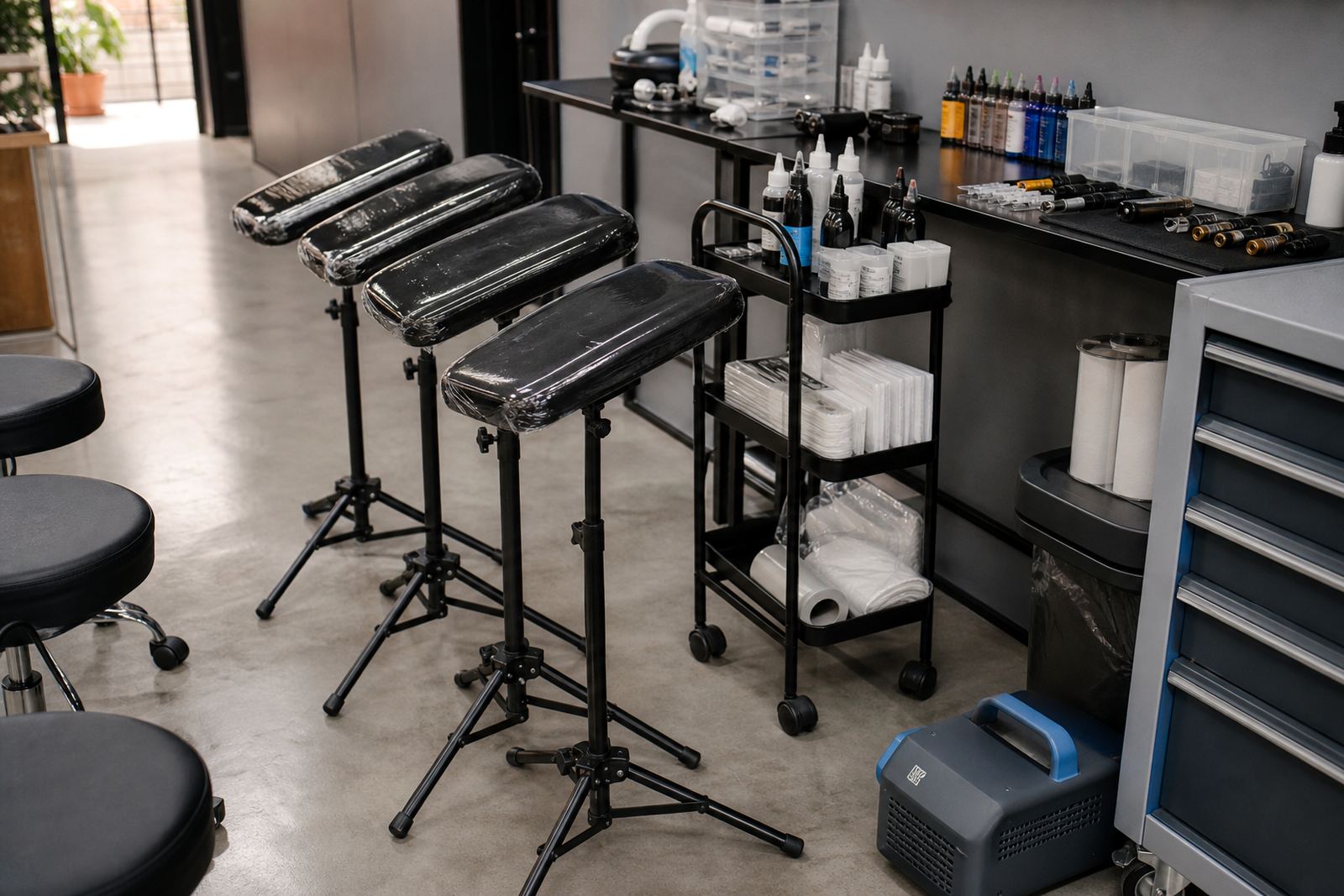
Armrest covers are disposable sleeves or fitted covers used over the padded support areas on tattoo chairs and arm rests. They create a fresh barrier between the upholstery and the working surface, which helps with studio housekeeping when sessions run back to back and surfaces need to be changed quickly.
In practice, these covers are chosen for busy stations where the armrest is handled often, adjusted for different body positions, and wiped down between clients. A good cover should sit snugly without slipping, stay in place while the artist works, and remove cleanly without leaving bits behind on the pad.
- Used on arm pads, elbow rests and small support cushions
- Suitable for folded or rolled cushioned supports
- Disposable for quick changeover after each session
- Helpful where stations are shared across multiple artists
Sizes and fit details that matter at the station
Armrest covers are commonly supplied in flat sheets, fitted sleeves, or stretch covers shaped for narrow tattoo arm pads and wider support cushions. The right option depends on the shape of the cushion, how often the armrest is adjusted, and whether the cover must tuck under the pad or stretch over the top and sides.
For studio planning, it helps to match the cover size to the actual pad measurement rather than guessing from the chair frame. Many arm supports vary in length and thickness, so checking the cushion width, depth and edge shape avoids loose cover flaps or a tight fit that tears when pulled on.
- Lengths commonly suit compact pads and longer support rests
- Widths should match the pad face and side coverage needed
- Depth or gusset allowance matters on thicker cushions
- Elastic, tuck-in or wrap style can change the final fit
Where these covers suit tattoo work best
These covers suit work areas where forearm, wrist or elbow placement changes often and the artist needs the support area to stay tidy between applications. They are practical in walk-in rooms, appointment studios, shared stations and multi-artist setups where the armrest is one of the most handled contact points in the room.
They also make sense in studios that run separate prep and treatment areas, because the support cushion can be covered, used and removed with less handling than a cloth wrap that must be washed after every client. In coastal cities like Cape Town, Durban and Gqeberha, disposable covers also help keep padded surfaces cleaner in humid conditions where dust and moisture can cling to upholstery.
- Busy tattoo rooms with frequent station resets
- Shared arm rests used by different artists through the day
- Studios that prefer disposable surface protection
- Rooms where support cushions are handled often during lining and shading work
Fitting the cover without slowing down the set-up
Most armrest covers are fitted before the client sits down, then removed once the session is finished and the station is cleared. Some styles slide over the pad in one movement, while others are wrapped and tucked to suit larger supports or more unusual armrest shapes. The cover should lie smooth across the top so the artist is not working around folds or loose corners.
If the armrest has a separate pole, base or adjustable bracket, the cover usually applies only to the padded section. Where the support is wider or has a rounded end, it helps to choose a cover with a little give so the material does not split at the seam. For double stations, keeping the covers boxed by size makes restocking faster and avoids mixing short and long fits.
- Apply to a dry, clean pad before client use
- Pull the cover smooth so the top face is even
- Choose a style that suits the cushion shape and edge profile
- Keep spare packs close to the station for changeovers
Storage, handling and studio hygiene use
Armrest covers should be kept in a closed carton or sealed pack, away from splashes, dust and direct sunlight. In a tattoo studio, it is best to store them close to the work area but off the floor, especially where cleaning trolleys, disinfectant bottles and paper goods are used throughout the day. In humid areas, keeping the stock dry matters because packaging can soften if left open near wet cleaning zones.
Use clean hands or fresh gloves when placing the cover on the armrest, and replace it after each client or whenever the station is reset. Follow local health regulations and your studio's own hygiene procedures for surface handling, waste disposal and room cleaning. Disposable covers are a station supply, so the stock count should be checked with other consumables such as clip cord sleeves, barrier film and couch roll.
- Store in the original pack until needed
- Keep away from sinks, mop buckets and open waste bins
- Use fresh covers for each client changeover
- Dispose of used covers with the rest of the studio waste stream
What to confirm before ordering for your room
To order the right armrest covers, confirm the pad length, width and depth, plus whether the surface is square, rounded or tapered. It also helps to note if the support is a simple flat pad, a thicker cushion, or a wider curved rest used for long sessions. That detail affects how much stretch or tuck is needed.
When ordering for several stations, list the number of artists using the covers, how often the room turns over, and whether you want a single fit across all chairs or separate sizes for different supports. For studios in Cape Town, Johannesburg, Durban, Pretoria and Gqeberha, delivery planning is easier when the counts are grouped by branch or area, especially if one location holds backup stock for the others. The contact team can assist through the enquiry form on the contact page with stock list help, range grouping advice, consumable reorders and seasonal restock plans.
- Pad measurements: length, width and depth
- Fit style: flat sheet, sleeve, tuck-in or elastic
- Pack count needed per station and per month
- Whether covers are for single chairs or mixed chair sizes
Key facts
| Type | Disposable armrest cover for tattoo studio supports |
|---|---|
| Use | Fits arm pads, elbow rests and support cushions |
| Fit styles | Flat sheet, sleeve, wrap or elastic style options |
| Sizes | Selected by pad length, width and depth |
| Material | Single-use protective cover material |
| Coverage | Top surface and side wrap depending on style |