Shader cartridge groupings for tonal work
Shader cartridges are built for areas where the artist wants smoother movement, more open ink delivery and controlled coverage over a larger skin area. In practical studio work, that means soft grey work, colour fills, layered shading and gradual blends where a liner grouping would feel too tight. The right shader grouping helps the needle carry ink evenly, so the hand stays steady through longer passes and the result reads clean from a normal viewing distance.
We stock shader cartridge groupings suited to common cartridge machines used in South African studios. The grouping you choose affects how much ink is pushed, how fast the skin takes colour and how the hand feels on curved areas like shoulders, ribs and thighs. For busy studios in Cape Town, Johannesburg, Durban, Pretoria and Gqeberha, the main aim is matching the grouping to the style of work so the cartridge supports the artist instead of fighting the stroke.
- Soft shading and washed gradients
- Colour packing and larger filled sections
- Black and grey tonal work
- General use on cartridge machines where a wider grouping is preferred
Sizes, taper lengths and grouping choices
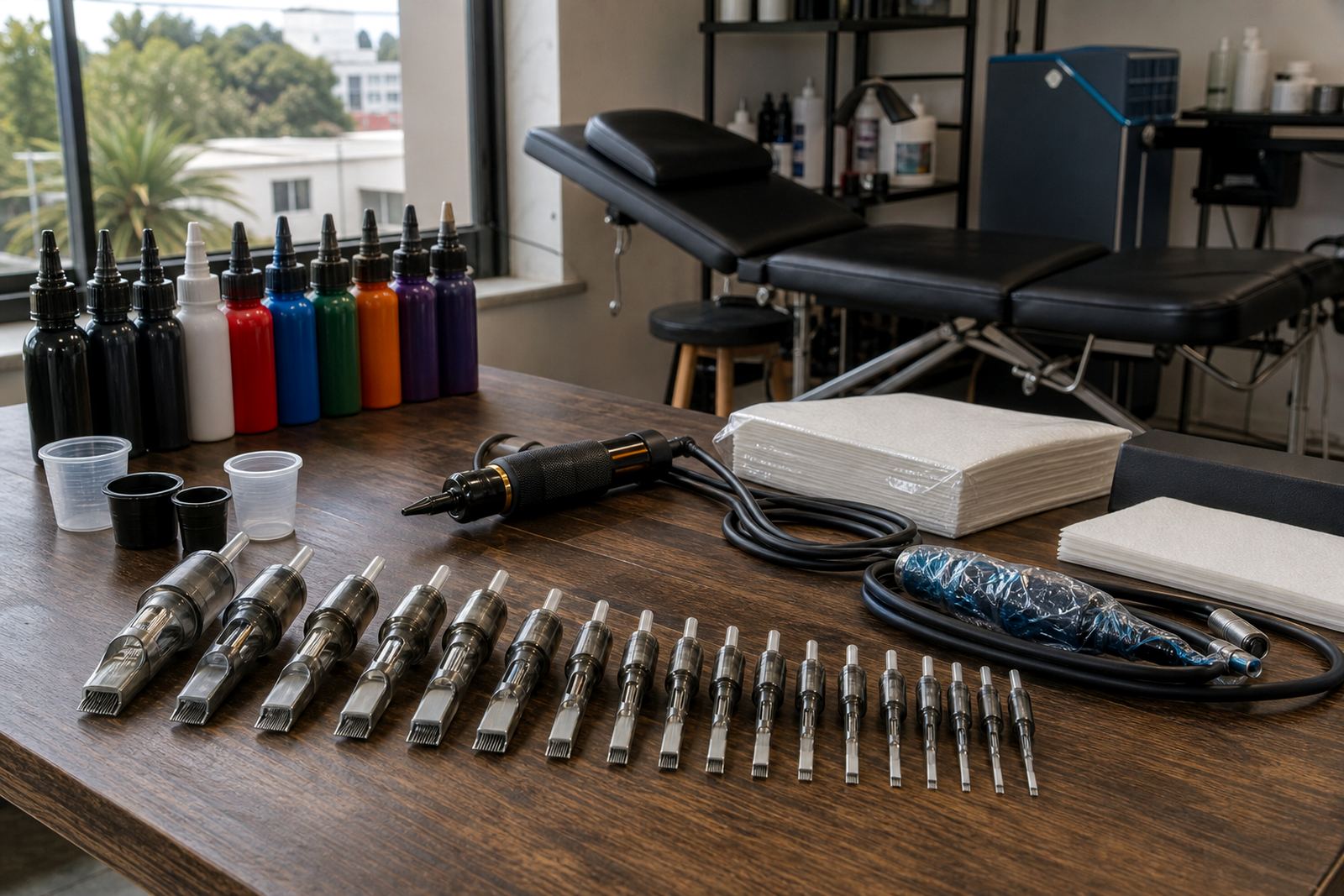
Shader cartridges are supplied in several grouping sizes, with common options ranging from tighter grouped shaders for controlled blending to broader groupings for heavier fill. The exact choice depends on the machine stroke, the hand speed and the kind of artwork being produced. Taper length also matters. Shorter tapers usually feel firmer and more direct, while longer tapers can give a softer response for shading passes and gradual colour builds.
When ordering, it helps to confirm the needle grouping, taper style, membrane type and cartridge body shape. Some artists prefer a rounded nose for better visibility while others want a flatter profile that sits neatly against the machine. If a studio runs mixed work, it is worth keeping a few shader groupings on hand so the artist can move between fine tonal work and broader packing without changing the whole workflow.
- Common groupings for shader work include smaller round shaders and wider magnum style cartridges
- Needle count changes the spread and the speed of coverage
- Taper length affects the feel of the stroke and the ink release
- Cartridge body shape can change visibility at the tip
Where shader cartridges fit best in the studio
Shader cartridges suit studios that work on portraits, script fills, ornamental shading, realism, cover work and soft background tone. In larger commercial setups, they are also useful for repeatable colour blocking where the artist wants predictable coverage across multiple sessions. In coastal towns like Cape Town and Durban, studios often keep packaged cartridges in clean, dry storage because humidity can affect how packaging and consumables are handled day to day.
For artists working in shared stations, shader cartridges are a practical choice when quick changeovers matter. They support cartridge machines used across different clients and styles, and they keep setup time neat when the artist is moving between line work, tone and fill. Good cartridge planning also makes stock easier to manage for shops that serve both walk-in demand and scheduled studio bookings.
- Portrait and realism shading
- Soft background tones
- Ornamental fills and texture work
- Cover work where controlled saturation is needed
Fitting and machine compatibility checks
Before fitting shader cartridges, the artist should confirm the machine accepts the cartridge format being used and that the cartridge seats cleanly in the grip. A secure fit matters because the needle movement needs to stay consistent through the full pass. If the fit is too loose or the cartridge sits at an angle, the hand feels unstable and the line of work can become patchy.
When setting up, check the cartridge membrane, the needle projection and how the cartridge locks into the grip. For rotary and cartridge-focused machines, the feel of the stroke must suit the grouping. A softer shader grouping usually pairs well with smoother machines, while a firmer cartridge can suit stronger packing. Follow local health regulations and studio hygiene procedures when changing cartridges, handling consumables and preparing the station.
- Confirm cartridge body fit in the grip
- Check needle projection before the session starts
- Match the grouping to the machine stroke and the style of work
- Keep the station arranged for clean cartridge changes
Care, storage and clean handling in studio use
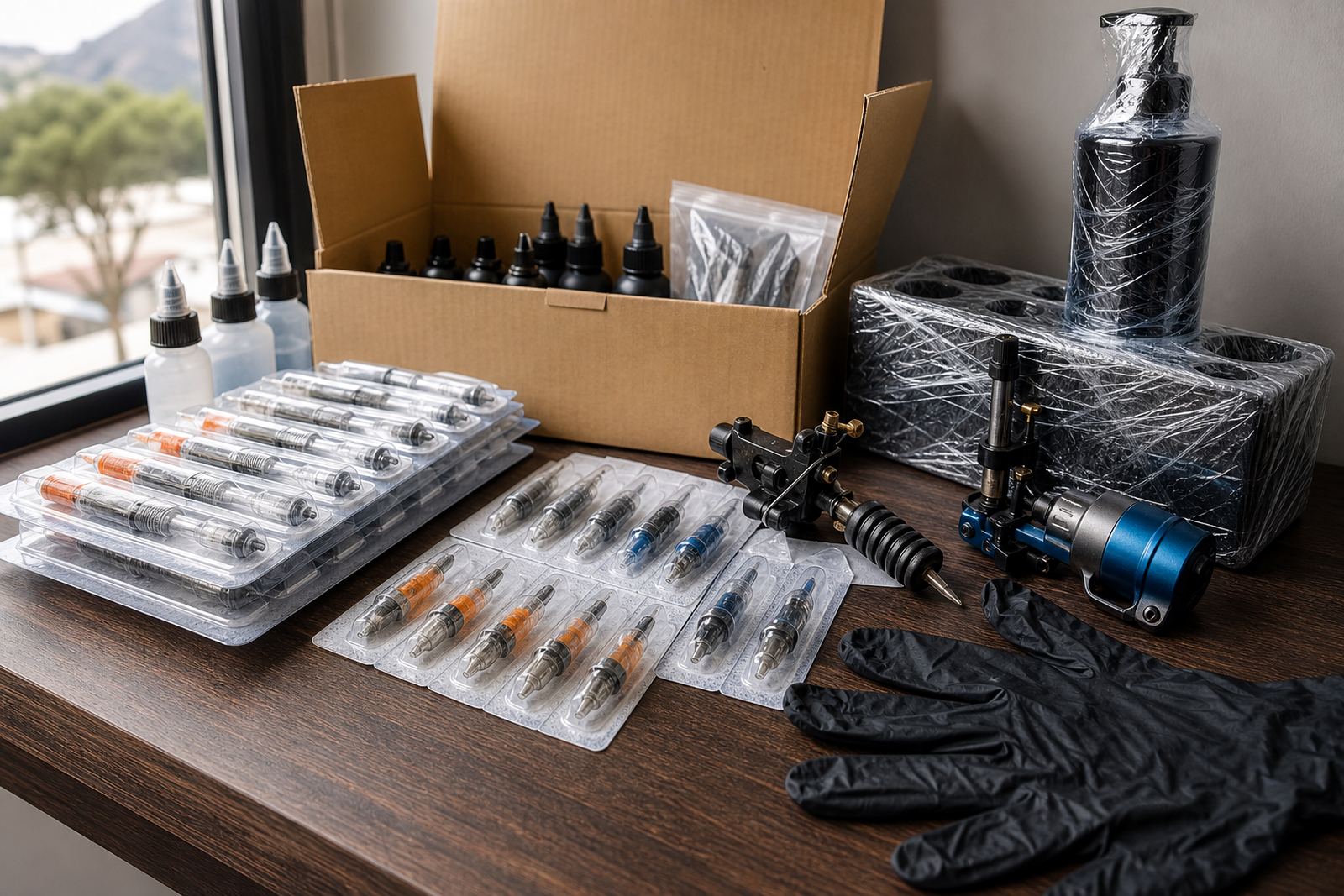
Shader cartridges should be kept in sealed, dry storage and handled as sterile single-use supplies until they are opened for a session. In a working studio, stock rotation matters. Keep the older cartons at the front, protect sealed boxes from dust and moisture, and store them away from sinks, wash areas and loose powders. That keeps the consumables easier to manage and helps the station stay orderly through a full day of work.
After fitting, used cartridges must be treated as contaminated waste and disposed of according to the studio’s procedures and local health regulations. Do not reuse single-use cartridge items. Clean handling is not only about the visible setup, it also includes the way stock is received, opened and passed to the artist. For shops in Bellville, Somerset West and across Gauteng, tidy storage can make a real difference to how smoothly the next appointment moves.
- Keep cartons sealed until needed
- Store in a dry, dust free area
- Rotate stock so older supplies are used first
- Dispose of used cartridges through the correct studio process
What to confirm before placing an order
To match the right shader cartridges to your studio, confirm the grouping size, taper length, cartridge body shape and the machine compatibility your artists use most often. It also helps to note whether the order is for soft tonal work, heavier colour packing or mixed-use shading. If your station set-up includes different artists, list the preferred grouping for each so the box arrives with less guesswork.
For multi-site ordering across Cape Town, Johannesburg, Durban, Pretoria and Gqeberha, include the branch delivery point and the usual stock pattern for the studio. Some shops need regular consumable reorders, while others want larger seasonal restock plans or bulk order support. If you are building a new tattoo kit range, shader cartridges can be grouped with needles, machine-ready consumables and other studio supplies for a cleaner setup from the start.
- Needle grouping and taper length
- Cartridge body shape and membrane style
- Machine compatibility and grip fit
- Branch delivery point and order quantity
Supported by a practical Cape Town supply team
InkX Tattoo works from Observatory, Cape Town and supplies tattoo inks, needles, cartridges and studio consumables to studios across South Africa. Our team handles stock list help, range grouping advice, machine match help, cartridge match help, storage planning, dispatch updates, product substitutions and seasonal restock plans. For studios that prefer a structured buying process, the enquiry form on our contact page is the usual way to reach us.
Whether you are setting up a new station or tightening the consumable mix for an active shop, shader cartridges are one of the items that benefits from careful selection. The right grouping saves time at the bench and keeps the tone work consistent across repeat clients and different artists in the same space.
Key facts
| Product type | Shader cartridges for modern cartridge machine workflows |
|---|---|
| Use | Soft shading, tonal work, colour packing and blended fills |
| Common grouping styles | Round shader and magnum style groupings |
| Needle and taper options | Various needle counts with short and longer taper choices |
| Fit | Compatible with cartridge grips and cartridge-ready machines |
| Supply format | Sterile single-use cartridge items for studio stock |