How clip cords fit into a wired machine station
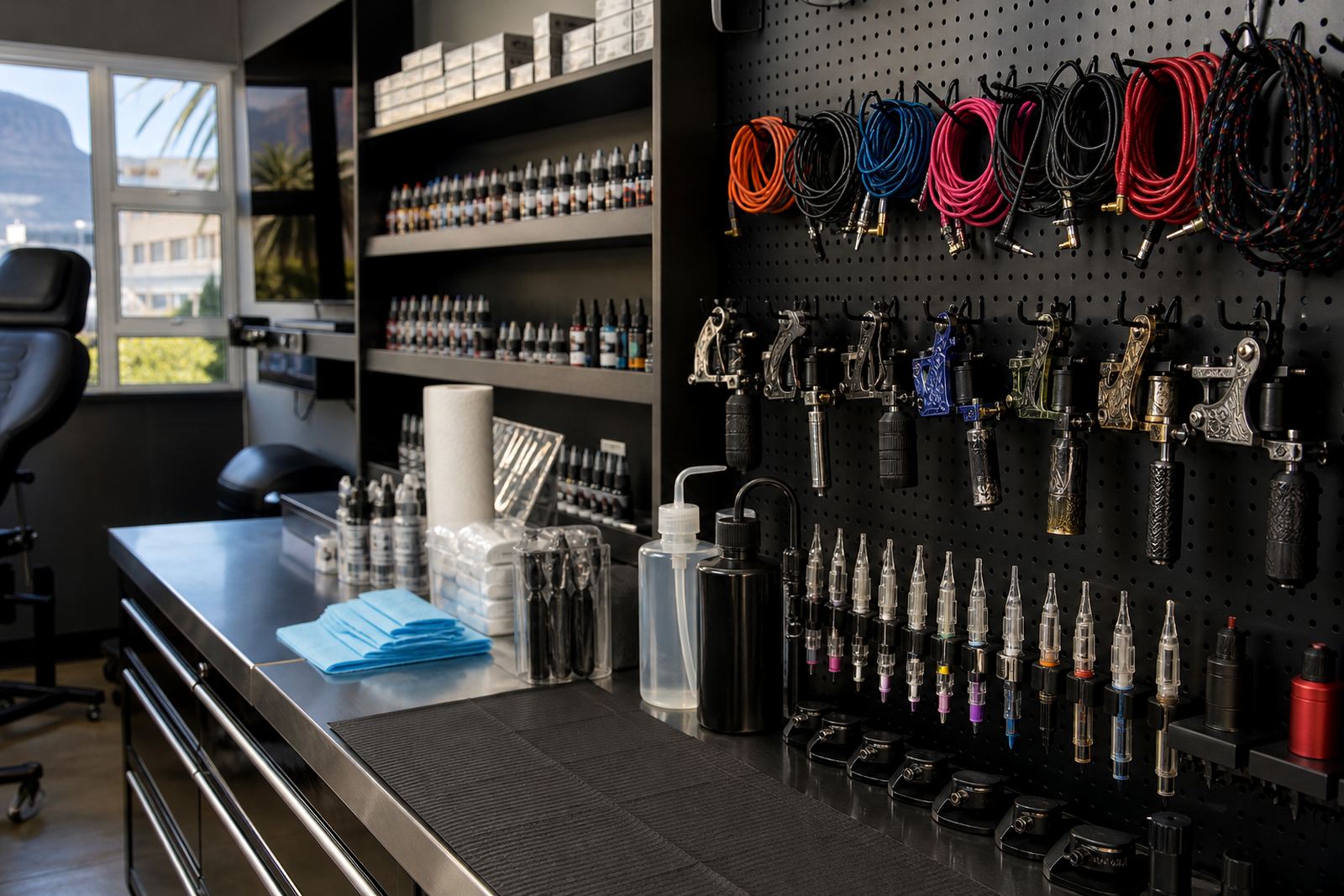
A clip cord is the lead that carries power from the supply to a wired tattoo machine, usually through a clip plug at the machine end and a standard connector at the other end. In a working station, it sits alongside the machine, footswitch, grips, needles or cartridges, and the power unit, so the cable has to move freely without tugging at the handpiece.
For studio use, the cord needs a firm clip connection, clean insulation and enough length for the artist to work from the chair, trolley or station tray without strain. In busy rooms in Cape Town, Johannesburg or Durban, a cord with sound ends and flexible sheathing helps reduce interruptions when the setup is changed between clients.
Cord lengths, plug ends and practical options
Clip cords are commonly supplied in working lengths that suit compact benches as well as larger studios. Shorter leads can keep a tight station tidy, while longer leads are useful where the machine and power supply sit farther apart, or where the artist moves around the chair during the session.
- Standard lengths for studio use are often around 1.8 m to 2.7 m
- Flexible outer jackets help the cord move with the artist
- Reinforced ends reduce wear where the cable bends most often
- Available for common wired machine connections and footswitch pairing
Some studios prefer a lighter cable for quick setup changes, while others want a thicker lead that stays stable over repeated use. The right option depends on the machine type, the layout of the station and how much cable movement the artist expects during line work or packing colour.
Where clip cords suit the studio floor
Clip cords are suited to wired stations in tattoo studios, training rooms and private workspaces where the artist uses a conventional power setup. They are used with coil machines and other wired handpieces that need a direct cable connection at the machine end and a footswitch control at the floor or station side.
In coastal studios around Gqeberha or Durban, cable choice matters because humid air can affect exposed metal fittings and storage conditions. Keeping spare cords clean and dry, and storing them away from pigment spills or loose spray residue, helps maintain the station between bookings.
- Suitable for lining, shading and colour packing stations
- Useful for permanent studio setups and mobile work tables
- Handy as a replacement when an existing lead shows wear at the clip or plug
Fitting a clip cord to the station
When fitting a clip cord, match the machine end carefully so the contact sits properly on the machine post and does not wobble during use. The cord should run with a gentle curve, not pulled tight across the tray or draped where the artist can catch it while changing needle groupings or cartridge settings.
Most stations are set up by connecting the clip cord to the machine, the other end to the power supply and the footswitch line as required by the station layout. Keep the cable clear of wet wipe areas, ink caps and prep spray, and check that the insulation remains intact along the full length. A loose plug or bent fitting can interrupt the session and should be sorted before the next client.
Follow local health regulations and studio operating rules for your area when setting up and maintaining tattoo equipment.
Keeping cords clean and serviceable
Clip cords need routine care because they are handled often, coiled up at the end of the day and moved between stations. Wipe the outer jacket after use, keep the clip and plug ends free from dried ink or dust, and store the cable loosely rather than folding it sharply into tight bends.
If a cord is used in a shared studio, label it clearly and keep it with the matching power accessories so the right lead is used at the right station. Any cord showing frayed insulation, bent pins or weak contact at the clip should be removed from active use. In a studio that runs full days in Pretoria or Bellville, a small stock of replacements can save a lot of downtime when a lead wears out.
- Wipe after each session with suitable studio-safe cleaning practice
- Allow the cord to dry fully before storage
- Check the clip tension and connector fit regularly
- Keep spare cords in a clean drawer or sealed bag
Clip Cords: stock details to agree
Before placing an order, confirm the machine type, connector style and the length you need for the station. It also helps to note whether the cord will be used in a fixed studio layout or moved between rooms, as that affects how much slack is useful around the table and chair.
For mixed studios handling linework, colour packing and machine swaps, confirm the following:
- Machine type and connection style
- Required cord length in metres
- Preferred plug end for your power setup
- Need for a lighter or heavier cable feel
- Whether the cord is a replacement or a spare for a new kit
- Delivery area, such as Cape Town, Johannesburg, Durban, Pretoria or Gqeberha
InkX Tattoo supports studios with stock list help, station planning, consumable reorders and product substitutions, so the right cord can be matched to the way your station is actually run.
Key facts
| Product type | Clip cord replacements and wired station accessories |
|---|---|
| Typical use | Connecting a wired tattoo machine to a power supply and footswitch setup |
| Common lengths | Around 1.8 m to 2.7 m, depending on station layout |
| Connector style | Machine clip end with standard power-side plug arrangement |
| Material focus | Flexible insulated cable with reinforced ends |
| Best suited to | Tattoo studios, training stations and mobile work setups |
| Care | Wipe clean, dry fully, store loosely and check for wear at the ends |