Slim-body machines for cartridge work
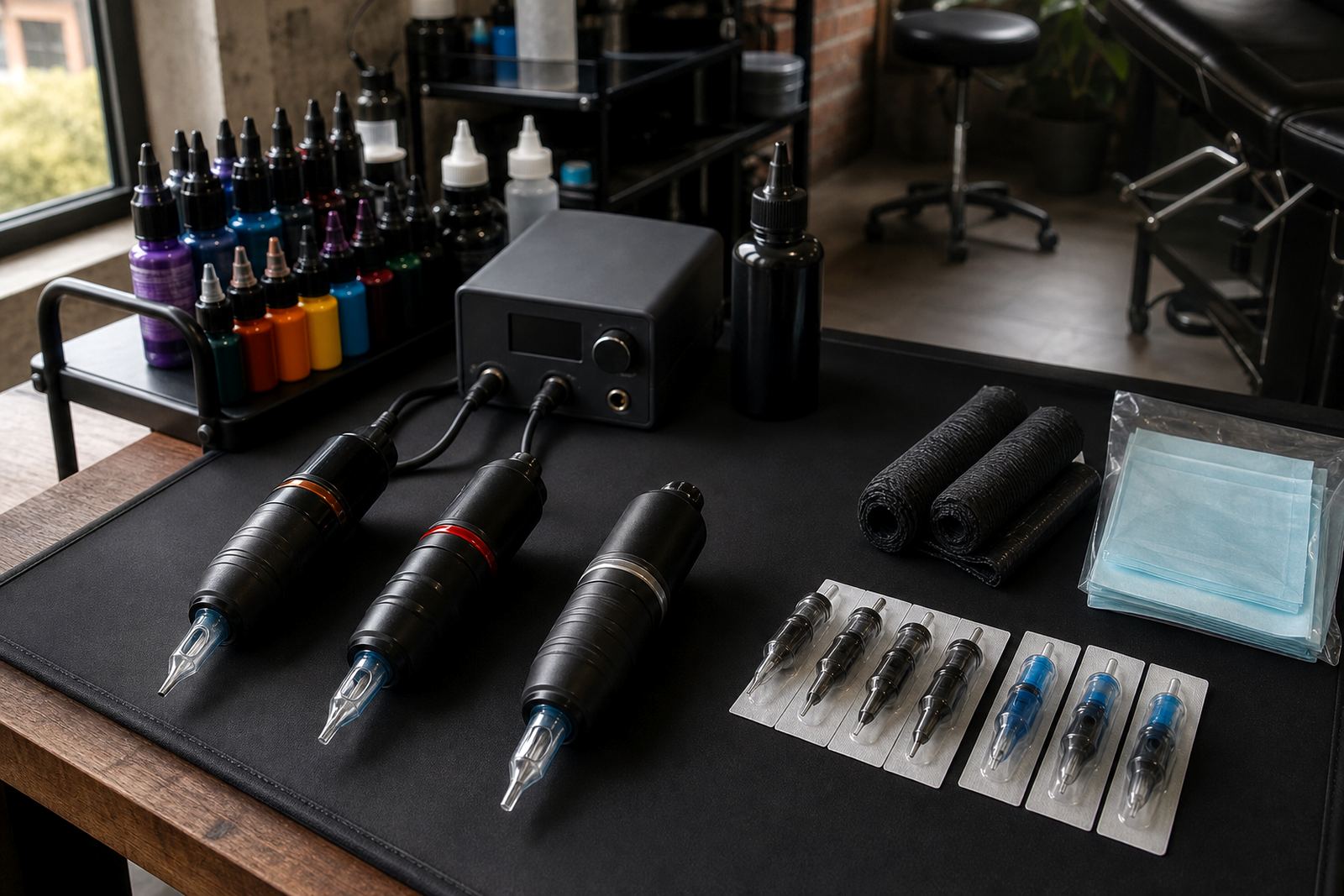
Pen machines are built in a straight pen shape, which makes them familiar to hold and easy to move through long sessions. The cartridge grip, motor housing and needle drive are packed into one unit, so the setup stays compact on the tray and in the hand. In a busy Cape Town studio or a larger team space in Johannesburg, that smaller profile helps when a station needs to stay tidy and tools need to be swapped quickly.
Most pen machines are made for cartridge systems, with a standard grip size that feels close to a pencil or marker. That suits artists who prefer a lighter front end and a direct needle feel. Depending on the model, the body may be aluminium or another lightweight alloy, with a balanced weight that sits well during detailed line work and longer shading passes.
- Pen body format for cartridge needles
- Common grip sizes around 25 mm to 32 mm
- Light, medium or more front-weighted feel
- Suitable for lining, shading and colour work
Stroke, motor speed and hand feel
The main specs to watch are stroke length, motor output and the way the machine loads under pressure. Shorter strokes, often around 2.5 mm to 3.5 mm, are usually picked for softer shading, greywash and smooth blends. Mid and longer strokes, often around 3.5 mm to 4.5 mm, suit stronger line work, colour packing and denser passes. The right choice depends on the artist style and the cartridges being used.
Some pen machines run with a quiet rotary motor and a fixed or adjustable stroke, while others give a set stroke and a voltage range that can be tuned at the power supply. In practice, that means the artist can match the machine to fine liners, bugpin groupings, larger round liners or mag groupings without the machine feeling too heavy or too sharp in the hand.
- Stroke options: 2.5 mm, 3.0 mm, 3.5 mm, 4.0 mm and 4.5 mm are common
- Voltage range usually matched to the machine and cartridge load
- Rotary drive for steady needle movement
- Works with liner, shader and mag cartridges
Where pen machines fit best in studio work
These machines suit studios that run cartridge-based stations and want fewer loose parts on the bench. They are common for portrait work, script, small colour pieces, fine line tattoos and longer sessions where the artist wants a more neutral grip. In humid coastal conditions like Durban or Gqeberha, a machine with a solid finish and easy wipe-down surfaces is useful, because moisture and studio cleaning both play a part in day-to-day care.
Pen machines also suit guest spots, mobile work and shared studios where equipment needs to travel in a padded case. The compact shape makes packing neater and the cartridge setup keeps changes quicker between clients. For larger studios, they can be grouped with different stroke lengths so one machine handles soft shading while another is kept for line work.
- Fine line and script work
- Greywash, smooth shading and colour packing
- Shared stations with cartridge systems
- Mobile artists and travelling setups
Power connection and fitting details
Most pen machines run from a tattoo power supply with a clip cord or a compatible machine connection, depending on the model and the motor type. Some units are built with a direct RCA style connection, while others use a different standard. The artist needs to confirm the plug type, cable setup and whether the machine is built for a wireless battery pack or a wired station. That matters when the studio is arranging trays, foot control and backup power for load-shedding periods where the machine must keep running on a stable source.
Fitting also includes the cartridge fit, grip diameter and whether the machine accepts a standard or specialised cartridge housing. A tight, correct fit helps prevent movement in the tube and keeps the needle throw consistent. When ordering, it helps to match the machine with the cartridges already in use, rather than mixing grip sizes and needle systems that do not sit properly together.
- Connection type: RCA, wireless battery or other compatible fit
- Grip diameter: confirm the hand size and station preference
- Cartridge acceptance: standard or specific housing fit
- Power supply range and pedal setup if wired
Care that keeps the machine working cleanly
Pen machines need regular wipe-downs on the body and grip area after each session, with care taken around the connection point and moving parts. The exterior should be cleaned with suitable studio disinfecting methods that fit the surface finish, then dried fully before storage. Internal parts should be checked for wear, unusual vibration or loose movement, especially after a heavy day of colour packing or long lining sessions.
Storage matters as much as use. Keep the machine in a clean case or tray cover, away from ink spills, damp shelves and direct dust exposure. In coastal cities, a dry storage space helps reduce residue build-up on metal parts. Cartridges should be kept sealed and organised separately, and the studio should follow local health regulations for cleaning, single-use items and waste handling.
- Wipe body and grip after each session
- Store in a dry, covered place
- Check connection points and motor feel often
- Keep single-use items separated from reusable equipment
Details to confirm before ordering
Before placing an order, confirm the stroke length, motor type, machine weight, grip diameter and connection format. It also helps to note whether the machine is intended for lining, shading or mixed work, because the best fit changes with the job. For a Johannesburg shop doing heavier black work, the pick may differ from a Cape Town studio focused on fine detail and small colour pieces.
Other useful details include the cartridge style already in the studio, the preferred needle grouping, and whether the artist wants a firmer hit or a softer pass. If the station uses multiple machines, label them by stroke and role so the team can move between them without confusion. For bulk stock or new studio kits, it is worth planning the machine mix alongside needles, cartridges, clip cords, battery packs and sterile single-use supplies.
- Stroke length and motor style
- Weight and grip diameter
- Connection type and power setup
- Needle and cartridge grouping used in the studio
Key facts
| Machine type | Pen-style rotary tattoo machine |
|---|---|
| Typical stroke range | 2.5 mm to 4.5 mm |
| Grip diameter | About 25 mm to 32 mm |
| Connection options | RCA, wired power setup or wireless battery compatible models |
| Main uses | Lining, shading, greywash and colour packing |
| Compatible supplies | Cartridge needles, grips, power supplies and studio station items |