
Barrier film for wrapped contact points and clean station flow
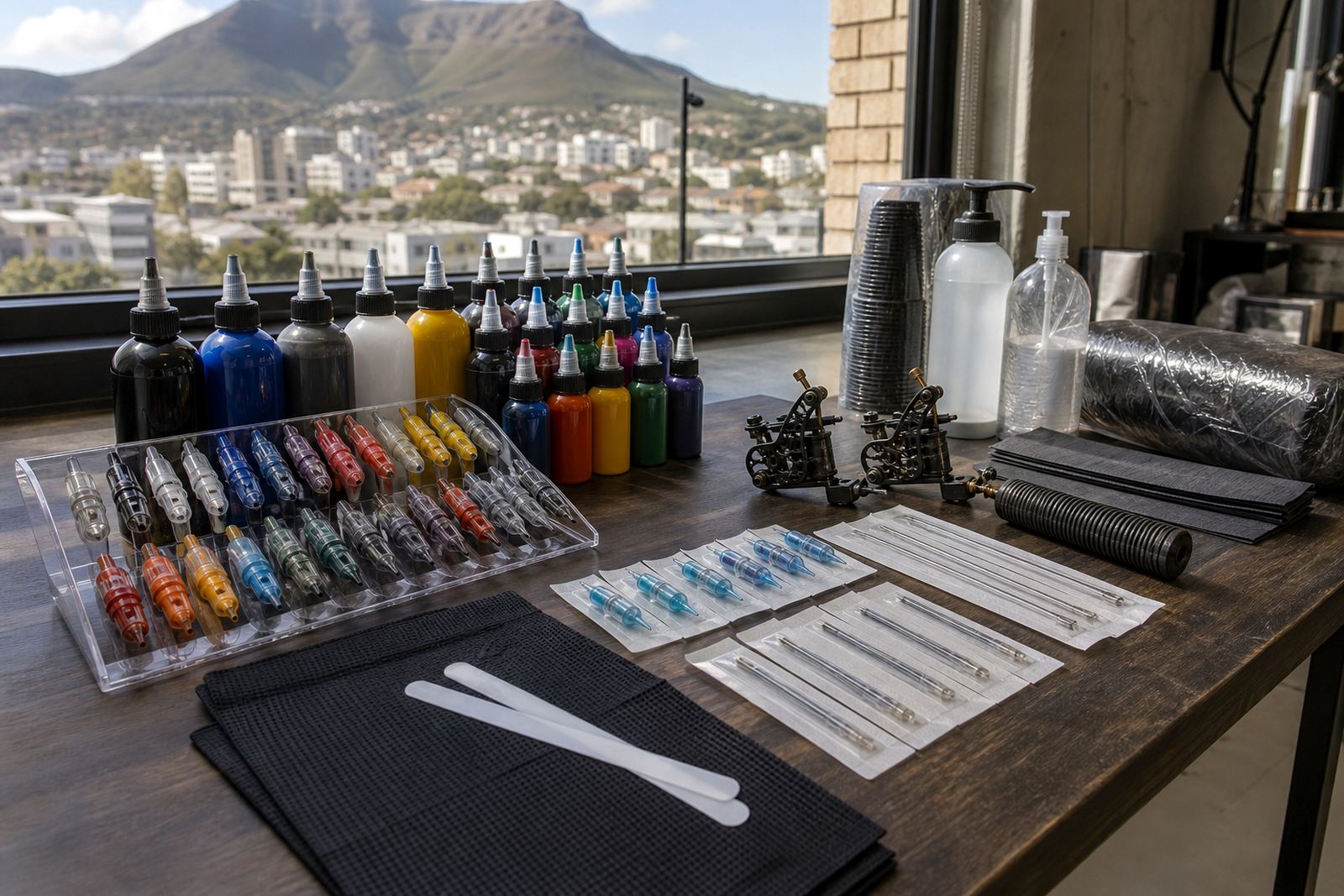
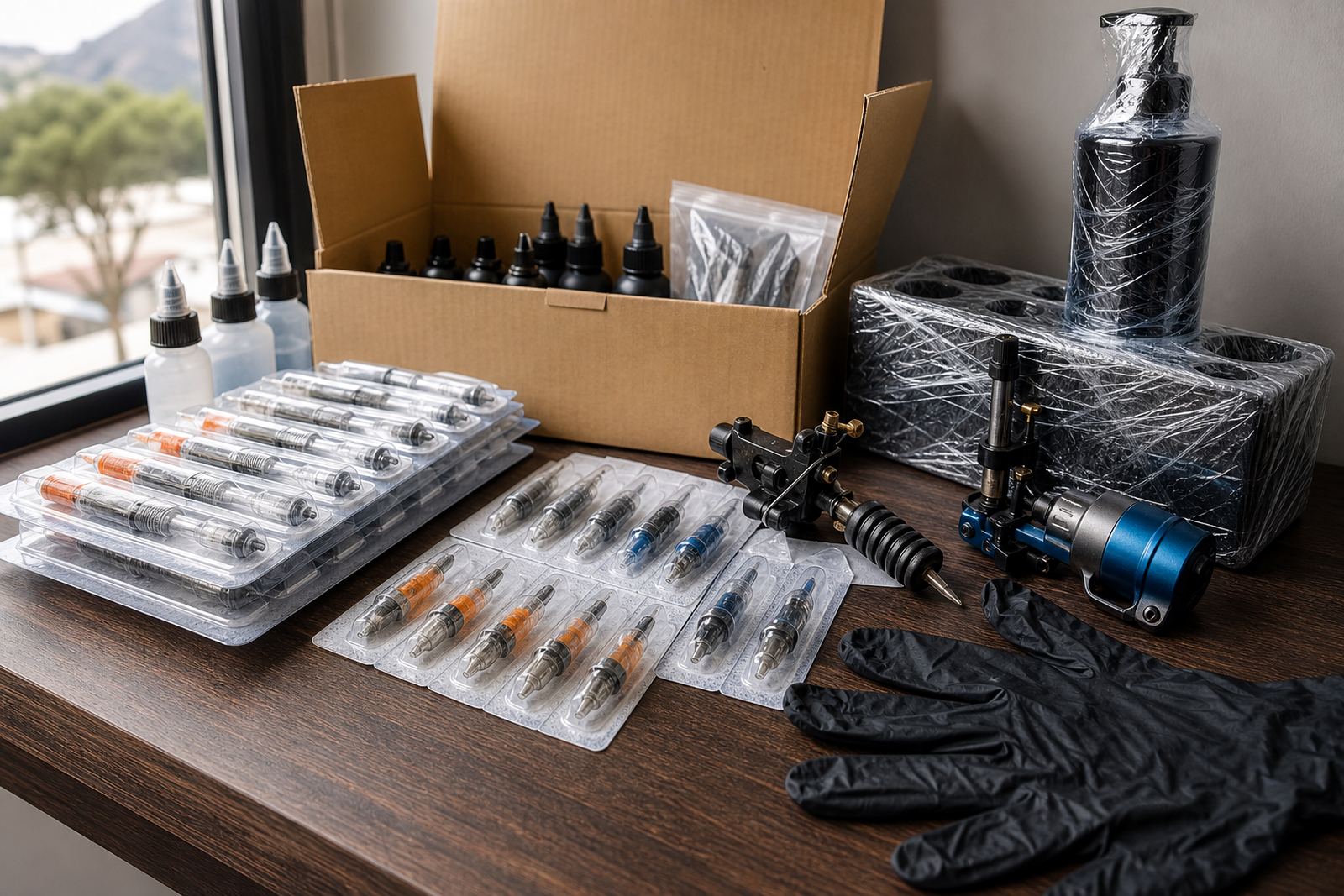
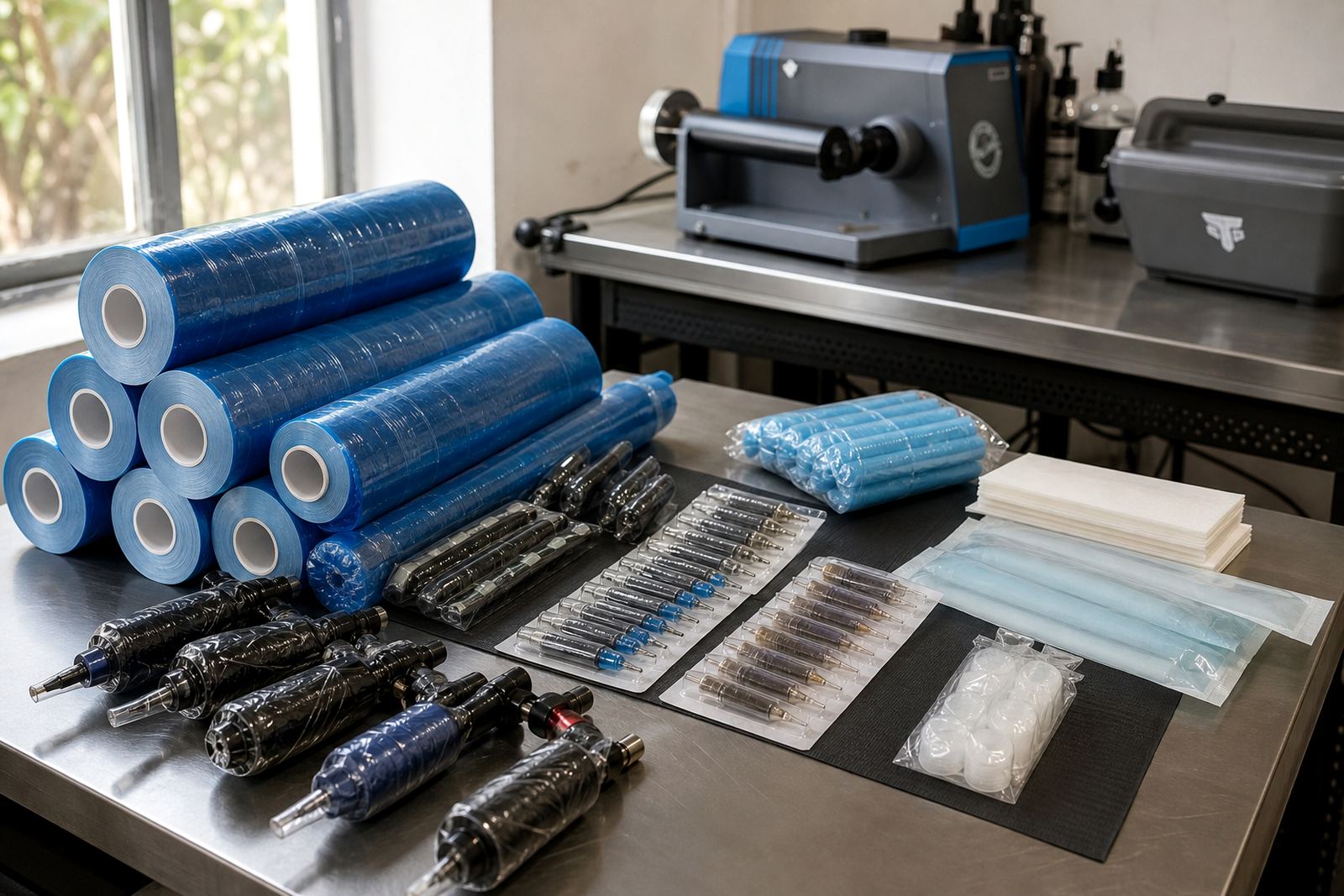
Barrier film is a thin self-adhesive protective wrap used around surfaces that are touched during a tattoo session. In practice, it is applied to machines, power pack controls, clip cords, sleeves, spray bottles, lamp handles and other high-contact points where artists want a fresh outer layer for each setup.
For studios in Observatory and across Cape Town, it is a practical consumable for keeping work areas orderly between clients. The roll format lets you tear off only what you need, which suits small stations as well as larger studios that work through several setups in a day.
Barrier film is not a substitute for proper cleaning or studio hygiene routines. It sits within a broader workflow that includes surface preparation, sterile single-use items where required, and local health regulation compliance.
Roll sizes and finishing options that suit studio use
Barrier film rolls are usually chosen by width, length and colour. Wider rolls are useful for larger surfaces, while narrower rolls work well on grip sections and smaller contact points. A clear or lightly tinted film is often preferred where artists want to see controls and labels through the wrap.
Common ordering checks include roll width, total metres, core size and whether the film is perforated or continuous. Some studios prefer compact rolls for travel kits or seasonal stock, while others keep longer rolls for busy stations and bulk wrap jobs.
- Width options for small grips, panel faces and larger wrap areas
- Roll length for low, medium or high studio turnover
- Core size for compatibility with holders and dispensers
- Clear, blue or other common tints depending on station preference
Where barrier film fits in a tattoo setup
This product suits studios that want a straightforward way to cover repeat-touch surfaces before the first client of the day. It is especially useful on machines with detachable parts, foot controls, lamp switches, tray edges and spray bottle triggers. In shared stations, barrier film helps each artist set up a fresh work area without reworking the whole bench.
It also suits mobile work and event kits, where station packing needs to stay compact and easy to manage. In coastal areas such as Durban and Gqeberha, sealed consumables like this are often stored with care so the outer wrap stays tidy in humid conditions.
- Day-to-day studio stations
- Guest spots and pop-up setups
- Training rooms and starter kits
- Shared equipment handled by more than one artist
Applying the roll without wasting material
Barrier film is fitted by stretching and laying it over a clean, dry surface, then pressing it into place so it stays put during the session. On narrow items such as grip sections or cords, the film should sit smoothly with enough overlap to hold the wrap in place. On larger contact areas, the roll can be layered in neat strips for full coverage.
Most studios keep a small cutting tool nearby for fast sectioning, especially when setting up multiple stations before a full day of bookings. If the roll is being used around electrical controls or powered equipment, the wrap should be placed so buttons remain visible and usable through the film.
For best handling, keep the roll in a dry storage spot and avoid leaving it in direct sun or near damp windows. A sealed storage drawer or lidded consumables box works well in busy Cape Town studios where prep space is limited.
Care, storage and stock rotation between sessions
Barrier film is a consumable, so the main care point is storage rather than cleaning. Keep unopened rolls in a cool, dry place and avoid compressing them under heavy stock. If the roll edge picks up dust or grit, trim off the affected section before use so the wrap goes onto a clean surface.
For studios with regular bookings, it helps to group rolls with related consumables such as disposable clip cord covers, machine bags and surface wipes. That makes station packing easier and cuts down on missing items during setup.
- Store away from moisture, heat and direct sunlight
- Keep rolls in original packaging until needed
- Separate open stock from fresh stock for easier rotation
- Check the roll edge for dust, flattening or damage before use
Details to confirm before placing an order
When ordering barrier film, confirm the roll width, roll length, colour preference and how many stations will be covered from the same stock line. If your studio uses different wrap sizes for machines, trays and cable sections, it helps to list those separately so the right mix can be supplied.
Also check whether you want single rolls for testing or a grouped order for seasonal restock planning. Studios in Johannesburg, Pretoria, Bellville, Stellenbosch, Somerset West and across South Africa often order barrier film alongside needles, cartridges and other consumables so the whole station list stays aligned.
For stock list help, range grouping advice, machine match help or consumable reorders, use the enquiry form on our contact page. Our team in Observatory handles online supply for studios across the country, with delivery arranged to Cape Town, Johannesburg, Durban, Pretoria and Gqeberha.
Used with the rest of the single-use station
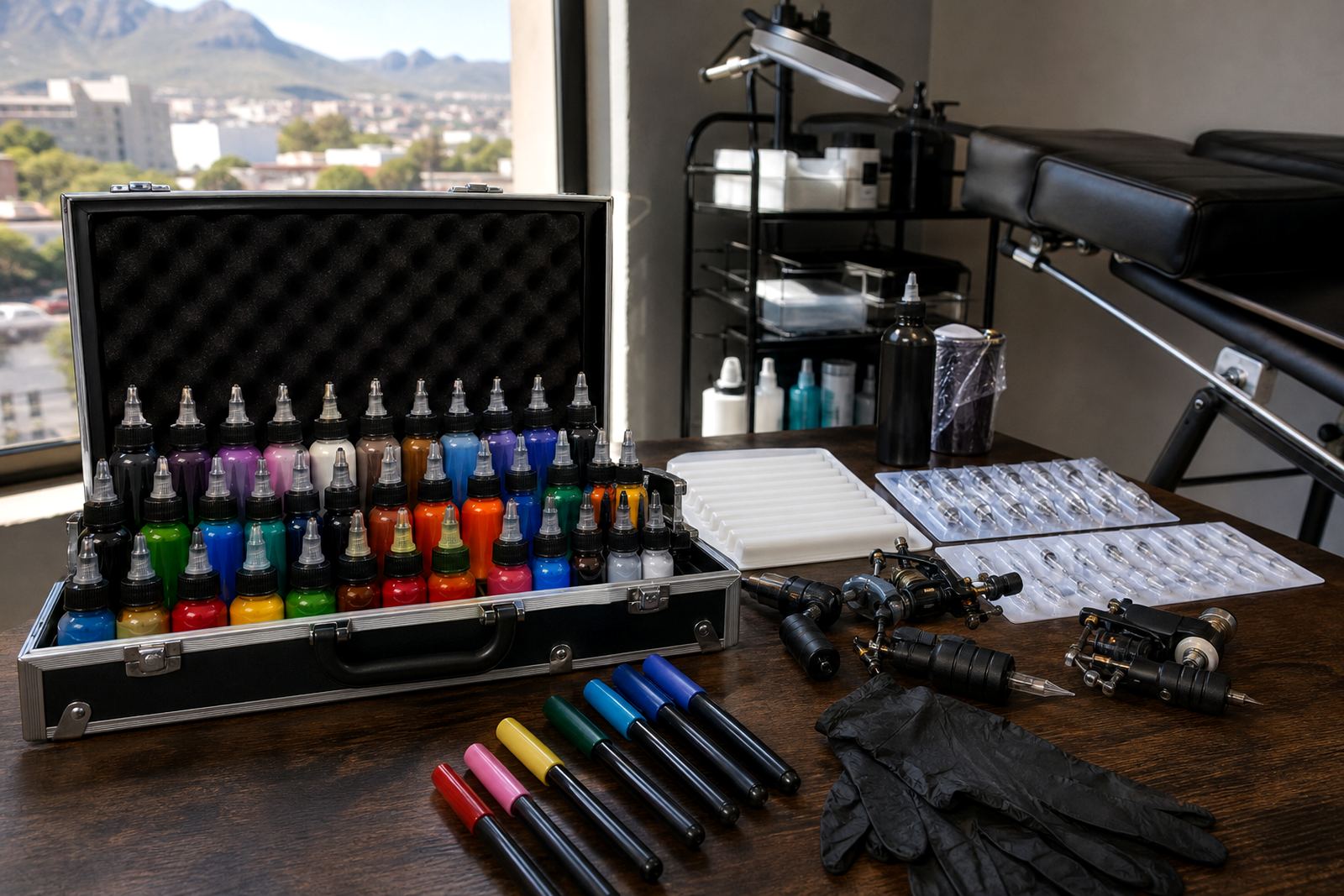
Barrier film works best as part of a tidy setup plan rather than on its own. Studios often pair it with sterile single-use items, disposable barriers for smaller touch points, and a clear storage plan for clean and used stock. That keeps the station easy to reset between appointments and makes it simpler for each artist to work from the same layout.
Where the work area changes through the day, barrier film is useful for marking out which surfaces have already been wrapped and which still need coverage. It is a practical consumable for busy shops that want clean movement around the station without clutter.
Key facts
| Product type | Barrier film roll for tattoo studio station wrapping |
|---|---|
| Common widths | Narrow and wide roll formats for different contact points |
| Roll length | Varies by stock line, suitable for single or bulk use |
| Finish | Usually clear or lightly tinted for visibility over controls |
| Use areas | Machines, grips, cords, switches, trays and handled surfaces |
| Storage | Keep sealed, dry and away from heat, moisture and dust |