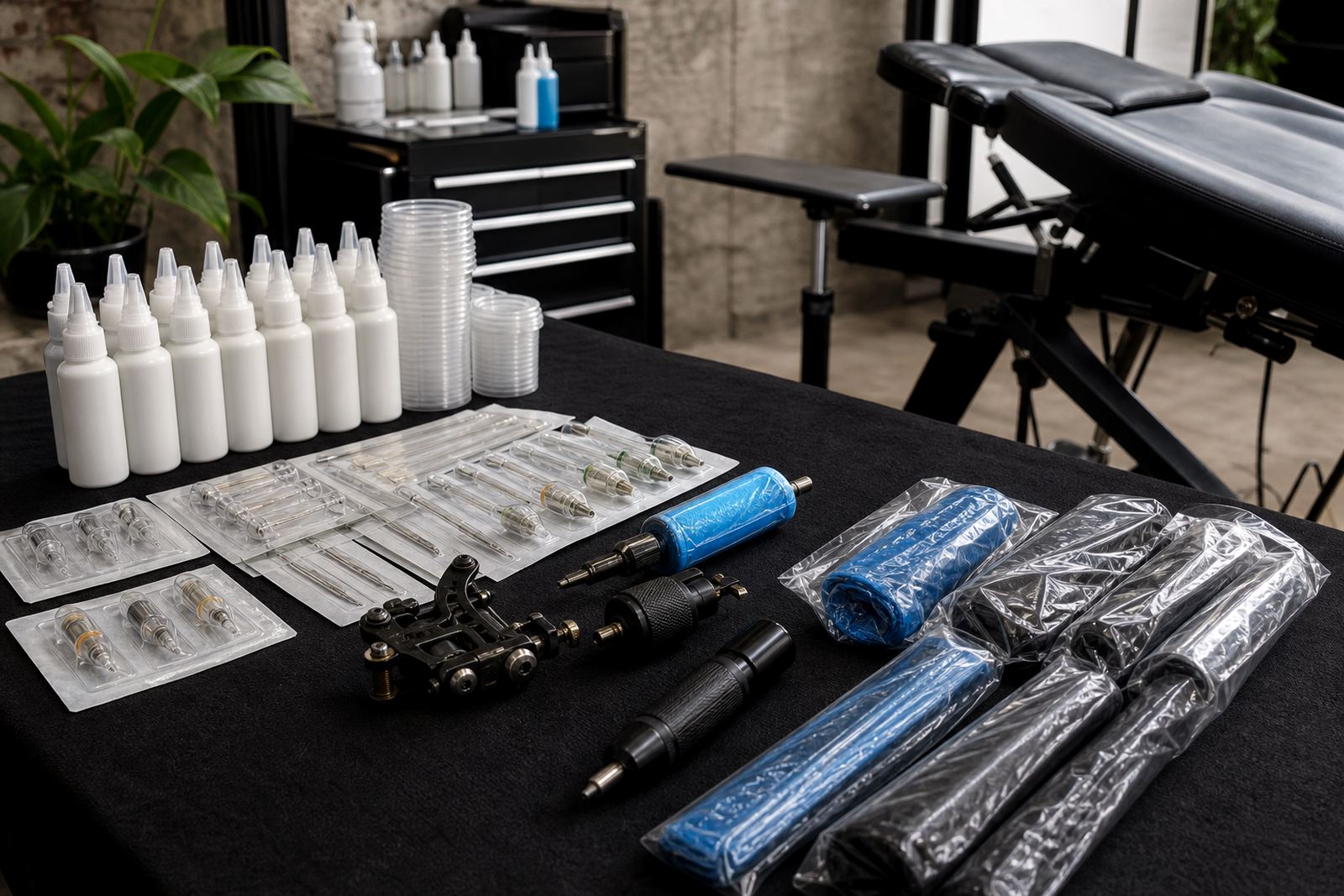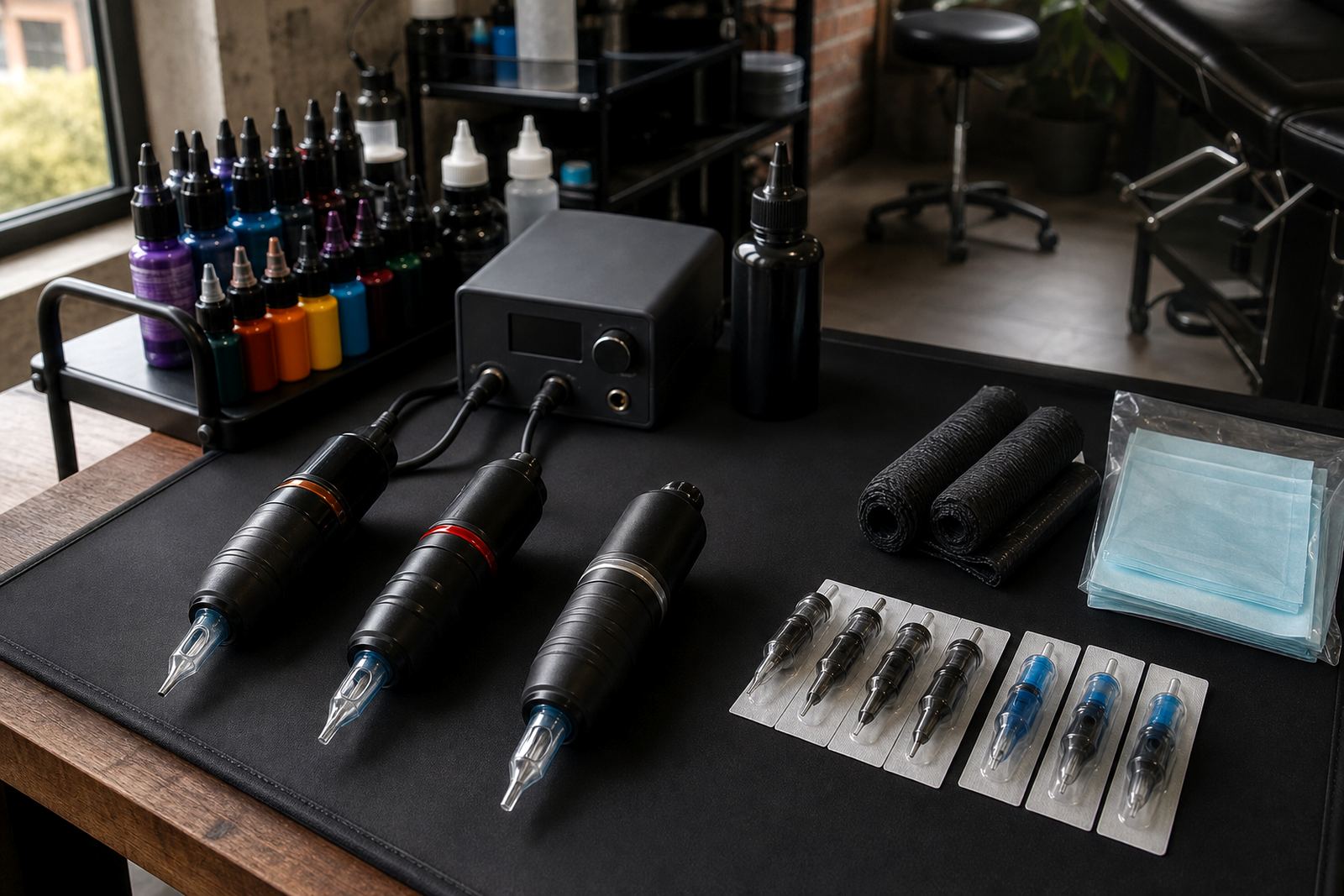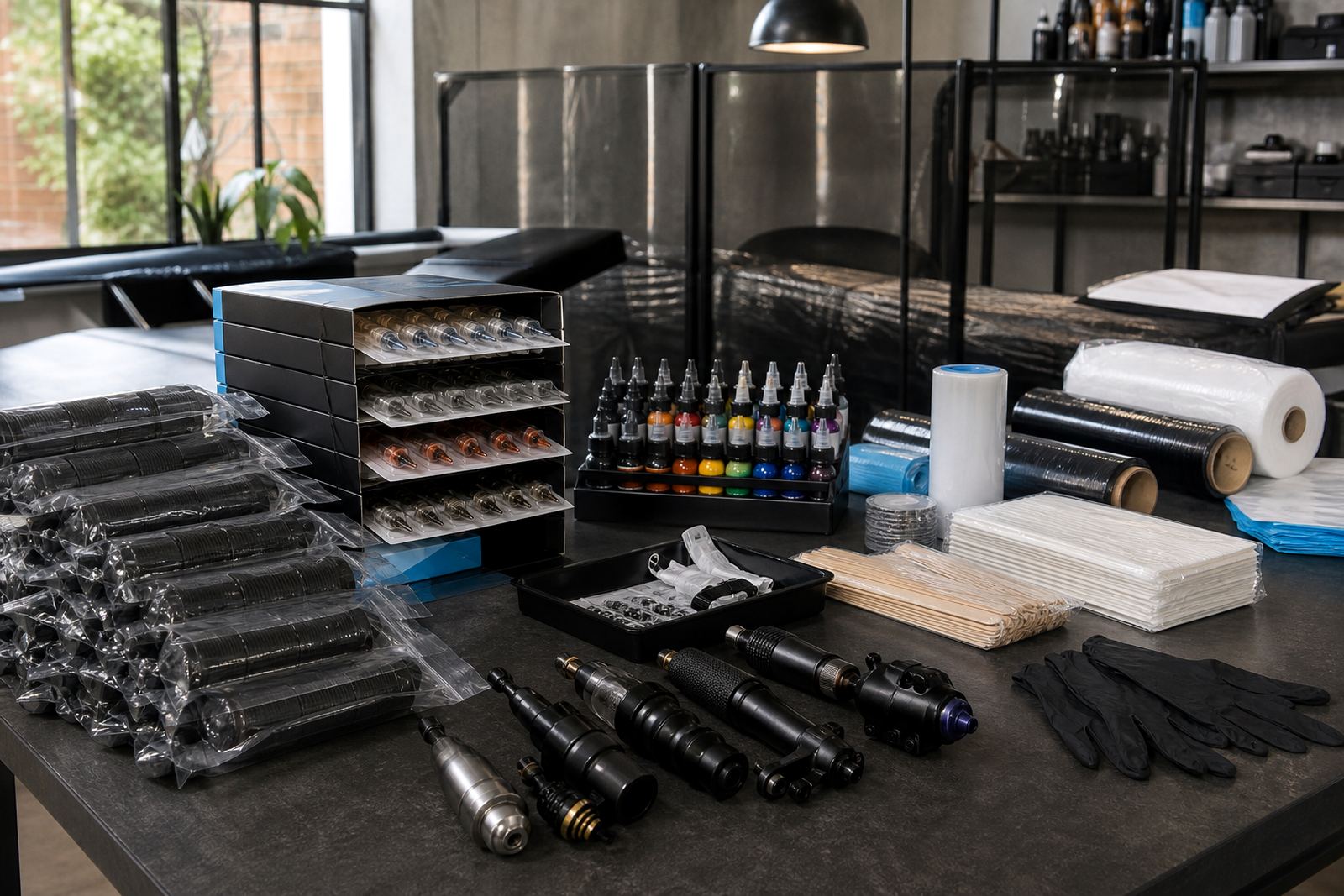
What black lining ink is used for in the studio
Black lining ink is formulated for controlled movement through the needle group, giving the artist a dark, even line for outlines, script, geometric work, and detail that needs to read clearly once healed. In a busy studio, it is often the first black on the shelf because it is used in far more appointments than many other shades, so ordering and storage need to make practical sense.
The lining range is usually chosen for its flow, density, and how it sits in the skin under consistent hand speed. For studios working in Cape Town, Johannesburg, Durban, Pretoria, or Gqeberha, the same black may be used all week, but heat, humidity, and stock turnover can change how often bottles are opened and sealed, so the handling routine matters just as much as the ink itself.
- Used for outline work, script, fine line detail, and crisp edge work
- Available in studio sizes that suit individual artists or shared stations
- Best ordered with the rest of your black stock so shortages do not interrupt bookings
Sizes and bottle options that suit real studio use
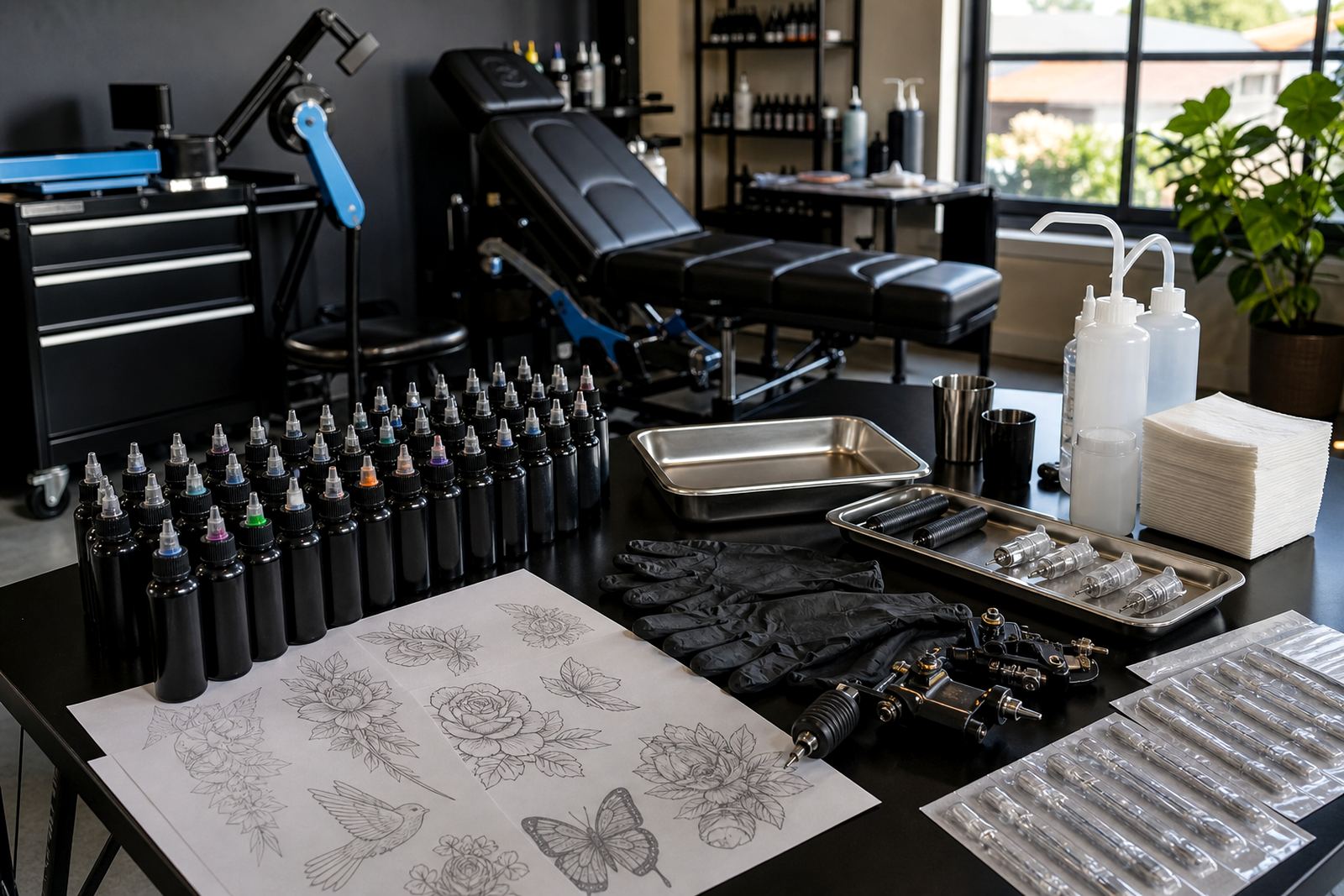
Black lining inks are commonly stocked in compact bottles for smaller studios and larger bottles for higher volume work. The usual format is a screw-cap bottle with a narrow pour opening or controlled dispense tip, which helps reduce spills during station setup. For stock planning, it helps to match bottle size to how often the ink is opened, not only to how dark it looks on the shelf.
When you are running more than one artist, the better choice is often a grouped order of several sizes rather than one large bottle per station. That keeps the open stock manageable and makes reorder planning easier, especially where daily linework is constant. In coastal cities like Durban or Gqeberha, proper sealing and upright storage also matter because repeated exposure to air can affect handling over time.
- Small bottle sizes for low-volume stations or test stock
- Medium sizes for regular weekly use
- Larger studio bottles for high-throughput black work
- Controlled caps that support cleaner pouring and less waste
Needle and cartridge pairings for cleaner linework
Black lining ink is normally paired with liner groupings rather than shading setups, and the ink needs to move cleanly through the selected grouping without feeling too thin or too heavy. Common pairings include round liners for fine outlines and tighter detail, with larger groupings used where the line needs to read bolder. The right match depends on machine setup, hand speed, and the style of work done in the studio.
For cartridge users, the fit between cartridge type, membrane feel, and ink flow can change the way the line lays down. For coil or rotary machines, the ink still needs to feed evenly and stay predictable through the session. If you are stocking for several artists, it is useful to plan black lining ink alongside the needle and cartridge groupings each artist already uses, instead of buying them separately and hoping the fit is right.
- Round liner groupings for outlines and lettering
- Cartridge liners where quicker changeovers are needed
- Pairing ink stock with the groupings used most often in the studio
Station handling, fitting, and day-to-day use
Black lining inks do not need special fitting, but they do need tidy station habits. Keep bottles capped when not in use, decant only what is needed for the session, and label opened stock so the team knows what is active. If the studio uses shared stations, organise the black inks with the rest of the lining consumables so that artists are not searching through mixed bottles before an appointment.
Good station planning also includes the way the bottle is stored beside machine grips, needle bars, cartridge sleeves, wipes, and sterile single-use supplies. In South African studios, especially where municipal health rules and local inspection expectations apply, consistency matters. Follow local health regulations for handling, storage, disposal, and the separation of sterile items from opened consumables.
- Store upright and out of direct sun
- Keep the cap clean between uses
- Decant only what the appointment needs
- Separate opened stock from sterile single-use items
Care, storage, and stock rotation for black ink
Black lining ink keeps best when the bottles are dry on the outside, closed properly, and stored away from dust and excess heat. In humid areas near the coast, the outside of the bottle and cap should be checked regularly so residue does not build up around the threads. In Gauteng, where dust and temperature shifts can be an issue, the same basic routine helps keep the shelf clean and easy to manage.
A clear stock rotation system is worth setting up for any studio that uses black ink daily. Keep the newest stock behind the older stock, note opened bottles, and group the products used for outlining together so the team can see what must be reordered first. If your station plan includes multiple black shades, mark them clearly so there is no confusion between lining ink, wash, and other black work.
Order checks before you place black lining ink on the shelf
Before confirming an order, it helps to check the bottle size, label description, and how the ink fits into your usual black grouping. If you run a mixed team, confirm whether the order is for a single artist, a shared station, or a full studio restock. That avoids ending up with the wrong volume of ink for the work planned that month.
Also confirm the rest of the consumables that go with black lining work. Needles, cartridges, grips, clip cord covers where relevant, disposable ink cups, cleaning wipes, and sterile single-use items all affect how many bottles are needed. For studios in Cape Town, Johannesburg, Durban, Pretoria, Gqeberha, Stellenbosch, Bellville, and Somerset West, delivery planning is simpler when the order is grouped by station rather than scattered across separate small purchases.
- Bottle size and total volume needed
- Whether the ink is for lining only or mixed black stock planning
- The needle or cartridge grouping used most often
- How many stations will share the same bottle
- Storage space and rotation system already in place
Supply support for South African tattoo studios
InkX Tattoo supplies tattoo inks, needles, cartridges, machines, sterile single-use supplies, and studio consumables from Observatory, Cape Town, with delivery arranged for studios across South Africa. The team handles stock list help, range grouping advice, station planning, consumable reorders, bulk order support, new studio kits, machine match help, cartridge match help, storage planning, dispatch updates, product substitutions, and seasonal restock plans.
Clients reach us through the enquiry form on our contact page, which keeps order details in one place for the studio team. That is useful when black lining ink is being ordered with the rest of a working station, especially where multiple artists need the same stock but use different machine setups and needle groupings.