One machine, several hand styles
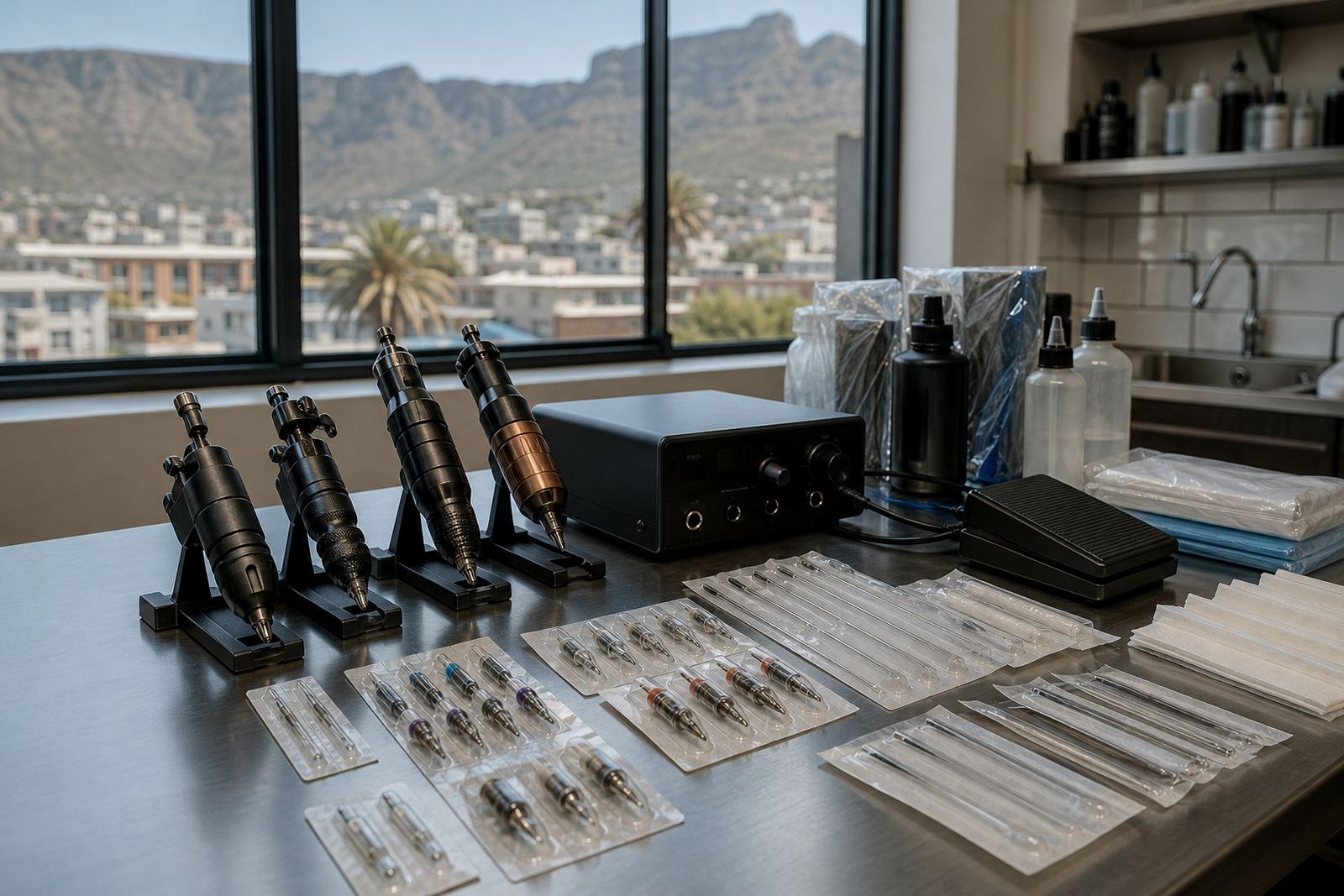
A rotary tattoo machine uses a motor to drive the needle assembly in a smooth, direct motion. That gives a different feel from heavier coil setups, with a lighter hand, less vibration and a cleaner start-up for many artists. For studios in South Africa that move between fine line work, soft shading and dense colour packing, the right rotary can reduce hand fatigue and keep the stroke consistent over a long day.
Rotary machines are used with standard tattoo power supplies and clip cord or RCA style connection depending on the machine body. For cordless units, the battery module and charge cycle matter just as much as the frame and motor. When ordering, it helps to match the machine to your usual needle grouping, your hand speed and the kind of work you do most often in your chair.
Stroke, give and motor feel
Rotary machines are usually chosen by stroke length, weight, grip feel and how the machine handles give. A shorter stroke around 2.5 mm to 3.2 mm is often selected for fine lining, lighter shading and smoother blending. A mid stroke around 3.5 mm to 4.0 mm suits general studio work, while a longer stroke around 4.2 mm and above gives more hit for bold lining and solid packing.
Some units have a soft hit with more give, which can feel forgiving on long sessions. Others run firmer for artists who want a more direct push through larger needle groupings. For South African studios dealing with mixed bookings and different skin types from one chair to the next, it is worth matching stroke and motor feel to the work rather than buying on looks alone.
- Common stroke choices: 2.5 mm, 3.5 mm, 4.0 mm and 4.5 mm
- Typical machine weight: about 120 g to 240 g depending on frame and motor
- Common grip sizes: 25 mm, 30 mm and larger comfort grips
- Connection types: RCA, clip cord or cordless battery formats
Where rotary machines suit the chair
Rotary machines are practical for studios doing mixed appointments, walk-in work and custom pieces that shift from outline to shade in the same session. They suit line work on smaller needles, curved shading over larger areas, and colour packing where a steady, even push is useful. Artists working in Observatory, Sea Point, Claremont or across the greater Cape Town area often keep one rotary for detail and another with a longer stroke for fuller saturation.
They also suit travelling artists and compact setups where the machine needs to be easy to clean externally, simple to set up and consistent after repeated sterilised needle changes. In bigger shops serving Johannesburg, Durban, Pretoria or Gqeberha, rotary machines are often paired with dedicated needle groupings so each station can be set for a specific part of the job.
- Good for lining, soft shading, whip shading and colour packing
- Useful in single-artist studios and multi-station tattoo rooms
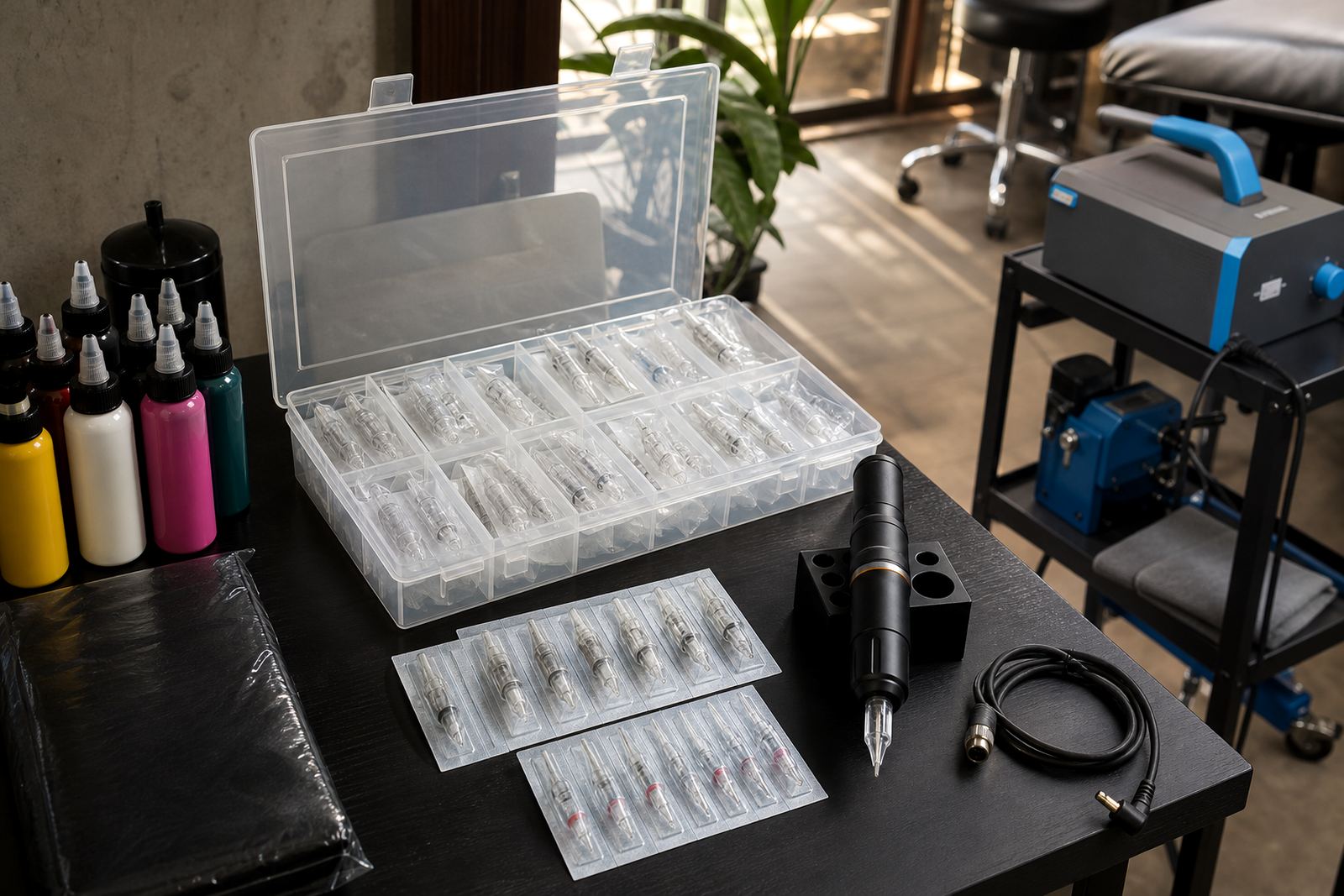
- Works well with cartridges where a quick switch between sizes is needed
- Fits studios that keep separate machines for detail and packing work
What to check before placing your order
Before you order a rotary machine, confirm the stroke, motor type, weight and connection style. If you use standard cartridges, check whether the machine accepts common cartridge grips or direct cartridge systems. If you still prefer needle bars and tubes, confirm the machine’s setup matches your station layout and your usual consumables. A mismatch here can waste time at the chair and affect how the machine feels in the hand.
Also check the recommended voltage range, especially if your power supply settings are already dialled in for certain hand speeds. The same machine can feel different with different needles, so it helps to note your usual lining, shader and mag groupings. If you are building a new studio kit or replacing older equipment, we can help group the order around machine match help and cartridge match help so the rest of the consumables line up properly.
- Stroke length and intended use
- Weight and balance in the hand
- Motor style and running feel
- Voltage range and connection type
- Needle or cartridge compatibility
- Grip diameter and hand comfort
Fitting into a clean working station
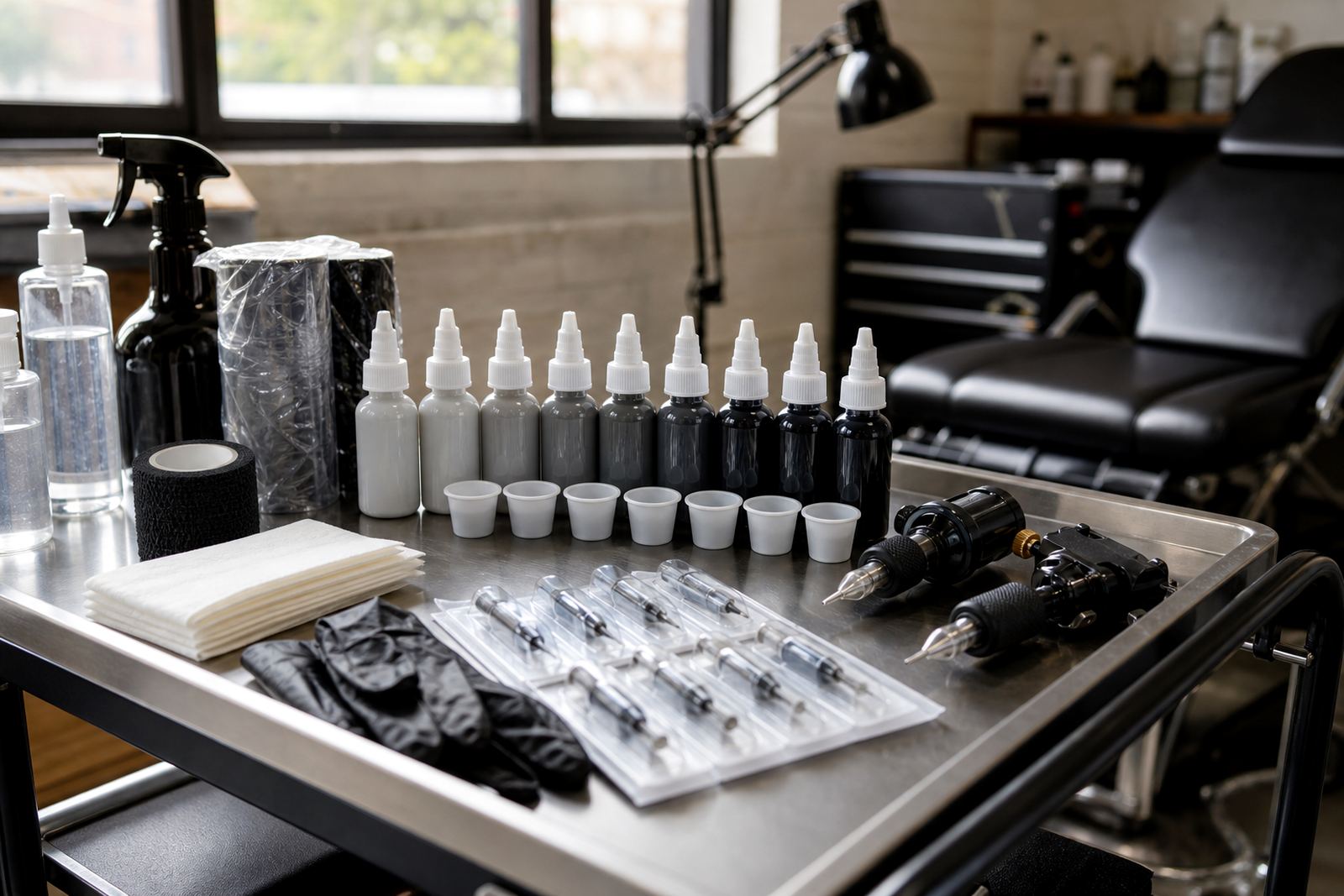
Rotary machines fit easily into a station built around sterile single-use needles, cartridge covers, clip cord bags and wrapped power equipment. The machine body itself should be kept clean between clients and handled in line with local health regulations and studio hygiene rules. In coastal areas like Cape Town and Gqeberha, it helps to store machines and grips in a dry cabinet or sealed container so moisture does not collect on metal parts or bearings.
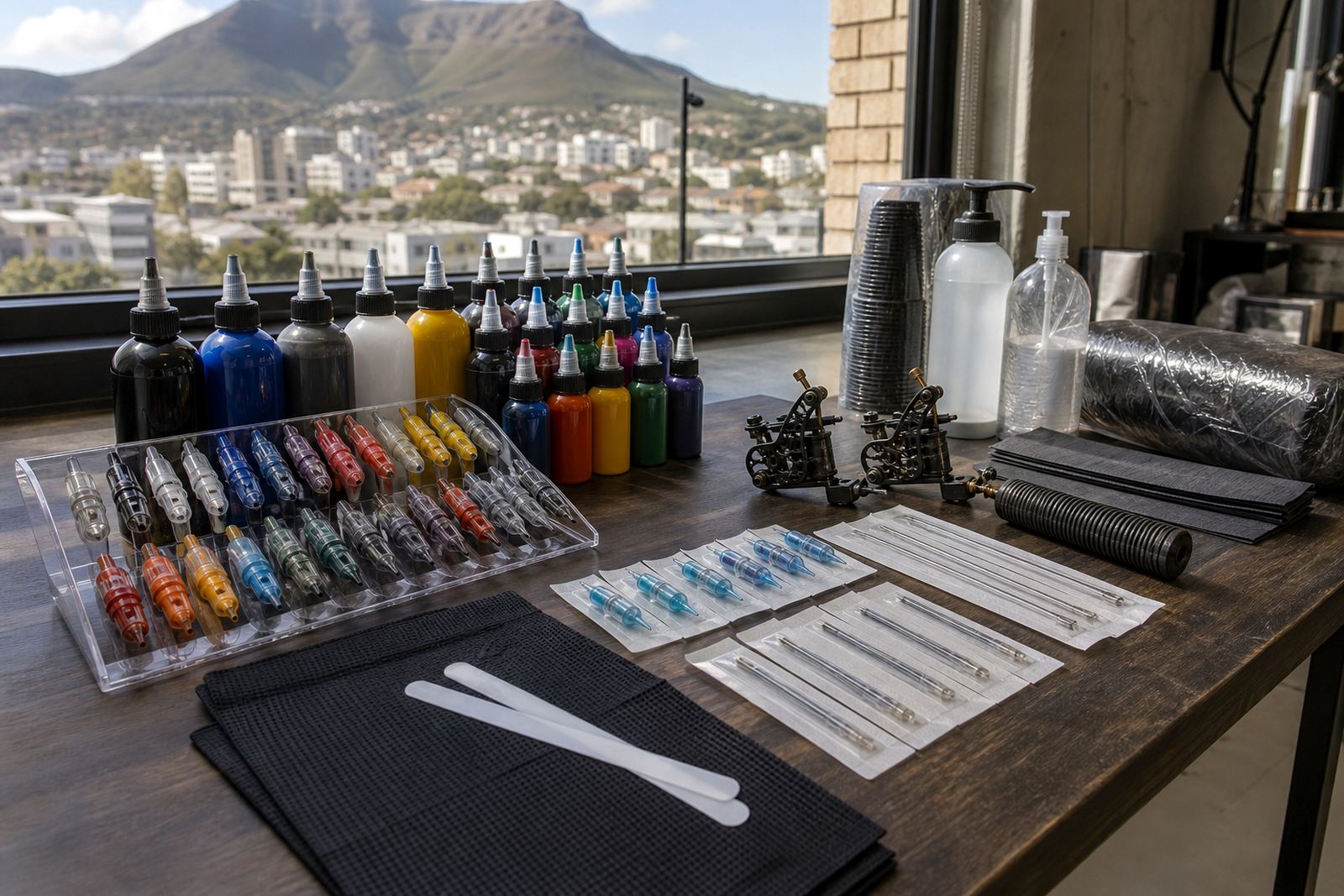
If you run a busier floor with several stations, station planning matters. Keep your machine, inks, cartridges and barrier film grouped in the same way each day so your setup stays consistent across bookings. For studios with stock movement between Bellville, Somerset West and the city bowl, labelled storage also makes reordering and restocking much easier.
Care between sessions and during storage
Rotary machines need basic care to keep the motor and moving parts working properly. Wipe external surfaces after each session, check the grip or cartridge holder for wear, and inspect the connection point before the next setup. If the machine uses removable drive components, follow the maker’s recommended maintenance schedule and replace worn parts before they start affecting needle movement.
For storage, keep the machine dry, dust free and away from loose pigment, cleaning fluid spills and heavy impact. A padded case or divided tray helps prevent knocks in transit between studios or when moving stock in the warehouse. If a machine starts to feel hot, noisy or uneven under load, pause use and check the connection, needle fit and motor condition before running another set of clients.
- Wipe down after use with suitable studio cleaning practice
- Check screws, drive parts and grip fit regularly
- Store away from direct heat and damp corners
- Keep spare O-rings, grips or cartridge parts where relevant
- Use proper station wrap and barrier film around the machine during work
Ordering from InkX Tattoo
When you order rotary machines from InkX Tattoo, it helps to note the machine style, preferred stroke, connection type and the needle or cartridge groupings you use most. We also handle stock list help, consumable reorders, dispatch updates and seasonal restock plans for studios that want a steadier inventory. If you are equipping a new room, new studio kits can be grouped around machines, inks, needles and general studio supplies in one order.
Our team in Observatory supports studios across South Africa, including Cape Town, Johannesburg, Durban, Pretoria and Gqeberha, plus delivery areas such as Stellenbosch, Bellville and Somerset West. For rotary machines, the practical details matter most: what you line with, how hard you pack, whether you want a lighter hand feel and whether your station runs cartridges or traditional needle setups.
- Machine type and frame style
- Stroke length and intended use
- Needle or cartridge system compatibility
- Power connection type
- Grip size and weight preference
- Storage and dispatch requirements for your studio
Key facts
| Product type | Rotary tattoo machine |
|---|---|
| Common stroke options | 2.5 mm, 3.5 mm, 4.0 mm, 4.5 mm |
| Typical use | Lining, shading and colour packing |
| Connection styles | RCA, clip cord or cordless battery formats |
| Typical weight | About 120 g to 240 g |
| Use context | Studio work with standard tattoo power supplies and cartridge or needle setups |