
Magnum groupings for wider passes and steady coverage
Magnum needles are grouped for working across wider sections with fewer passes than a round setup. In practice that means cleaner packing on larger fills, softer blends in the hands of an experienced artist, and a more even spread when the goal is to cover broader areas without leaving patchy spacing. The point is not speed for its own sake, it is control over how the pigment enters the skin and how the needle stack behaves across the stroke.
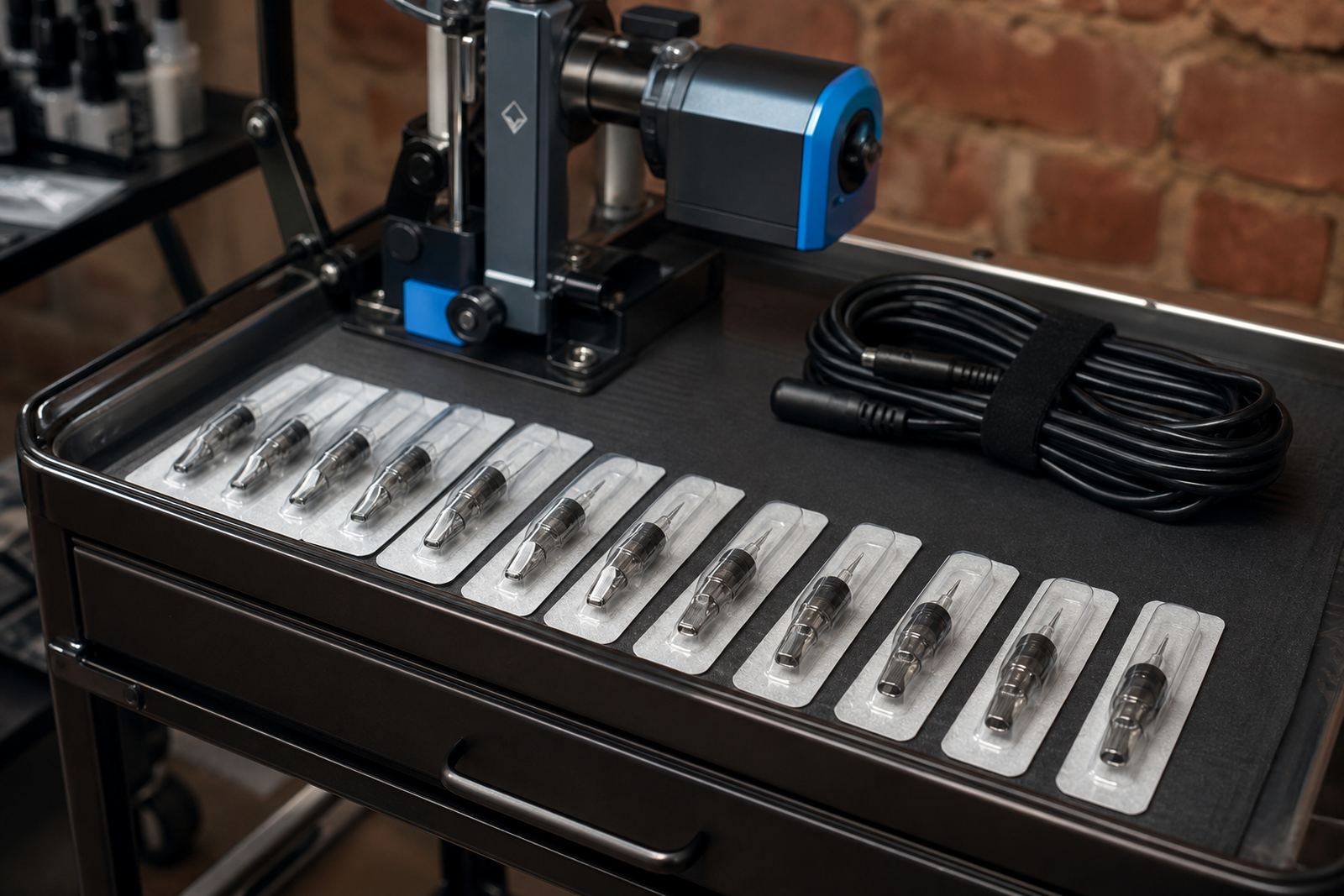
We supply magnums in the forms most studios ask for, including stacked and curved groupings. Stacked magnums keep the needles in a straight line, while curved magnums soften the edge of the group for a gentler sweep across wider areas. Some artists prefer a tighter grouping for firmer packing, others want a looser feel for smoother movement. The right pick depends on line weight, hand speed, machine setup and the kind of work being done that day.
- Stacked magnums for firmer colour lay-in
- Curved magnums for softer edge contact
- Grouped options for shading and larger fills
- Available in cartridge format and traditional needle groupings
Sizes and build details that matter at the bench
Magnums are usually chosen by needle count and taper, then matched to the job at hand. Common groupings include smaller pairings for tighter control and wider sets for larger field work. The count changes how much surface is covered in one pass, while the taper affects how the needle releases pigment and how much bite is felt by the artist. For many studios, the sweet spot comes from keeping a few sizes ready rather than forcing one size to cover every style.
When comparing options, check the cartridge membrane, the needle finish and the point consistency. A clean fit helps the group track straight through the stroke and keeps the movement predictable. If the fit is loose or the needle bar is uneven, the result can be inconsistent packing and unnecessary drag. Small details count here, especially on longer sessions where hand fatigue starts to show.
- Needle count options for fine to broad coverage
- Standard and curved groupings for different hand styles
- Longer and shorter taper options
- Cartridge and traditional formats for compatible machines
Where magnums suit the work best
Magnum needles suit artists who spend time on shading, colour fills, soft gradients and large body sections. They are a practical choice for work that needs broader contact, such as backs, thighs, upper arms and other wide panels where even saturation matters. In studio use, they also help when building smooth transitions between darker and lighter areas, provided the artist keeps a steady rhythm and watches the pressure closely.
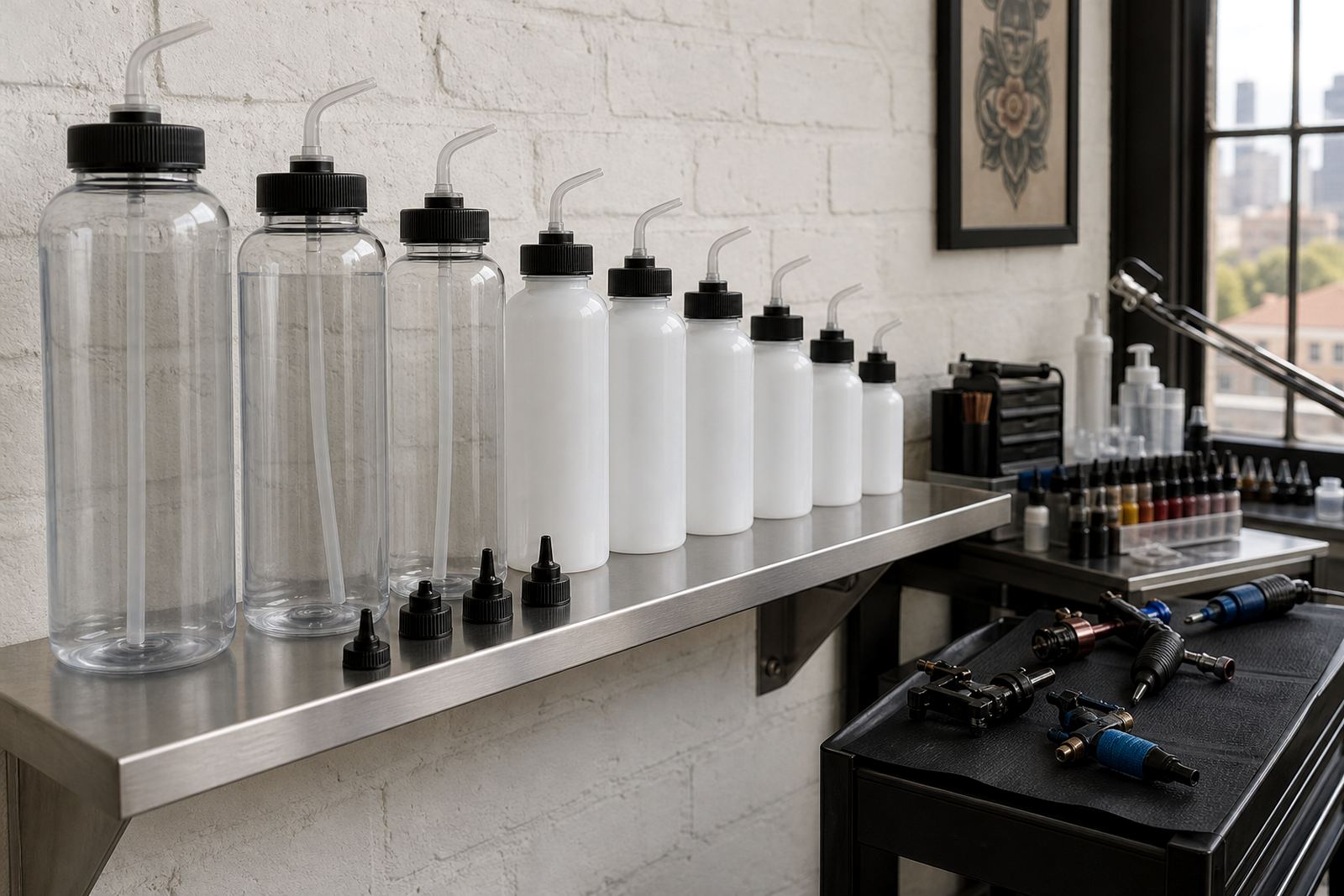
In Cape Town, Johannesburg, Durban, Pretoria and Gqeberha, studios often ask for magnums that can handle varied sessions without fuss. Coastal humidity in places like Cape Town and Durban can affect how supplies are stored, so sealed packs and dry storage are worth keeping on hand. It helps to sort stock by grouping and taper rather than leaving everything mixed in one drawer, because a packed box with no label turns into a slow morning.
- Broad fills on larger skin areas
- Shading and gradual tone work
- Colour packing in open sections
- Studio stock for mixed appointment books
Cartridge fitting and machine matching
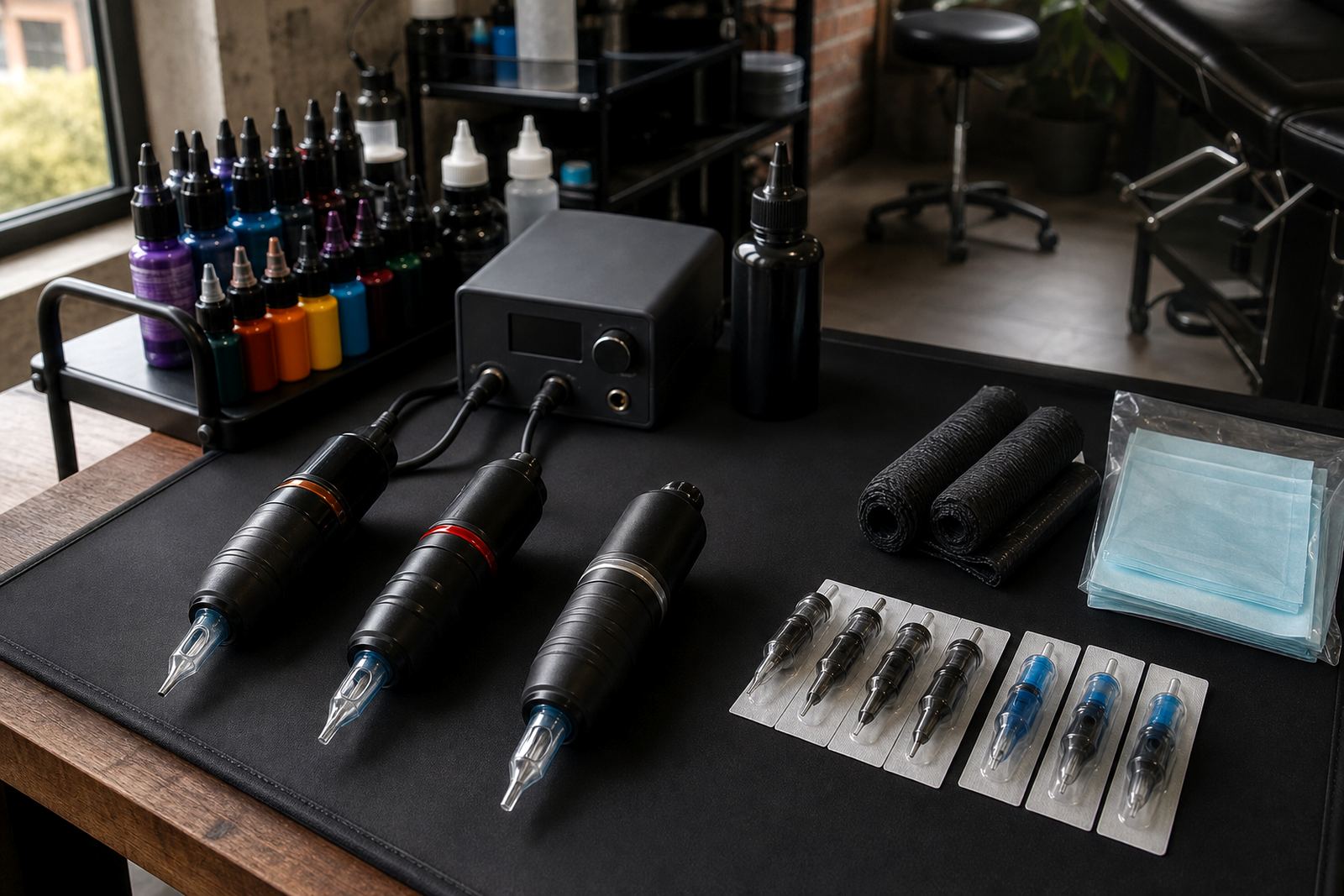
Magnum cartridges need the right machine fit to move properly, whether the studio uses a rotary machine with a cartridge grip or a compatible direct system. A secure seat matters because the needle group must travel straight, return cleanly and hold its position under working pressure. If the fit is off, the group can wobble or feel uneven through the hand, which shows up very quickly on wider fills.
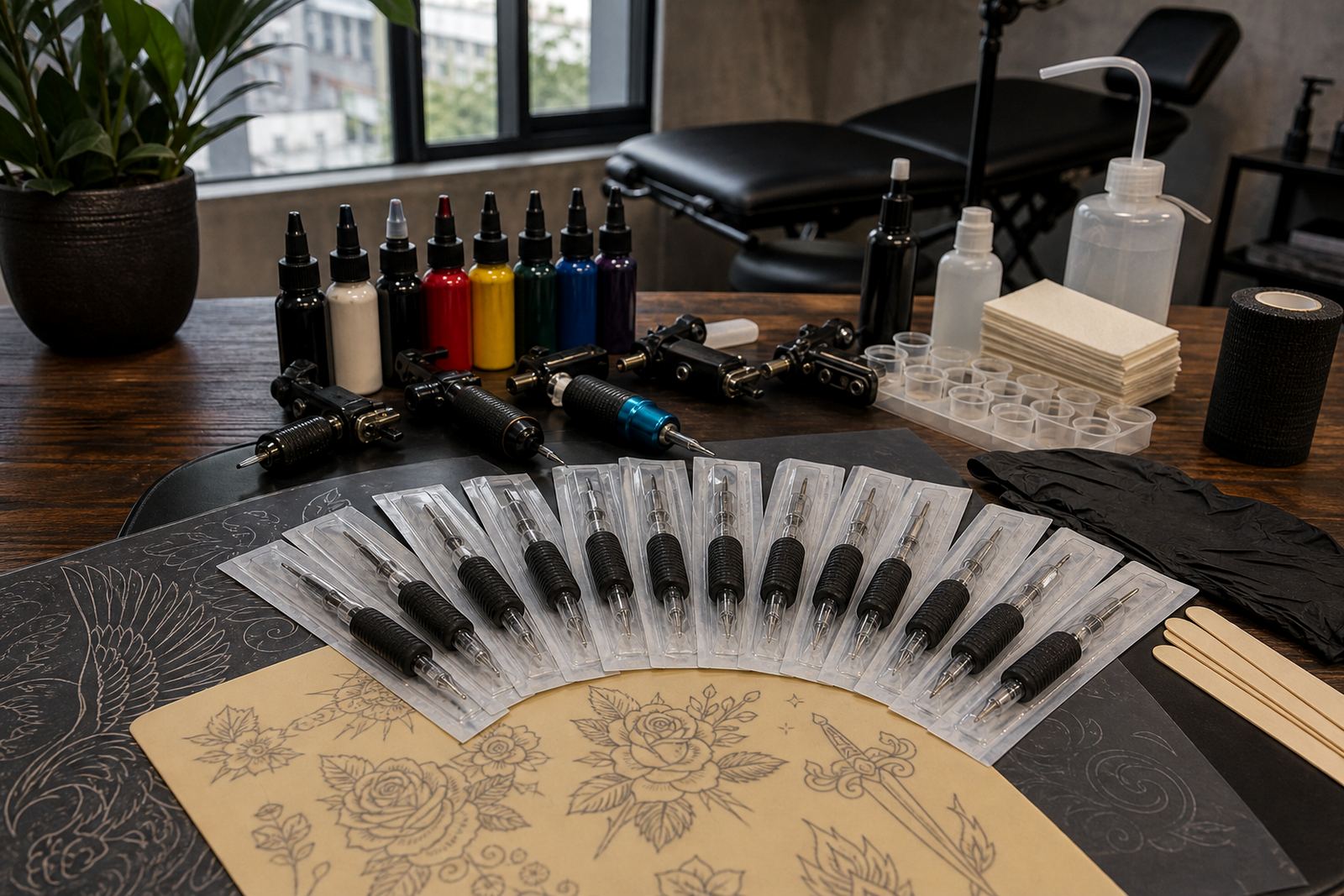
For traditional needle groupings, the fitting is just as important. The bar, tube and tip need to match the grouping size and the way the artist works. A broader magnum needs enough clearance to move without scraping, but not so much space that it loses control. We help studios sort machine match, cartridge match and stock grouping so the right magnum lands on the right setup first time, not after a frustrating test run.
- Check cartridge compatibility with the machine system
- Match the grip, tube and tip to the grouping size
- Confirm the stroke style suited to the artist’s hand speed
- Use sterile single-use parts where the studio protocol requires them
Handling, storage and studio hygiene
Magnum needles should be stored in a clean, dry space away from dust, splash areas and heat. In a coastal city, moisture can creep into packaging quicker than expected, so sealed stock and labelled trays are worth the effort. Keep open packs separate from sealed packs, and never mix clean items with used work areas. That sounds obvious, yet it is one of those things that gets missed when the day gets busy.
Follow local health regulations for handling, disposal and studio hygiene, and keep your workflow aligned to the rules that apply to your premises. Single-use items must stay single-use, and any open stock needs a clear system so nothing gets crossed over by mistake. A tidy station makes it easier to work properly and easier to restock without wasting time hunting through mixed supplies.
- Keep packs dry, sealed and clearly marked
- Separate sterile stock from open stock
- Follow local health regulations for handling and disposal
- Use a labelled storage plan for magnums, cartridges and consumables
What to confirm before placing stock in the cart
Before placing a magnum order, confirm the grouping type, needle count, taper and format. Also check whether the studio needs cartridges, traditional groupings or both, because the wrong format can stall a booking and leave a shelf full of useful stock that does not suit the current machines. If you work with a mix of artists, it helps to note who prefers which size so reorders are not based on guesswork.
For larger studio orders, confirm the quantity split across your branches or delivery points, especially if stock is being sent to Cape Town, Johannesburg, Durban, Pretoria or Gqeberha. It is also worth checking whether you need matching consumables, storage items or backup stock for busy weeks. A quick note on the order saves double handling later and keeps the drawer order clearer. We can help with stock list help, range grouping advice, machine match help, cartridge match help, storage planning and seasonal restock plans through the enquiry form on our contact page.
- Needle count and taper
- Curved or stacked grouping
- Cartridge or traditional format
- Quantity by studio location or branch
- Matching consumables and storage needs
Key facts
| Product type | Magnum needle groupings for broader coverage |
|---|---|
| Formats | Cartridge and traditional needle groupings |
| Common use | Shading, colour packing and larger-area work |
| Grouping styles | Stacked and curved options |
| Storage note | Keep sealed, dry and clearly labelled |
| Supply area | Observatory, Cape Town with delivery across South Africa |