Traditional coil frames for direct hand feel
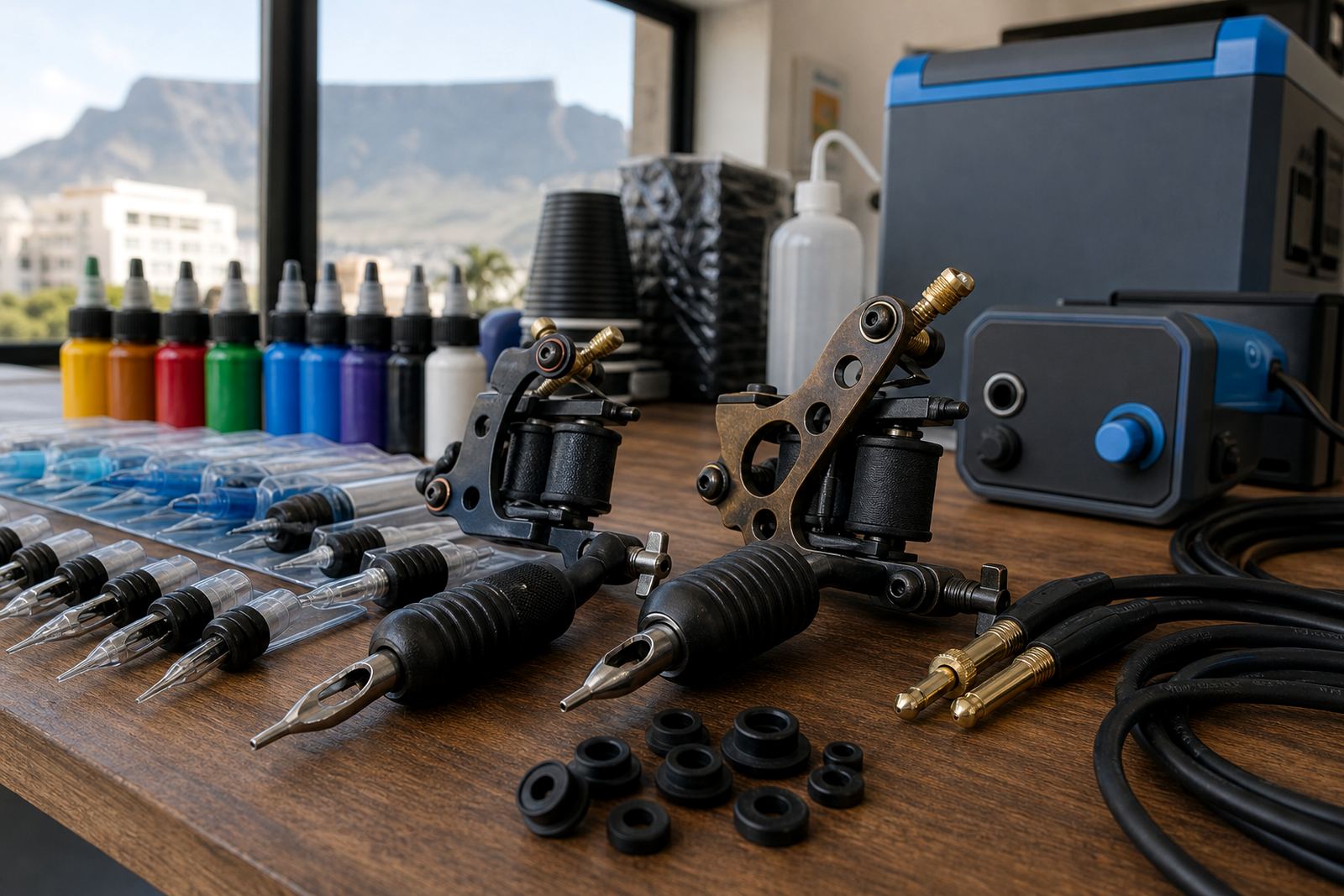
Coil tattoo machines are built around a metal frame, electromagnetic coils, armature bar and spring set. That layout gives the artist a direct feel through the hand, which is why many studios keep them for lining, shading and solid colour packing. The stroke is controlled by the machine build, spring tension and tuning, so the same frame can behave very differently depending on the set-up.
For South African studios, coil machines are still a practical choice where artists want a firmer hit on tighter line work or a softer set for long shade passes. They suit busy shops in Cape Town, Johannesburg, Durban, Pretoria and Gqeberha where artists want familiar hardware they can service and adjust with standard tools. Local humidity near the coast can affect steel parts and contacts, so dry storage and regular cleaning matter in everyday use.
Machine sizes, stroke and tuning details
When selecting a coil machine, the main details are frame weight, stroke length, spring feel and the style of work it will carry. Lighter frames are easier on the wrist for longer sessions, while heavier frames can feel steadier on bold lining. Stroke length influences how hard the needle group hits the skin surface and how quickly it returns to rest.
- Short stroke setups around 2.5 mm to 3.0 mm for softer shading and smoother blends
- Mid stroke setups around 3.0 mm to 3.5 mm for general studio use
- Longer stroke setups around 3.5 mm to 4.2 mm for lining and colour packing
- Single coil and dual coil options, depending on the pull and speed the artist wants
- Standard tube and grip fitment or grip-free frame formats, based on the machine style
Voltage range, contact gap and spring balance all affect performance, so a machine that looks similar on paper may not feel the same on the bench. For artists who tune by hand, that difference is useful. For newer stations, a more predictable factory set machine can be easier to work with during daily bookings.
Where coil machines suit best in the studio
Coil machines suit artists who split their day between line work, black and grey shading, and colour fills. They are common in studios that want one machine for a specific job rather than a single universal set-up. A lining machine usually runs a stronger front spring and a sharper hit, while a shader tends to run softer with a longer, smoother cycle.
They are also useful for walk-in work and flash days, where the artist wants a familiar response from the handpiece. In coastal studios around Durban or Gqeberha, it helps to keep the machine dry between clients and wipe down surfaces properly, because moisture can collect on contacts, frames and screws. Follow local health regulations for studio handling, barrier practices and waste control at all times.
- Lining on fine script, bold outlines and geometric work
- Black packing on larger fill areas
- Grey wash shading and smooth texture passes
- Set-ups for artists who prefer tuning over pre-set cartridge machine handling
Fitting, power set-up and bench requirements
Coil machines need a proper machine connection on the bench, with a reliable clip cord or compatible power lead and a stable power supply unit. Correct polarity, contact alignment and footswitch response all affect how the machine starts and runs. If a studio uses multiple machines, keeping the power supply marked and the cables checked helps avoid uneven output during a session.
Most coil machines are fitted with standard grips, tubes or cartridge conversion parts depending on the frame design. When ordering, check whether the machine is supplied as a complete unit or as a frame only. Some artists want a ready-to-run set-up, while others prefer to build the machine around their own tubes, needles or cartridge grips. For studios in South Africa, it helps to confirm the plug type, lead compatibility and the bench space available for the power unit and foot control.
Care, cleaning and storage between sessions
A coil machine lasts longer when it is cleaned after each session and stored where dust and humidity are controlled. Wipe the frame, springs and contact points carefully, then keep the machine dry before putting it away. Any residue on the front spring or binding posts can change the feel of the machine on the next run.
Use sterile single-use items where required by your studio workflow, and keep reusable parts separate from consumables. Needle bars, cartridges, clips, grips and wraps should be grouped clearly so the station can be reset without confusion. In coastal areas, a sealed box or dry cabinet helps prevent corrosion on screws and springs. A quick check of the contact screw, rubber grommet and frame bolts before a shift can save time later.
- Check springs for fatigue or loss of tension
- Inspect the contact screw for wear and clean build-up
- Keep screws, bands and washers in a labelled parts tray
- Store machines away from direct moisture and loose pigment dust
What to confirm before placing an order
Before choosing a coil machine, confirm the work style it must cover, the voltage range your power supply supports, and whether you need a lining frame, shader frame or a versatile all-round option. It also helps to note the grip size, tube fitment, frame weight and whether the artist works with traditional needles or cartridge systems. A clear order avoids mismatches at the station.
For studio planning, it is useful to check which consumables are being restocked at the same time, especially needles, cartridges, sterile single-use fittings and storage items. If you are setting up a new station or replacing older machines, grouped ordering can make packing and dispatch easier across Cape Town, Johannesburg, Durban, Pretoria and Gqeberha. If you need help matching the machine to your range, InkX Tattoo can assist with stock list help, machine match help and cartridge match help through the enquiry form on the contact page.
- Intended use: lining, shading or colour packing
- Stroke length and spring feel
- Frame weight, grip fit and tube compatibility
- Power supply compatibility and lead type
- Needle or cartridge preference for the artist
- Any studio rules for station layout and consumable grouping
Key facts
| Type | Coil tattoo machine for lining, shading or colour packing |
|---|---|
| Frame | Traditional metal frame with spring and contact layout |
| Stroke range | Approx. 2.5 mm to 4.2 mm depending on build |
| Use | Professional studio work, flash sessions and custom set-ups |
| Power | Uses a compatible tattoo power supply and connection lead |
| Fitment | Standard grip, tube or cartridge conversion depending on model |