
What these bottle sleeves are used for on the station
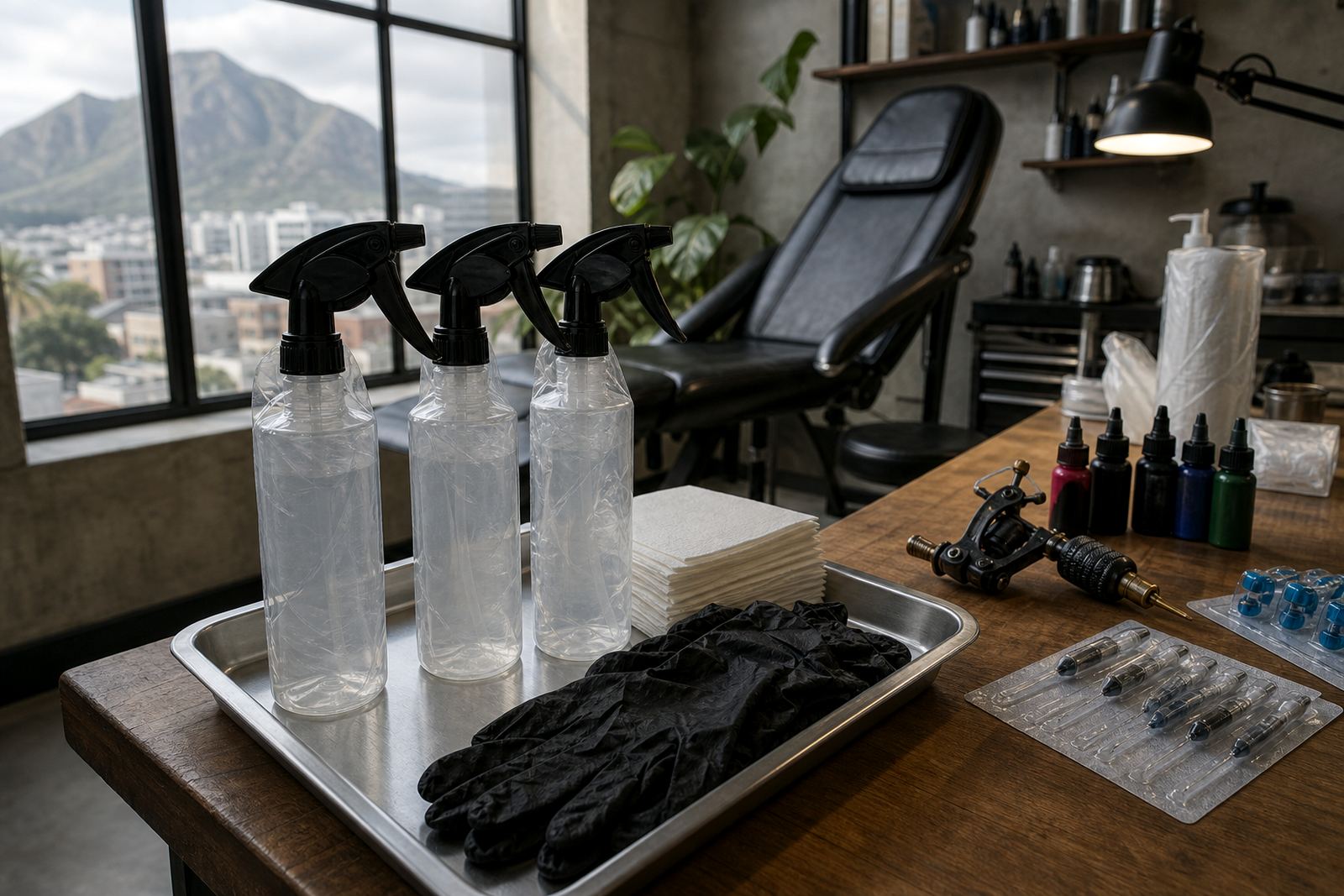
Bottle cover sleeves are thin single-use sleeves fitted over spray bottles, wash bottles and similar session bottles used at the tattoo station. They form a clean outer layer around the bottle body, which helps keep the bottle easier to manage during busy work and reduces contact with the surface of the bottle itself.
In studio use, these sleeves suit artists who keep one bottle for rinse water, one for cleaning solution and one for general station handling. They are especially useful where bottles are moved between the work area, tray and sink area during a session, as happens in larger studios in Cape Town, Johannesburg and Durban where several stations may run at the same time.
- Single-use sleeve for bottle handling during tattoo sessions
- Suitable for spray bottles, wash bottles and similar handheld containers
- Useful for station prep, cleaning routines and consumable control
Sizes and fit options that suit tattoo bottle work
These sleeves are supplied in practical sizes for common studio bottle diameters and heights. The right fit depends on the bottle shoulder, body width and how much of the bottle you want covered. A sleeve should sit smoothly over the bottle without being pulled so tight that it distorts the opening or grips unevenly around the shoulders.
For taller bottles, a longer sleeve gives better coverage down the body and helps keep the hand contact area covered. For compact bottles used on a packed station, a shorter sleeve can be easier to fit and remove during restocking. In humid coastal areas such as Cape Town and Gqeberha, a neat fit also helps when bottles are handled with slightly damp hands after cleaning the station.
- Choose by bottle diameter and bottle height
- Check whether you need a short or extended sleeve
- Match the opening to the bottle top and shoulder profile
Where bottle cover sleeves suit best in South African studios
These sleeves suit busy tattoo studios that keep spray bottles on the bench, on a tray or beside the rinse station. They are practical for blackwork, colour work, fine-line setups and walk-in stations where bottle handling forms part of every session. They also work well in training rooms, private studios and larger shops that use grouped consumables for different stations.
For studios that stock consumables by session type, bottle sleeves fit neatly with other sterile single-use items, gloves, barrier film and table covers. They are also useful where staff keep separate bottles for different liquids and want a clear way to manage bottle handling through the day.
- Front-of-station bottle handling
- Training rooms and shared workspaces
- Studio prep tables and consumable stations
Fitting and station setup details to keep in mind
Fitting is straightforward and is usually done before the station opens or during prep time. Slide the sleeve over the bottle body so it sits evenly from the base upward, then check that the neck and spray top remain easy to grip and use. If the sleeve is part of a grouped station kit, it helps to label or separate bottles before fitting so each sleeve goes to the correct bottle size.
Some studios prefer to sleeve bottles together with other consumables during tray setup, while others fit them one by one as part of station planning. Either way, the bottle shape should be confirmed first. Tall narrow bottles, wider wash bottles and rounded spray bottles can all need a slightly different sleeve length or width. A clean fit matters when work moves quickly and there is little room on the station.
- Fit before the session or during station prep
- Confirm bottle height, shoulder shape and neck size
- Keep sleeves grouped with the correct bottle type
Care, storage and stock handling for sleeve packs
These sleeves are stored as closed packs with the rest of the consumable stock. Keep them dry, out of direct sun and away from dust so the pack stays neat for station use. Because they are single-use, they are best counted as part of daily or weekly consumable planning rather than mixed loosely with open loose stock.
For studios running regular deliveries to Cape Town, Johannesburg, Durban, Pretoria and Gqeberha, it helps to keep bottle sleeves on the same reorder list as gloves, barrier items and other session consumables. That keeps stock movement clearer and reduces last minute gaps when several stations are running at once. In colder inland months the packs are easy to store, while coastal humidity can make sealed storage and tidy shelving more important.
- Store sealed, dry and away from dust
- Count as part of consumable restock planning
- Keep separate from open station waste and used items
Ordering details to confirm before placing stock
When ordering bottle cover sleeves, confirm the bottle type, approximate size and how many stations you want to cover. If you use different bottles for rinse, cleaning and general handling, note whether each one needs the same sleeve size or a mixed pack plan. That helps with stock grouping and avoids ending up with sleeves that are too short for taller bottles or too loose for slim ones.
It also helps to confirm whether the sleeves are for a new studio kit, a seasonal restock or a bulk order for multiple branches. Studios in Observatory, Bellville and Somerset West often keep a mixed set of bottle sizes on hand, while larger teams may want sleeves packed by station or by delivery split. For local health rules and studio procedures, follow the requirements that apply to your premises and operating area.
- Bottle size and shape
- Number of sleeves per pack or order
- Use case: single station, bulk restock or new studio setup
Key facts
| Product type | Single-use bottle cover sleeves for tattoo session bottles |
|---|---|
| Compatible items | Spray bottles, wash bottles and similar handheld studio bottles |
| Typical use | Station prep, bottle handling and consumable control |
| Material form | Lightweight protective sleeve |
| Pack style | Supplied in grouped consumable packs |
| Supply areas | Cape Town, Johannesburg, Durban, Pretoria, Gqeberha and surrounding studio routes |