
Covering treatment beds without slowing the room down
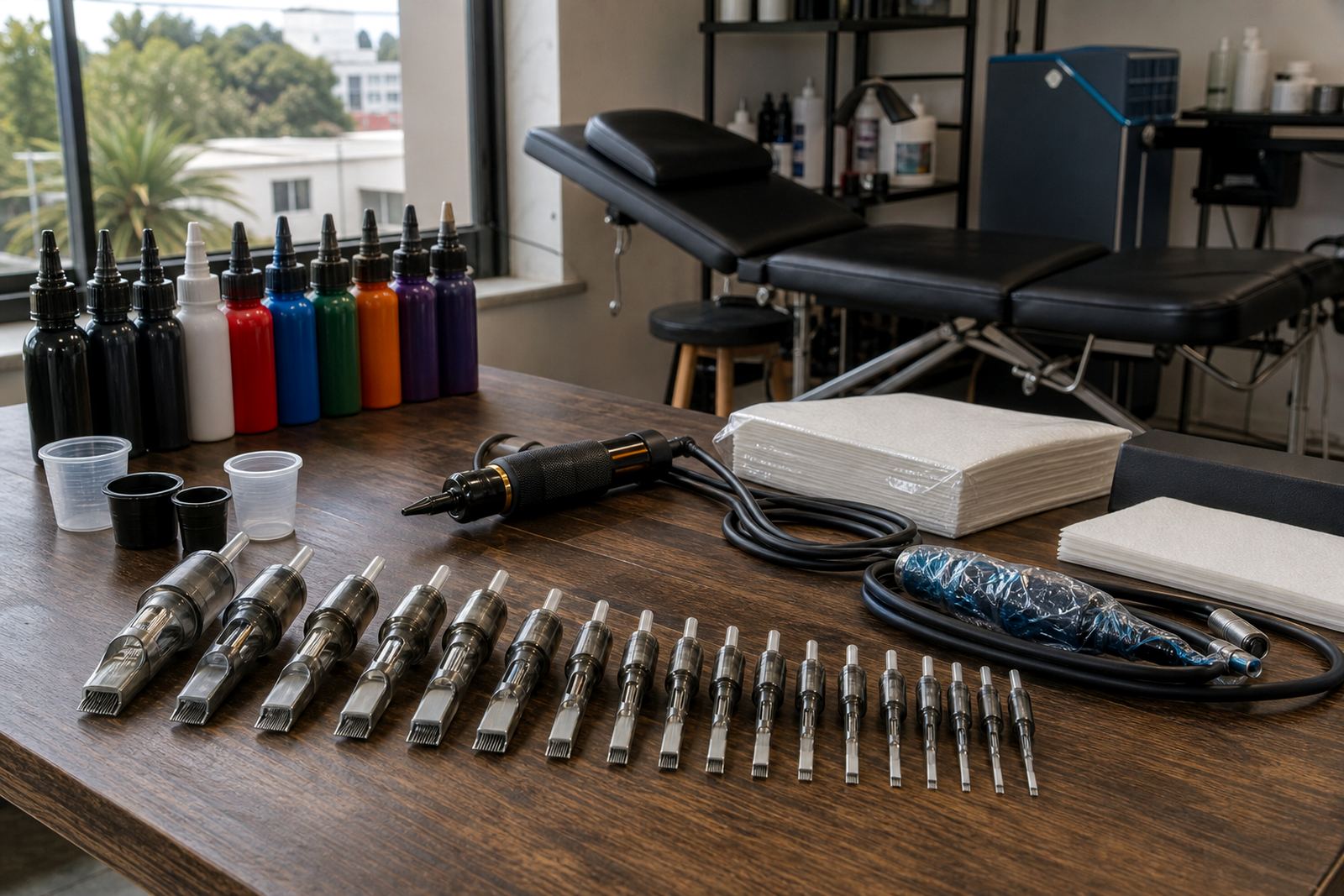
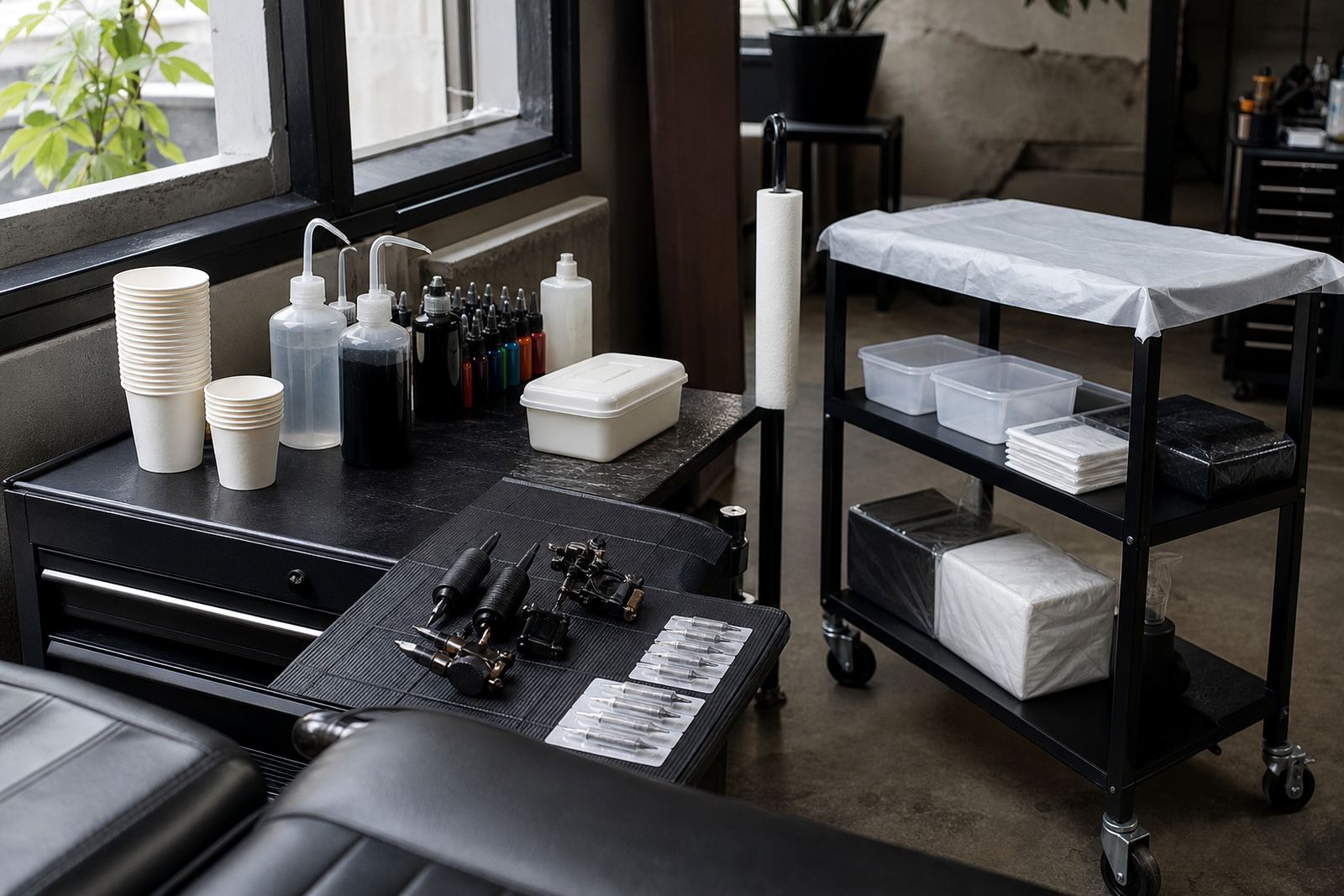
Bed covers are used on tattoo treatment beds, recline chairs and similar station furniture to protect the surface and keep the working area neat between appointments. In a busy studio, a fitted cover helps with quicker changeovers, especially where more than one artist shares the same room and stock needs to move with the daily flow.
For tattoo setups, the cover should sit flat, stay in place through movement and remove without fuss when the station is reset. A good cover also helps separate fresh setup from used surfaces, which supports cleaner stock rotation and a more orderly counter area.
- Suitable for treatment beds, padded tables and station chairs
- Available in common studio sizes and stretch-fit options
- Useful for single-room and multi-artist workstations
- Helps keep the surface neat during fast turnarounds
Sizes, fit and finish that suit studio use
Bed covers are usually selected by length, width and depth, with some styles made for elastic edge fit and others cut for a flatter wrap. In a Cape Town studio with limited space, a snug cover makes setup easier. In larger rooms or shared stations in Johannesburg or Durban, a cover with a deeper skirt can be useful where beds vary in thickness.
Options may include smooth wipe-clean finishes, lightly textured materials and covers with reinforced edges where frequent fitting is part of the day. Colour choice is usually kept practical for studio routines, with dark shades often preferred where ink marks and surface wear need less visible attention.
- Common sizes: single station, extended treatment bed, wide recline chair
- Fit styles: elastic edge, envelope fit, wrap-around style
- Finish options: smooth surface, lightly textured surface, reinforced edge
- Colours often selected for practical studio rotation and easier visual checking
Where bed covers are used in tattoo workrooms
These covers suit studios that work with lined station layouts, mobile event tables, apprentice bays and private treatment rooms. They are also useful where a bed is shared across artist shifts and the room needs to reset quickly before the next client. In coastal areas like Gqeberha and Durban, a cover that stores flat and dries neatly after cleaning can be easier to keep in rotation.
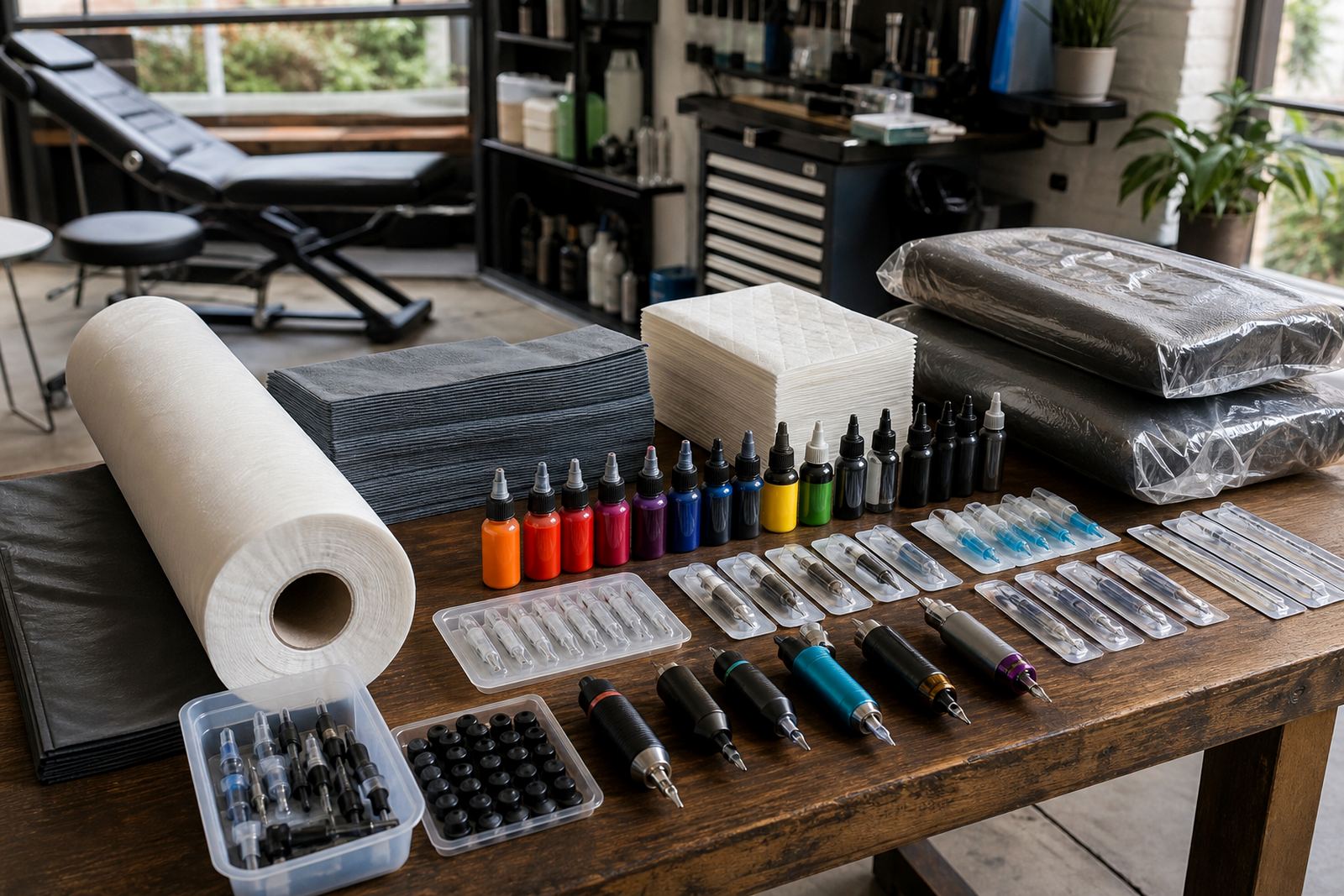
For studios in observatory-style shared spaces, compact storage matters. A cover that folds without taking much shelf space makes it simpler to keep spare stock on hand, especially when consumable orders are planned with needles, cartridges and barrier items at the same time.
- Shared artist stations
- Private tattoo rooms
- Guest spot setups and event work
- Short notice changeovers between clients
Fitting checks before the first use
Before fitting, it helps to check the bed length, width, headrest shape and corner depth so the cover sits properly. Some treatment beds have rounded ends or thicker foam sections, which may need a looser cut or deeper edge. If the bed has fittings or adjustable sections, the cover should still allow the surface to move without pulling at the seams.
Most studios prefer a cover that can be pulled on quickly and removed cleanly for washing or disposal, depending on the type ordered. For busy shops in Pretoria or Bellville, this matters when the station is being reset between bookings and the same bed needs to keep its shape through the day.
- Check bed length, width and corner depth
- Note any headrest or split-section shape
- Confirm whether the bed is fixed, folding or adjustable
- Match the cover to how often the station is changed over
Care, storage and studio hygiene routines
Bed covers should be handled as part of the studio’s regular cleaning routine, together with surface wipes, barrier wrap and other sterile single-use supplies. Wipe-clean styles are useful where surfaces need to be reset often, while reusable covers should be washed, dried and folded before being returned to stock. In humid coastal conditions, dry storage helps prevent musty stock and keeps the cover ready for use.
Keep folded covers in a clean, labelled shelf or drawer away from loose ink bottles and sharp stock. If a studio uses separate room packs, it helps to store bed covers with clip-on barriers, apron stock and other station consumables so each bay can be topped up without rummaging through mixed cartons. Follow local health regulations for studio hygiene and surface handling.
- Store dry and folded in a clean stock area
- Keep away from loose needles, cartridges and opened consumables
- Use a labelled rotation system for clean and used stock
- Match cleaning routines to the cover material ordered
Ordering details that prevent wrong stock on site
When ordering bed covers, confirm the bed dimensions, the surface shape and whether you need one-off replacement stock or a regular rotation pack. It also helps to note the studio branch or delivery area, especially for deliveries to Cape Town, Johannesburg, Durban, Pretoria, Gqeberha, Stellenbosch, Bellville or Somerset West. If the cover is part of a wider restock, include the count needed for front-room and spare-room use.
For procurement teams and studio managers, the most useful order details are the bed type, preferred finish, colour, quantity and whether the covers need to work with disposable barriers or washable room stock. That keeps stock planning tidy and reduces mix-ups when a larger consumable order is split across several stations.
- Bed size and shape
- Cover type, fit style and finish
- Quantity needed for active stations and spare stock
- Delivery area and whether the order is for one studio or multiple sites
Key facts
| Product type | Tattoo treatment bed cover |
|---|---|
| Use | Station covering for beds and recline chairs |
| Fit styles | Elastic edge, wrap-around, envelope fit |
| Typical sizing | Single station, wide treatment bed, extended lounge fit |
| Care | Wipe-clean or washable depending on material |
| Use case | Fast setup changes, stock rotation and studio hygiene |