
Start with the work you are doing in the studio
The right order starts with the kind of tattooing you do most often. Fine line work, shaded pieces, solid colour packing and high volume walk-in work each call for different inks, needle groupings and cartridge choices. If you are setting up a new space in Observatory or restocking for a busy studio in Cape Town, it helps to separate daily use items from slower moving stock.
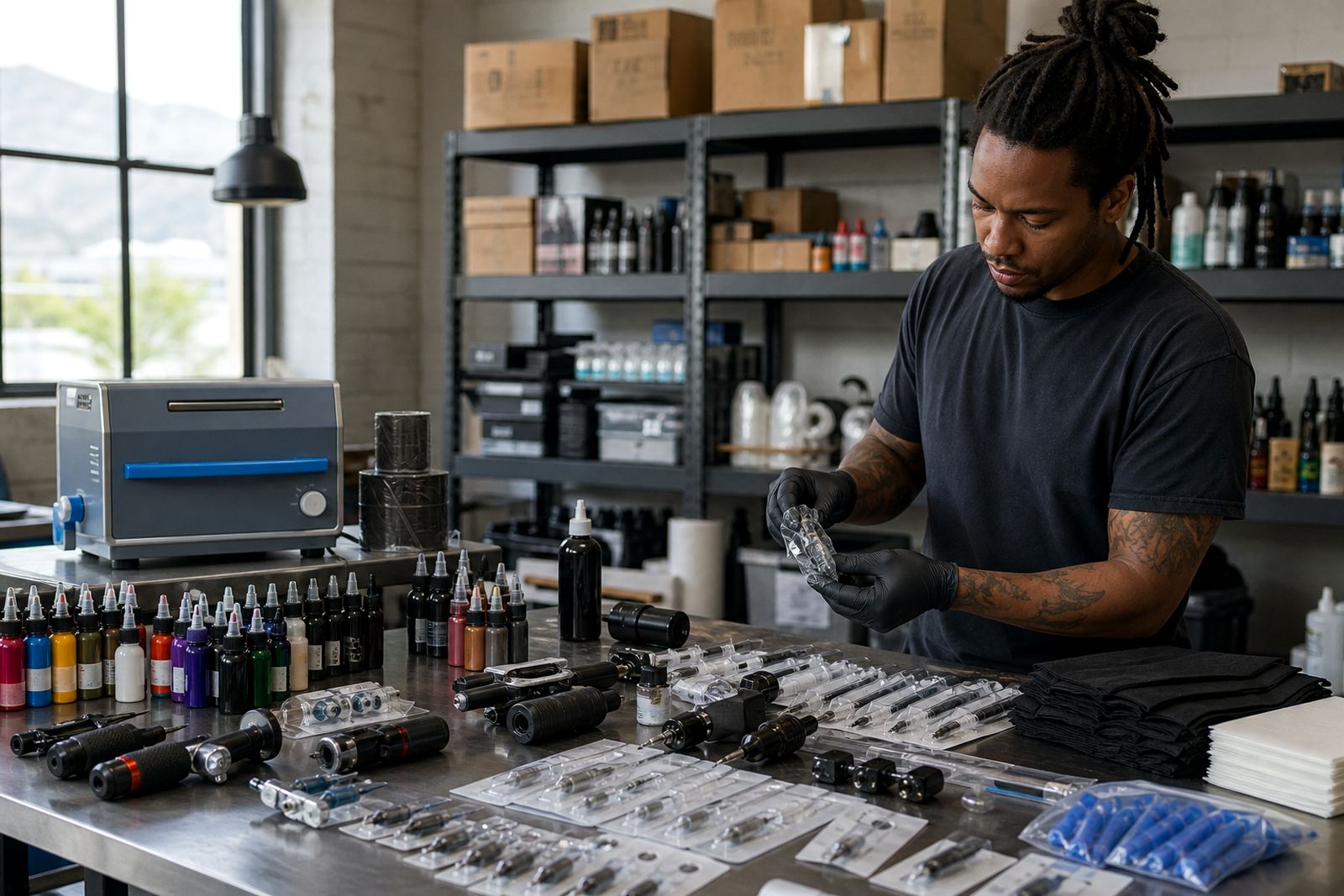
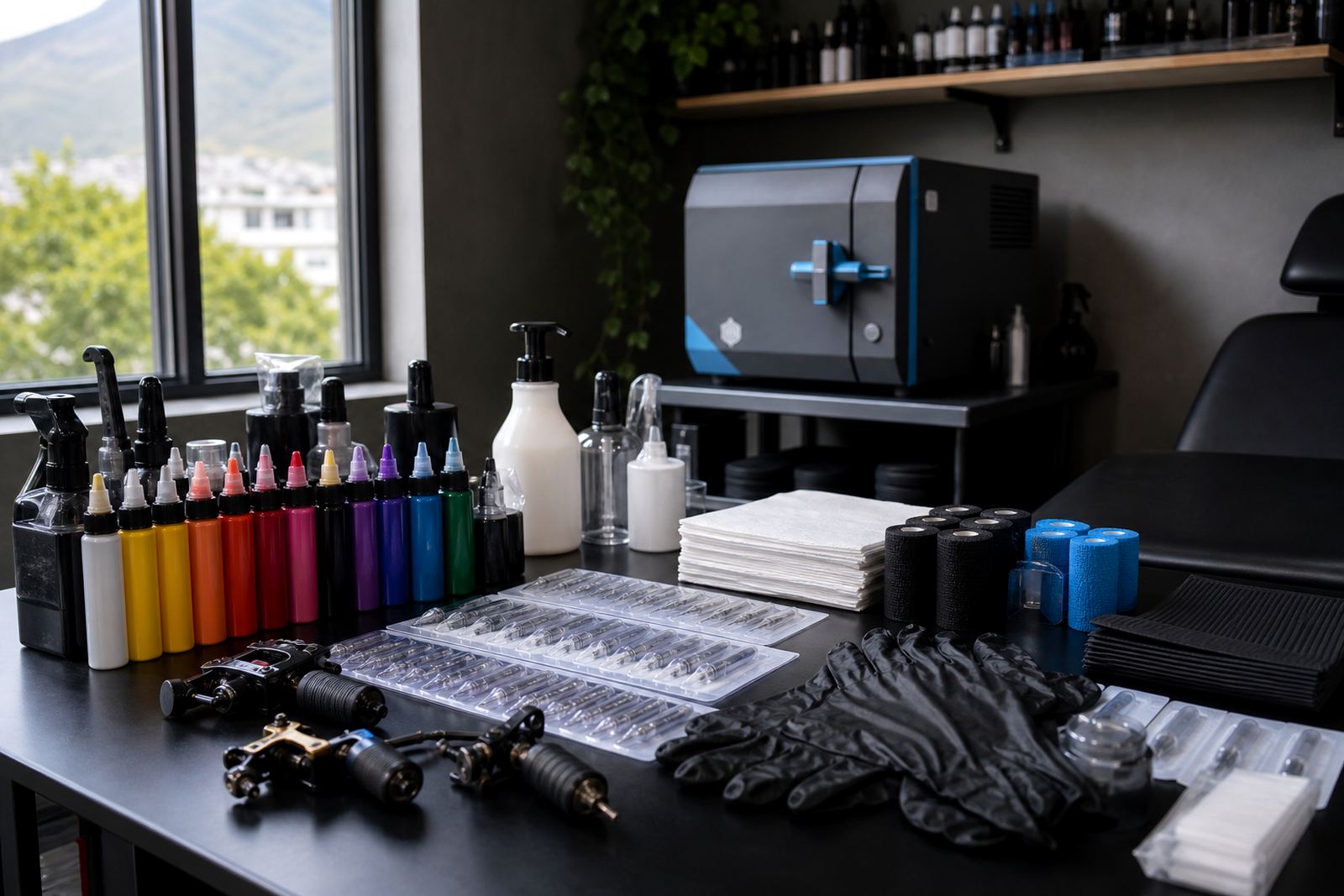
For many studios, the first step is checking what runs out fastest and what needs to stay on hand in sealed, clean storage. That usually includes black and colour inks, liners, shaders, magnums, disposable grips, caps, clip cords or machine parts where relevant, plus barrier and cleaning consumables. A clear stock list makes it easier to spot gaps before a delivery is arranged.
- Match the order to the style of tattooing you do most.
- Separate core stock from once-off or seasonal items.
- Keep a note of what moves quickly in your studio.
- Check storage space before adding bulk packs.
Ink groupings that are easier to compare
Tattoo inks are often grouped by colour range, viscosity and how they are used in the workflow. Black is usually the core item, then artists add lining sets, grey wash sets and colour ranges that suit the work they produce. If you buy for a team, it helps to compare how each ink behaves in the bottle, how it pours, and how it is stored once opened.
Some studios prefer a tighter range with a few dependable shades, while others keep a broader colour wall for varied client work. In humid coastal areas like Durban or Gqeberha, storage matters too, so closed shelving and tidy rotation can help keep stock organised. Follow local health regulations for handling, labelling and disposal where they apply.
Needles and cartridges without the guesswork
Needle groupings and cartridges are usually chosen by the lines, fills and blends you need to produce. Liners are used for detail and outlines, shaders for softer coverage, and magnums for broader shading or colour work. If your setup uses cartridges, compare needle count, configuration, membrane style and how the units fit your machine system.
It also helps to think about how your team works during a long day. Some artists prefer a smaller spread of common cartridge sizes so the station stays tidy, while others need a wider mix for custom work. Product help often starts with one question: what do you reach for most during a normal day and what can be kept as back-up stock.
- Choose liners, shaders or magnums based on the type of work.
- Check the fit and format your machine accepts.
- Keep commonly used sizes close to the station.
- Store sealed single-use items separately from opened stock.
Machine match help for the setup at hand
Machine choice affects the whole supply order because it changes which needles, cartridges and accessories will work together. Rotary and pen-style machines are often used with cartridges, while some studios still keep other machine formats in the kit. When comparing options, look at the feel in hand, the intended stroke style and how the machine is used for lining, shading or colour packing.
For studios in Johannesburg, Pretoria and Cape Town, it can also help to standardise a few machine and cartridge combinations so ordering stays simpler. That makes training, stock control and station setup more consistent across artists and rooms. If you need storage planning too, keep batteries, chargers and small parts in dry, labelled places away from cleaning liquids.
Single-use supplies and clean station stock
Single-use items are the parts of the order that help keep a station organised and controlled during a session. That can include gloves, grip covers, barriers, ink caps, rinse cups, clip cord sleeves and other disposable consumables used around the working area. These items should be counted with the same care as needles and cartridges, especially when a studio handles several clients in one day.
When comparing supplies, ask which items are used per session and which are opened only when a station is set. That makes reordering more accurate and helps avoid last minute shortfalls. A practical stock plan also reduces clutter, which matters in smaller studios where every shelf and drawer has to work hard.
- List the single-use items used at every station.
- Keep open packs separate from sealed packs.
- Count session use before placing a bulk order.
- Check what is needed for new studio kits and replenishment.
Ordering for delivery across South Africa
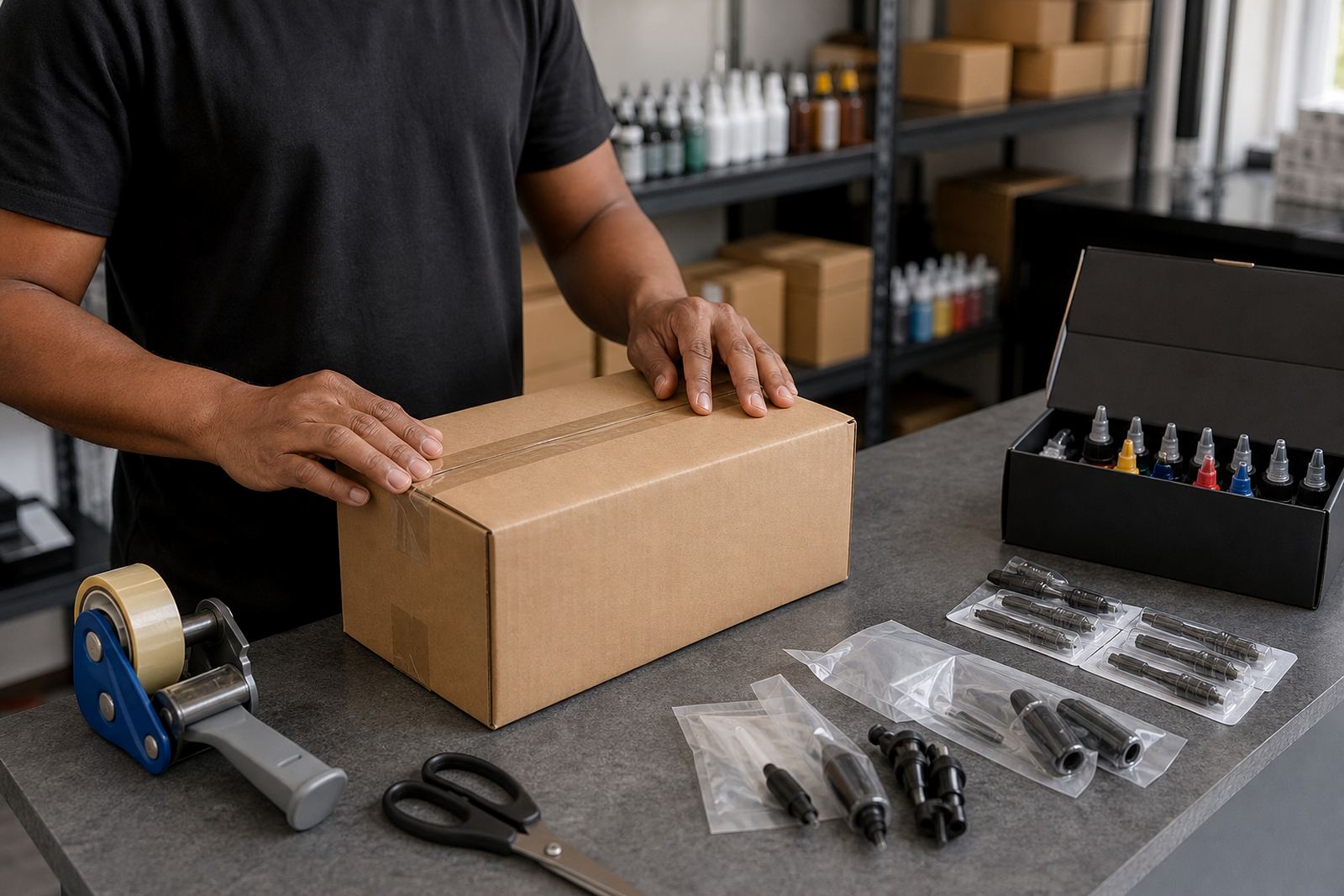
InkX Tattoo supplies studios in Cape Town, Johannesburg, Durban, Pretoria and Gqeberha, with delivery also going to Stellenbosch, Bellville and Somerset West. If you are placing a larger order, it helps to group items by category before sending the enquiry through the contact page. That makes it easier to quote the correct mix of inks, needles, cartridges and studio supplies for the address you use.
For teams that order on a regular cycle, seasonal restock planning and consumable reorders can keep the station steady through busy periods. You can also ask for stock list help, range grouping advice, product substitutions or bulk order support. It is a practical way to keep the shelf list tidy without overbuying or running short on core items.