Shelf zoning that suits daily studio work
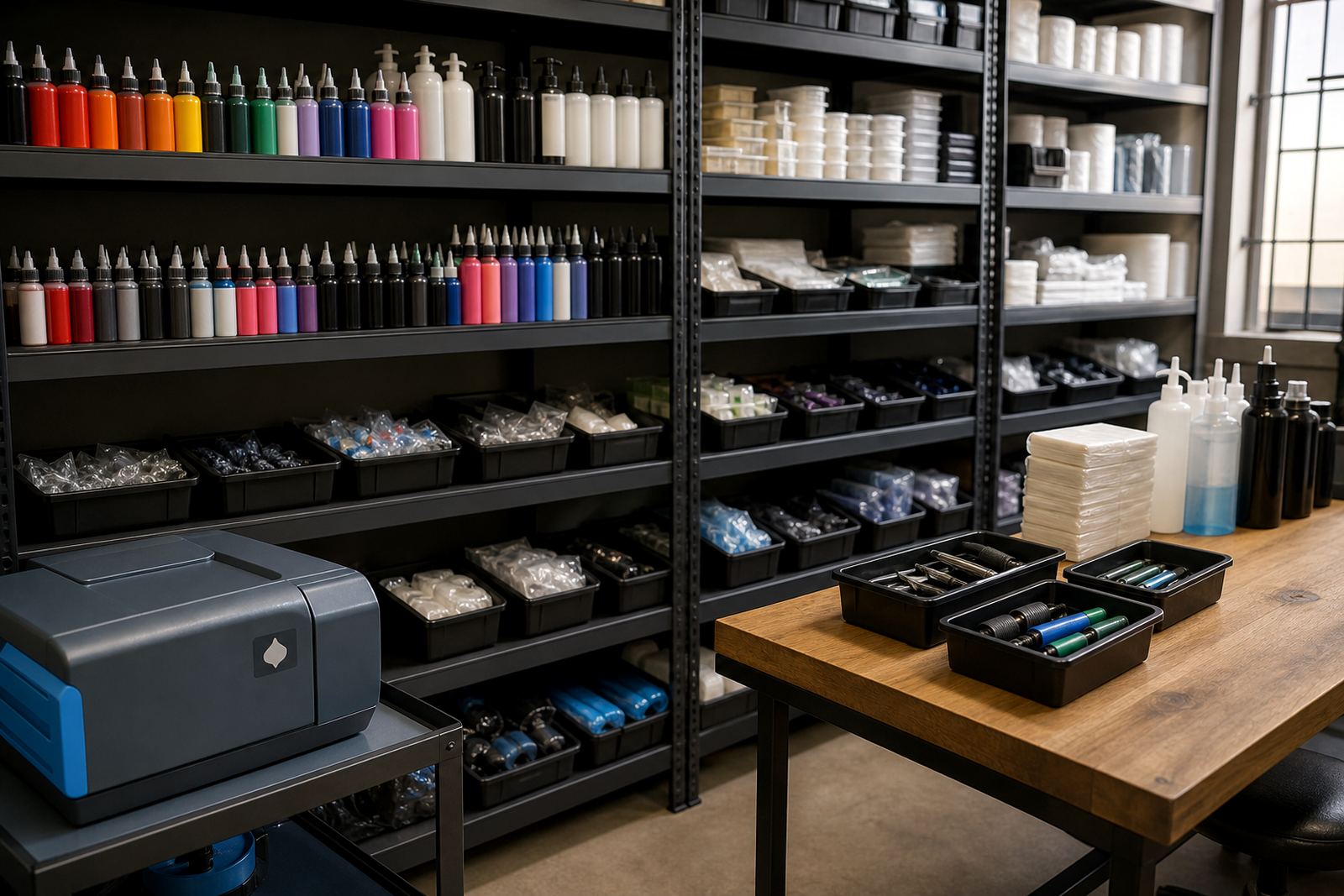
A tidy storeroom is not just about looks, it changes how fast artists and support staff can find what they need during a busy day. We group stock by use, size and handling needs so the most-used items sit at hand level, slower-moving lines sit higher up, and sealed goods stay in clean, dry sections away from spill risk. For tattoo studios near the coast, that matters more because humidity can affect cartons, labels and outer packaging if everything is packed too tightly together.
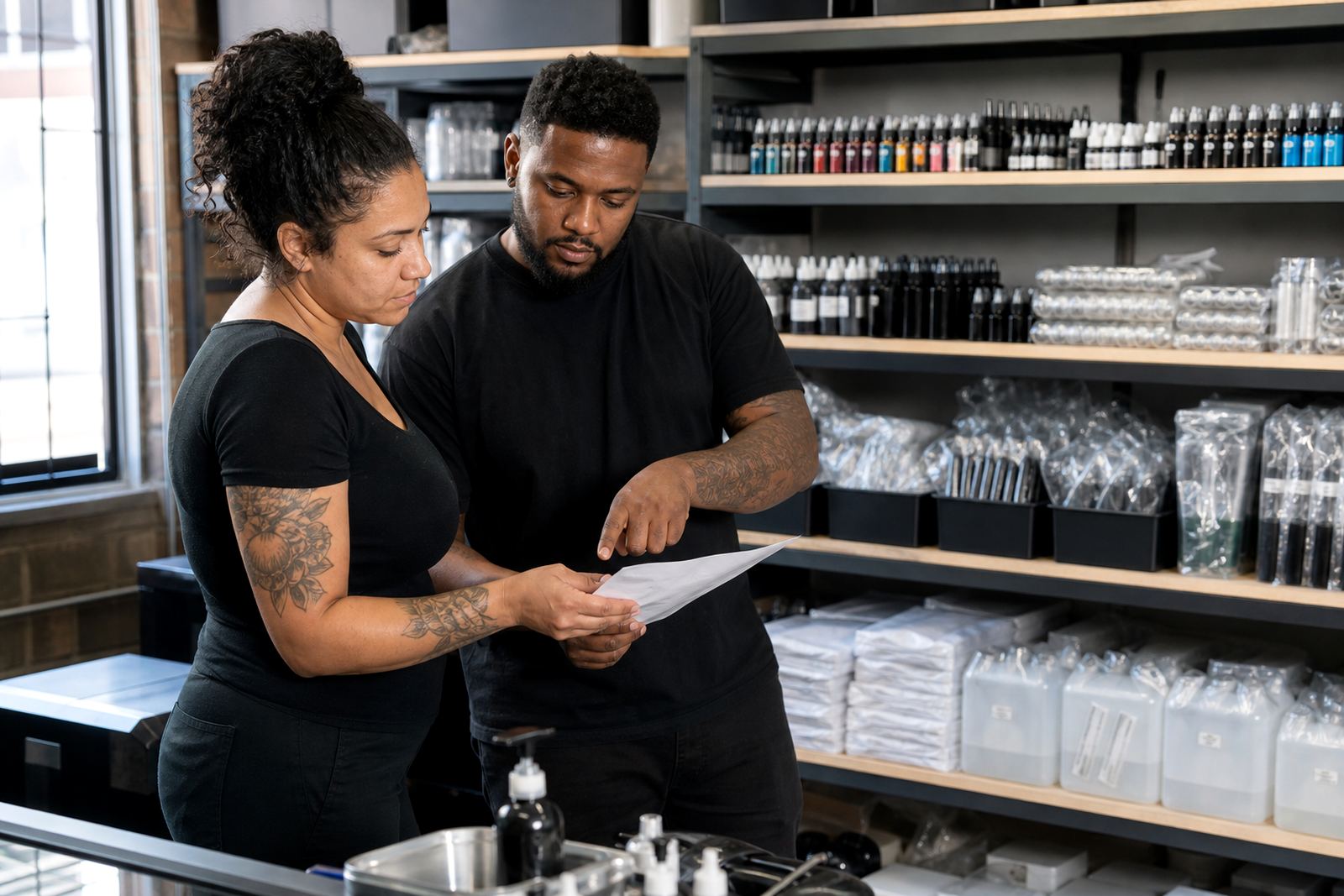
We look at how your space works in practice, whether you are running a compact back room in Observatory or a larger store area serving multiple stations. The plan can include clear shelf labels, bin grouping, drawer divisions and separate areas for sterile single-use supplies, inks, machine parts and general studio consumables. The aim is to make restocking calmer and stock checks quicker without overcomplicating the room.
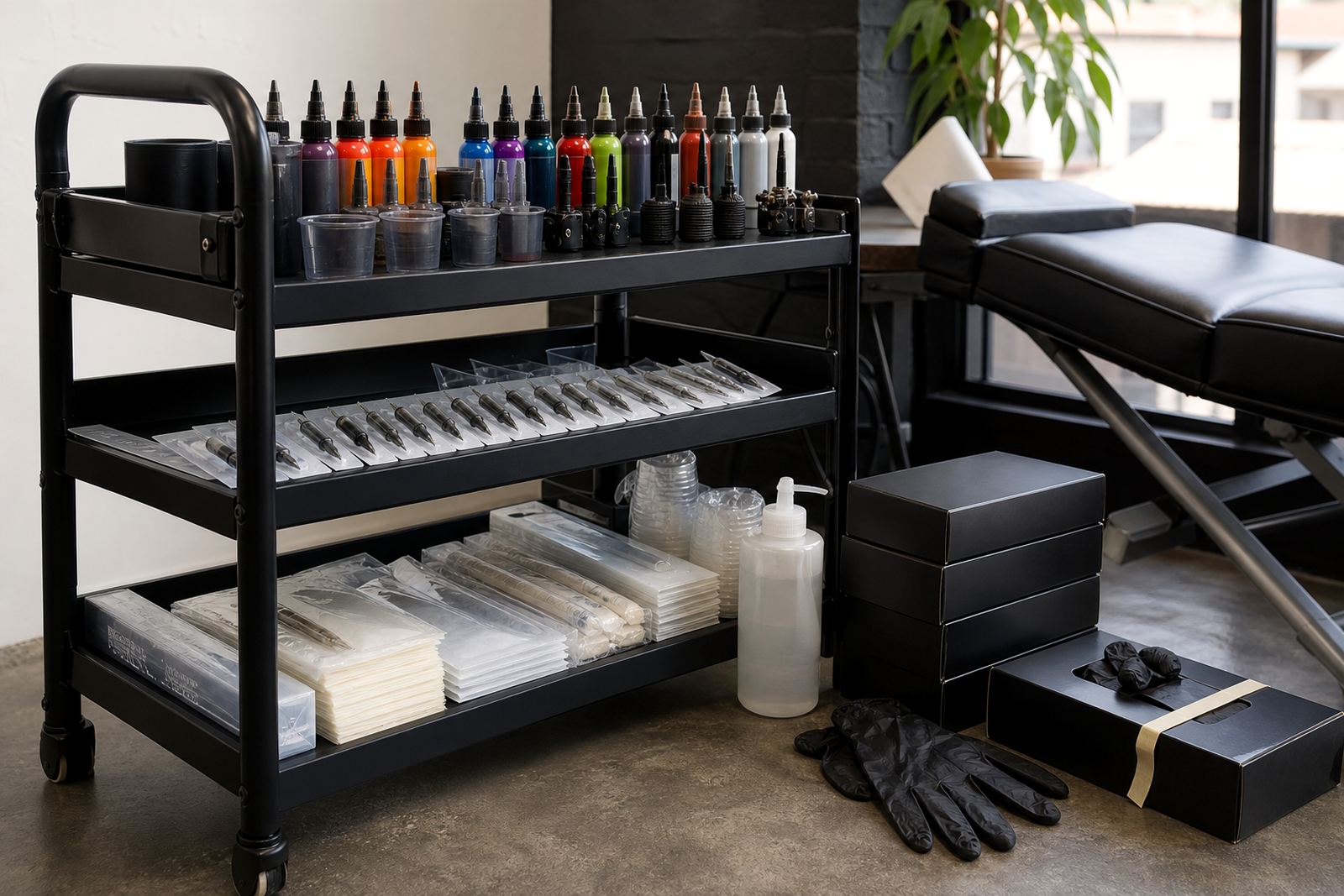
- Inks grouped by colour family, bottle size and opening date order
- Needles and cartridges separated by grouping, taper and box count
- Single-use packs stored in clean, closed sections
- Cleaning and barrier supplies kept apart from pigment and hardware stock
Rotation rules for stock that moves at different speeds
Storage planning works best when stock rotation is built into the layout. Some items move through a studio quickly, while others sit longer and need closer control so older stock is used first. We can set up a clear first in, first out flow for inks, cartridges, needles and consumables so opening dates and batch markings are easier to track in the storeroom.
That might mean front-facing rows for fast movers, reserve shelves for bulk packs and a separate holding area for incoming deliveries before they are counted in. If your studio takes larger monthly orders or holds extra lines for guest artists, we can suggest a shelf order that keeps those items visible without mixing them into daily use stock.
- Fast-moving items placed closest to the picking point
- Reserve stock separated from day-to-day issue stock
- Incoming cartons checked, dated and moved into their zone
- Opened items tracked by label or shelf position
Back-room organisation that keeps the studio moving
Back-room organisation is about reducing clutter and making it easy to work with the stock you already have. We review bench space, shelving height, bin sizes and access paths so staff are not digging through mixed cartons or stacked boxes. Where needed, we suggest simple storage pieces such as lidded tubs, narrow drawers, wire shelving or wipe-clean trays that suit the size of the room and the volume of stock on hand.
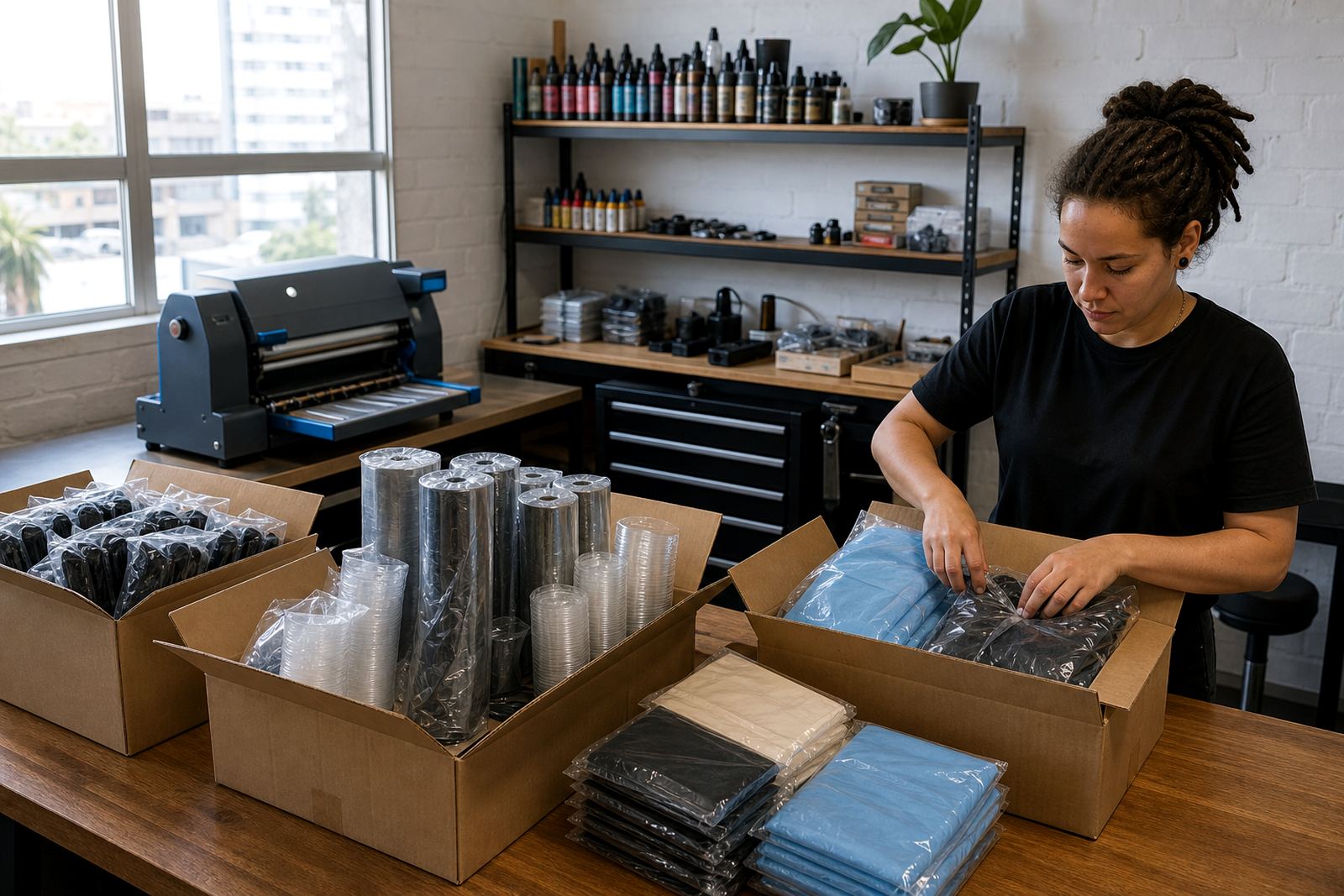
We also look at how the room is used during cleaning, unpacking and end-of-day pack-away. If your studio handles deliveries in a small receiving area, the storage plan can include a clear staging point for counted goods before they go onto the shelves. That keeps labels readable and reduces the chance of mixing sizes or needle groupings.
- Zone for counted-in stock near the receiving point
- Closed storage for sterile single-use items
- Open shelving for regularly issued consumables
- Separate section for backup parts and slow movers
What the storage planning service includes
The service covers practical recommendations based on the stock you carry and the way your studio operates. We can work through tattoo inks, needle groupings, cartridge groupings, machines and supporting consumables, then shape a storage layout around those categories. If your team needs a cleaner split between retail stock and studio-use stock, that can be built into the plan as well.
Follow local health regulations for storage, handling and studio hygiene, especially where sterile single-use supplies and cleaning materials are kept. We do not give medical advice, but we can help arrange stock so it is easier to keep separated, counted and stored in a neat order that suits a professional tattoo setting.
- Shelf zoning by product type and frequency of use
- Rotation plan for older stock and incoming stock
- Labelling suggestions for bins, drawers and shelves
- Space planning for cartons, sleeves, bottles and boxed consumables
- Storage flow for receiving, counting and issuing stock
How the planning process works
We start by understanding the size of the studio, the stock categories you carry and how the room is used through the week. From there, we map the shelving and storage points that make sense for your operation, whether you need help with a compact storage room or a larger back area with mixed stock. A plan can also include notes for multiple branches or delivery points if your studio keeps stock in more than one place.
Once the layout is set, we group the items into clear zones and suggest the best order for restocking. That can include separate sections for inks, needles, cartridges, machines, wraps, cups, cleaning goods and packing items. If the studio takes deliveries for more than one team, the plan can include simple handover steps so stock does not get left in the wrong pile.
- Review of current shelves, bins and stock flow
- Zone map for each product group
- Rotation and label recommendations
- Practical notes for packing away new deliveries
Turnaround and pricing approach
Turnaround depends on the size of the storage area and how many product groups need to be covered. A smaller studio with a straightforward stock list can be mapped faster than a larger operation with multiple shelves, reserve boxes and separate consumable areas. We keep the scope clear from the start so you know whether the work is a quick storage refresh or a fuller reorganisation of the back room.
Pricing is based on the amount of planning required, the number of zones involved and whether the work needs a basic shelf map or a more detailed stock flow layout. If the studio has regular bulk orders, mixed branch stock or extra storage at more than one site, the quote reflects that scope. There is no one-size figure because every studio carries different pack sizes, quantities and storage pressures.
- Small room planning for a single shelf bank
- Mid-size planning for mixed stock and consumables
- Full back-room layout for higher-volume studios
- Multi-site stock zoning where deliveries are split by branch
Aftercare for a cleaner stock room
After the plan is in place, studios usually need a short adjustment period while the team settles into the new shelf order. We can help with follow-up notes on labelling, restocking order and how to keep new deliveries aligned with the zones already set. That makes it easier to hold the layout together after a busy week or a large replenishment run.
If your stock mix changes, such as adding new needle groupings, cartridge sizes or a higher volume of consumables, the storage plan can be updated to suit the new flow. The point is to keep the room useful, not to make staff work around a system that no longer fits the stock on hand.
- Adjust shelf zones when stock ranges change
- Recheck labels after major restocks
- Keep reserve stock separate from working stock
- Use the same flow for every delivery so the room stays orderly
Key facts
| Service type | Storage planning for tattoo studios |
|---|---|
| Stock covered | Tattoo inks, needles, cartridges, machines and consumables |
| Layout focus | Shelf zoning, stock rotation and back-room organisation |
| Delivery areas | Cape Town, Johannesburg, Durban, Pretoria and Gqeberha |
| Studio fit | Single-room setups, multi-station studios and mixed storage areas |
| Approach | Practical zoning, clear labelling and cleaner stock flow |